Thursday, 19 March 2015 : Solemnity of St. Joseph, Spouse of the Blessed Virgin Mary, 2nd Anniversary of the Installation of Pope Francis, Vicar of Christ and Supreme Pontiff (Gospel Reading)

Liturgical Colour : White

Matthew 1 : 16, 18-21, 24a

Jacob was the father of Joseph, the husband of Mary, and from her came Jesus who is called the Christ – the Messiah.

This is how Jesus Christ was born : Mary His mother had been given to Joseph in marriage, but before they lived together, she was found to be pregnant through the Holy Spirit.

Then Joseph, her husband, made plans to divorce her in all secrecy. He was an upright man, and in no way did he want to discredit her. While he was pondering over this, an angel of the Lord appeared to him in a dream and said, “Joseph, descendant of David, do not be afraid to take Mary as your wife. She has conceived by the Holy Spirit, and now she will bear a Son. You shall call Him ‘Jesus’ for He will save His people from their sins.”

When Joseph woke up, he did what the angel of the Lord had told him to do.


Alternative reading

Luke 2 : 41-51a

Every year the parents of Jesus went to Jerusalem for the Feast of the Passover, as was customary. And when Jesus was twelve years old, He went up with them, according to the custom of this feast. After the festival was over, they returned, but the boy Jesus remained in Jerusalem, and His parents did not know it.

They thought He was in the company, and after walking the whole day they looked for Him among their relatives and friends. As they did not find Him, they went back to Jerusalem searching for Him, and on the third day they found Him in the Temple, sitting among the teachers, listening to them and asking questions. And all the people were amazed at His understanding and His answers.

His parents were very surprised when they saw Him, and His mother said to Him, “Son, why have You done this to us? Your father and I were very worried while searching for You.” Then He said to them, “Why were you looking for Me? Did you not know that I must be in My Father’s house?” But they did not understand this answer.

Jesus went down with them, returning to Nazareth, and He continued to be subject to them.

Wednesday, 18 March 2015 : 4th Week of Lent, Memorial of St. Cyril of Jerusalem, Bishop and Doctor of the Church (Gospel Reading)

Liturgical Colour : Purple/Violet or White (Bishops)

John 5 : 17-30

At that time, after Jesus healed the sick man on the Sabbath, He replied to the Jews, “My Father goes on working and so do I.” And the Jews tried all the harder to kill Him, for Jesus not only broke the Sabbath observance, but also made Himself equal with God, calling God His own Father.

Jesus said to them, “Truly, I assure you, the Son cannot do anything by Himself, but only what He sees the Father do. And whatever He does, the Son also does. The Father loves the Son and shows Him everything He does; and He will show Him even greater things than these, so that you will be amazed.”

“As the Father raises the dead and gives them life, so the Son gives life to whom He wills. In the same way the Father judges no one, for He has entrusted all judgment to the Son, and He wants all to honour the Son as they honour the Father. Whoever ignores the Son, ignores as well the Father who sent Him.”

“Truly, I say to you, anyone who hears My word and believes Him who sent Me, has eternal life; and there is no judgement for him, because he has passed from death to life. Truly, the hour is coming and has indeed come, when the dead will hear the voice of the Son of God, and on hearing it, will live. For the Father has life in Himself, and He has given to the Son also to have life in Himself. And He has empowered Him as well to carry out Judgment, for He is the Son of Man.”

“Do not be surprised at this : the hour is coming when all those lying in tombs will hear My voice and come out; those who have done good shall rise to live, and those who have done evil will rise to be condemned. I can do nothing of Myself, and I need to hear Another One to judge; and My judgement is just, because I seek not My own will, but the will of Him who sent Me.”

Sunday, 15 March 2015 : Fourth Sunday of Lent, Laetare Sunday (Gospel Reading)

Liturgical Colour : Purple/Violet or Rose (Laetare Sunday)

John 3 : 14-21

At that time, Jesus said to Nicodemus, “As Moses lifted up the serpent in the desert, so must the Son of Man be lifted up, so that whoever believes in Him may have eternal life. Yes, God so loved the world that He gave His only Son that whoever believes in Him may not be lost, but may have eternal life.”

“God did not send the Son into the world to condemn the world; instead, through Him the world is to be saved. Whoever believes in Him will not be condemned. He who does not believe is already condemned, because he has not believed in the Name of the only Son of God.”

“This is how the Judgment is made : Light has come into the world, and people loved darkness rather than light, because their deeds were evil. For whoever does wrong hates the light, and does not come to the light, for fear that his deeds will be seen as evil. But whoever lives according to the truth comes into the light, so that it can be clearly seen that his works have been done in God.”


Alternative reading (Readings of Year A)

John 9 : 1-41

At that time, as Jesus walked along, He saw a man who had been blind from birth. His disciples asked Him, “Master, was he born blind because of a sin of his, or of his parents?”

Jesus answered, “Neither was it for his own sin nor for his own parents’ sin. He was born blind so that God’s power might be shown in him. While it is day we must do the work of the One who sent Me; for the night will come when no one can work. As long as I am in the world, I am the Light of the world.”

As Jesus said this, He made paste with spittle and clay, and rubbed it on the eyes of the blind man. Then He said, “Go and wash in the Pool of Siloam.” (This word means ‘sent’.) So the blind man went and washed and came back able to see.

His neighbours, and all the people who used to see him begging, wondered. They said, “Is this not the beggar who used to sit here?” Some said, “He is the one.” Others said, “No, but he looks like him.” But the man himself said, “I am he.”

Then they asked him, “How is it that your eyes were opened?” And he answered, “The Man called Jesus made a mud paste, put it on my eyes and said to me, ‘Go to Siloam and wash.’ So I went, and washed, and I could see.” They asked, “Where is He?” And the man answered, “I do not know.”

The people brought the man who had been blind to the Pharisees. Now it was a sabbath day when Jesus made mud paste and opened his eyes. The Pharisees asked him again, “How did you recover your sight?” And he said, “He put paste on my eyes, and I washed, and now I see.”

Some of the Pharisees said, “That Man is not from God, for He works on the Sabbath”; but others wondered, “How can a sinner perform such miraculous signs? They were divided, and they questioned the blind man again, “What do you think of this Man who opened your eyes?” And he answered, “He is a Prophet!”

After all this, the Jews refused to believe that the man had been blind and had recovered his sight; so they called his parents and asked them, “Is this your son? You say that he was born blind, how is it that he now sees?” The parents answered, “He really is our son and he was born blind; but how it is that he now sees, we do not know, neither do we know who opened his eyes. Ask him, he is old enough. Let him speak for himself.”

The parents said this because they feared the Jews, who had already agreed that whoever confessed Jesus to be the Christ was to be expelled from the synagogue. Because of that his parents said, “He is old enough, ask him.”

So a second time the Pharisees called the man who had been blind, and they said to him, “Tell us the truth; we know that this Man is a sinner.” He replied, “I do not know whether He is a sinner or not; I only know that I was blind and now I see.” They said to him, “What did He do to you? How did He open your eyes?” He replied, “I have already told you and you would not listen. Why do you want to hear it again? Do you also want to become His disciples?”

Then they started to insult him. “Become His disciple yourself! We are disciples of Moses. We know that God spoke to Moses; but as for this Man, we do not know where He comes from.”

The man replied, “It is amazing that you do not know where the Man comes from, and yet He opened my eyes! We know that God does not listen to sinners, but if anyone honours God and does His will, God listens to him. Never, since the world began, has it been heard that anyone opened the eyes of a person who was born blind. If this Man were not from God, He could do nothing.”

They answered him, “You were born a sinner and now you teach us!” And they expelled him. Jesus heard that they had expelled him. He found him and said, “Do you believe in the Son of Man?” He answered, “Who is He, that I may believe in Him?” Jesus said, “You have seen Him and He is speaking to you.” He said, “Lord, I believe”; and he worshipped Him.
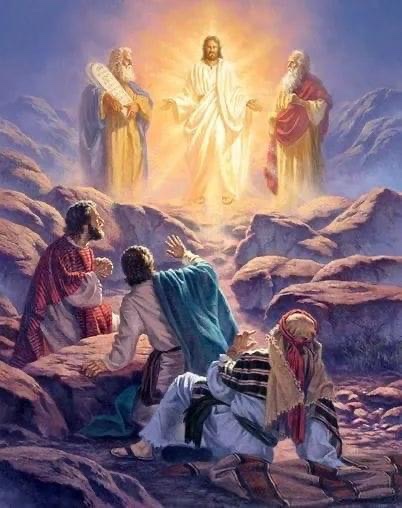
Jesus said, “I came into this world to carry out a judgment : Those who do not see shall see, and those who see shall become blind.” Some Pharisees stood by and asked Him, “So we are blind?” And Jesus answered, “If you were blind, you would not be guilty. But you say, ‘We see’; this is the proof of your sin.”


Alternative reading (shorter version of Readings of Year A)

John 9 : 1, 6-9, 13-17, 34-38

At that time, as Jesus walked along, He saw a man who had been blind from birth. As Jesus said this, He made paste with spittle and clay, and rubbed it on the eyes of the blind man. Then He said, “Go and wash in the Pool of Siloam.” (This word means ‘sent’.) So the blind man went and washed and came back able to see.

His neighbours, and all the people who used to see him begging, wondered. They said, “Is this not the beggar who used to sit here?” Some said, “He is the one.” Others said, “No, but he looks like him.” But the man himself said, “I am he.”

The people brought the man who had been blind to the Pharisees. Now it was a sabbath day when Jesus made mud paste and opened his eyes. The Pharisees asked him again, “How did you recover your sight?” And he said, “He put paste on my eyes, and I washed, and now I see.”

Some of the Pharisees said, “That Man is not from God, for He works on the Sabbath”; but others wondered, “How can a sinner perform such miraculous signs? They were divided, and they questioned the blind man again, “What do you think of this Man who opened your eyes?” And he answered, “He is a Prophet!”

They answered him, “You were born a sinner and now you teach us!” And they expelled him. Jesus heard that they had expelled him. He found him and said, “Do you believe in the Son of Man?” He answered, “Who is He, that I may believe in Him?” Jesus said, “You have seen Him and He is speaking to you.” He said, “Lord, I believe”; and he worshipped Him.

(Usus Antiquior) Fourth Sunday of Lent, Laetare Sunday (I Classis) – Sunday, 15 March 2015 : Holy Gospel

Liturgical Colour : Violet

Sequentia Sancti Evangelii secundum Joannem – Continuation of the Holy Gospel according to St. John

John 6 : 1-15

In illo tempore : Abiit Jesus trans mare Galilaeae, quod est Tiberiadis : et sequebatur eum multitudo magna, quia videbant signa, quae faciebat super his, qui infirmabantur. Subiit ergo in montem Jesus : et ibi sedebat cum discipulis suis.

Erat autem proximum Pascha, dies festus Judaeorum. Cum sublevasset ergo oculos Jesus et vidisset, quia multitudo maxima venit ad eum, dixit ad Philippum : Unde ememus panes, ut manducent hi? Hoc autem dicebat tentans eum : ipse enim sciebat, quid esset facturus.

Respondit ei Philippus : Ducentorum denariorum panes non sufficiunt eis, ut unusquisque modicum quid accipiat. Dicit ei unus ex discipulis ejus, Andreas, frater Simonis Petri : Est puer unus hic, qui habet quinque panes hordeaceos et duos pisces : sed haec quid sunt inter tantos?

Dixit ergo Jesus : Facite homines discumbere. Erat autem faenum multum in loco. Discubuerunt ergo viri, numero quasi quinque milia. Accepit ergo Jesus panes, et cum gratias egisset, distribuit discumbentibus : similiter et ex piscibus, quantum volebant.

Ut autem impleti sunt, dixit discipulis suis : Colligite quae superaverunt fragmenta, ne pereant. Collegerunt ergo, et impleverunt duodecim cophinos fragmentorum ex quinque panibus hordeaceis, quae superfuerunt his, qui manducaverant. Illi ergo homines cum vidissent, quod Jesus fecerat signum, dicebant : Quia hic est vere Propheta, qui venturus est in mundum.

Jesus ergo cum cognovisset, quia venturi essent, ut raperent eum et facerent eum regem, fugit iterum in montem ipse solus.


English translation

At that time, Jesus went over the Sea of Galilee, which is that of Tiberias, and a great multitude followed Him, because they saw the miracles which He did on those who were diseased. Jesus therefore went up into a mountain, and there He sat with His disciples.

Now the Pascha, the festival day of the Jews was near at hand. When Jesus therefore had lifted up His eyes, and seen that a very great multitude came to Him, He said to Philip, “Where shall we buy bread that all these may eat?” And this He had said to try him, for He Himself knew what He would do.

Philip answered, “Two hundred denarius worth of bread is not sufficient for them, that everyone may take a little of them.” One of His disciples, Andrew, the brother of Simon Peter said to Him, “There is a boy here who has five barley loaves and two fishes, but what are these among so many?”

Then Jesus said, “Make the men sit down.” Now there was much grass in the place. The men therefore sat down, in number about five thousand. And Jesus took the loaves, and when He had given thanks, He distributed to them who were put to sit down. In like manner, He also distributed the fishes, as much as they would eat.

And when they were filled, He said to His disciples, “Gather up the fragments that remain, lest that they are lost.” Therefore, they gathered up the leftovers and filled twelve baskets with the fragments of the five barley loaves, which remained over and above to those who had eaten. Now those men, when they had seen what a miracle Jesus had done, they said, “This is truly the Prophet who is to come into the world.”

Therefore Jesus, when He knew that they would come to take Him by force and make Him king, fled again into the mountain by Himself alone.

Saturday, 14 March 2015 : 3rd Week of Lent (Gospel Reading)

Liturgical Colour : Purple/Violet

Luke 18 : 9-14

At that time, Jesus told another parable to some people, fully convinced of their own righteousness, who looked down on others : “Two men went up to the Temple to pray; one was a Pharisee, and the other a tax collector.”

“The Pharisee stood by himself, and said, ‘I thank You, God, that I am not like other people, grasping, crooked, adulterous, or even like this tax collector. I fast twice a week, and give the tenth of all my income to the Temple.'”

“In the meantime, the tax collector, standing far off, would not even lift his eyes to heaven, but beat his breast, saying, ‘O God, be merciful to me, a sinner.'”

“I tell you, when this man went back to his house, he had been reconciled with God, but not the other. For whoever makes himself out to be great will be humbled, and whoever humbles himself will be raised up.”

Friday, 13 March 2015 : 3rd Week of Lent, 2nd Anniversary of the Election of Pope Francis, Vicar of Christ and Supreme Pontiff (Gospel Reading)

Liturgical Colour : Purple/Violet

Mark 12 : 28b-34

At that time, a teacher of the Law came up to Jesus and asked Him, “Which commandment is the first of all?”

Jesus answered, “The first is : ‘Hear Israel! The Lord, our God, is One Lord; and yiu shall love the Lord, your God, with all your heart, with all your soul, with all your mind and with all your strength.’ And after this comes a second commandment : ‘You shall love your neighbour as yourself.’ There is no commandment greater than these two.”

The teacher of the Law said to Him, “Well spoken, Master; You are right when you say that He is One, and there is no other besides Him. To love Him with all our heart, with all our understanding and with all our strength, and to love our neighbour as ourselves is more important than any burnt offering or sacrifice.”

Jesus approved this answer and said, “You are not far from the kingdom of God.” After that, no one dared to ask Him any more questions.

Thursday, 12 March 2015 : 3rd Week of Lent (Gospel Reading)

Liturgical Colour : Purple/Violet

Luke 11 : 14-23

At that time, one day Jesus was driving out a demon, which was mute. When the demon had been driven out, the mute person could speak, and the people were amazed. Yet some of them said, “He drives out demons by the power of Beelzebul, the chief of the demons.” Others wanted to put Him to the test, by asking Him for a heavenly sign.

But Jesus knew their thoughts, and said to them, “Every nation divided by civil war is on the road to ruin, and will fall. If Satan also is divided, his empire is coming to an end. How can you say that I drive out demons by calling upon Beelzebul? If I drive them out by Beelzebul, by whom do your sons drive out demons? They will be your judges, then.”

“But if I drive out demons by the finger of God; would not this mean that the kingdom of God has come upon you? As long as a man, strong and well armed, guards his house, his goods are safe. But when a stronger man attacks and overcomes him, the challenger takes away all the weapons he relied on, and disposes of his spoils.”

“Whoever is not with Me is against Me, and whoever does not gather with Me, scatters.”

Wednesday, 11 March 2015 : 3rd Week of Lent (Gospel Reading)

Liturgical Colour : Purple/Violet

Matthew 5 : 17-19

At that time, Jesus said to the people, “Do not think that I have come to annul the Law and the Prophets. I have not come to annul them but to fulfill them. I tell you this : as long as heaven and earth last, not the smallest letter or dot in the Law will change until all is fulfilled.”

“So then, whoever breaks the least important of these commandments, and teaches others to do the same, will be the least in the kingdom of heaven. On the other hand, whoever obeys them, and teaches others to do the same, will be great in the kingdom of heaven.”

Tuesday, 10 March 2015 : 3rd Week of Lent (Gospel Reading)

Liturgical Colour : Purple/Violet

Matthew 18 : 21-35

At that time, Peter asked Jesus, “Lord, how many times must I forgive the offenses of my brother or sister? Seven times?” Jesus answered, “No, not seven times, but seventy-seven times.”

“This story throws light on the kingdom of Heaven : A king decided to settle the accounts of his servants. Among the first was one who owed him ten thousand pieces of gold. As the man could not repay the debt, the king commanded that he be sold as a slave with his wife, his children and all his goods, as repayment.”

“The servant threw himself at the feet of the king and said, ‘Give me time, and I will pay you back everything.’ The king took pity on him, and not only set him free, but even cancelled his debt.”

“When the servant left the king’s presence, he met one of his companions, who owed him a hundred pieces of silver. He grabbed him by the neck and almost choked him, shouting, ‘Pay me what you owe!’ His companion threw himself at his feet and begged him, ‘Give me time, and I will pay everything.’ The other did not agree, but sent him to prison until he had paid all his debt.”

“Now his fellow servants saw what had happened. They were extremely upset, and so they went and reported everything to their lord. Then the lord summoned his servant and said, ‘Wicked servant, I forgave you all that you owed when you begged me to do so. Were you not bound to have pity on your companion, as I had pity on you?'”

“The lord was now angry, so he handed his servant over to be punished, until he had paid his whole debt.” Jesus added, “So will My heavenly Father do with you, unless you sincerely forgive your brothers and sisters.”

Monday, 9 March 2015 : 3rd Week of Lent, Memorial of St. Frances of Rome, Religious (Gospel Reading)

Liturgical Colour : Purple/Violet

Luke 4 : 24-30

At that time, Jesus said to the people of Nazareth, “No prophet is honoured in his own country. Truly, I say to you, there were many widows in Israel in the days of Elijah, when the heavens withheld rain for three years and six months and a great famine came over the whole land.”

“Yet, Elijah was not sent to any of them, but to a widow of Zarephath, in the country of Sidon. There were also many lepers in Israel in the time of Elisha, the prophet, and no one was healed except Naaman, the Syrian.”

On hearing these words, the whole assembly became indignant. They rose up and brought Him out of the town, to the edge of the hill on which Nazareth is built, intending to throw Him down the cliff. But He passed through their midst and went His way.