Tuesday, 17 February 2015 : 6th Week of Ordinary Time, Memorial of the Seven Holy Founders of the Servite Order (Gospel Reading)

Liturgical Colour : Green or White (Saints)

Mark 8 : 14-21

At that time, the disciples had forgotten to bring more bread, and had only one loaf with them in the boat. Then Jesus warned them, “Keep your eyes open, and beware of the yeast of the Pharisees and the yeast of Herod.” And they said to one another, “He saw that we have no bread.”

Aware of this, Jesus asked them, “Why are you talking about the loaves you are short of? Do you not see or understand? Are your minds closed? Have you eyes that do not see and ears that do not hear? And do you not remember when I broke the five loaves among five thousand?”

“How many baskets full of leftovers did you collect?” They answered, “Twelve.” “And having distributed seven loaves to the four thousand, how many wicker baskets of leftovers did you collect?” They answered, “Seven.” Then Jesus said to them, “Do you still not understand?”

Monday, 16 February 2015 : 6th Week of Ordinary Time (Gospel Reading)

Liturgical Colour : Green

Mark 8 : 11-13

At that time, the Pharisees came and started to argue with Jesus. Hoping to embarrass Him, they asked for some heavenly sign. Then His Spirit was moved. He gave a deep sigh and said, “Why do the people of this present time ask for a sign? Truly, I say to you, no sign shall be given to this people.”

Then He left them, got into the boat again and went to the other side of the lake.

Sunday, 15 February 2015 : Sixth Sunday of Ordinary Time, Quinquagesima Sunday (Second Reading)

Liturgical Colour : Green

1 Corinthians 10 : 31 – 1 Corinthians 11 : 1

Then, whatever you eat, or drink, or whatever you do, do it for the glory of God. Give no offense to the Jews, or to the Greeks, or to the Church of God, just as I try to please everyone in everything. I do not seek my own interest, but that of many, this is, that they be saved.

Follow my example as I follow the example of Christ.

(Usus Antiquior) Quinquagesima Sunday (II Classis) – Sunday, 15 February 2015 : Gradual and Tract

Liturgical Colour : Violet

Gradual

Psalm 76 : 15, 16

Tu es Deus qui facis mirabilia solus : notem fecisti in gentibus virtutem Tuam.

Response : Liberasti in bracchio Tuo populum Tuum, filios Israel et Joseph.

English translation

You are the God who alone has done wonders. You have made Your power known among the nations.

Response : With Your arm You have redeemed Your people, the children of Israel and of Joseph.

Tract

Psalm 99 : 1-2

Jubilate Deo, omnis terra : servite Domino in laetitia.

Response : Intrate in conspectu Ejus in exsultatione : scitote, quod Dominus ipse est Deus.

Response : Ipse fecit nos, et non ipsi nos : nos autem populus Ejus, et oves pascuae Ejus.

English translation

Sing joyfully to God all the earth. All of you serve the Lord with gladness.

Response : Come in before His presence with exceeding great joy. Know, all of you, that He is the Lord, our God.

Response : He made us, and not we ourselves. But we are His people, and the sheep of His pasture.

(Special – Singapore) Saturday, 14 February 2015 : Solemnity of the Anniversary of the Dedication of the Cathedral of the Good Shepherd (Second Reading)

Liturgical Colour : White

1 Corinthians 3 : 9-13, 16-17

We are fellow workers with God, but you are God’s field and building. I, as a good architect, according to the capacity given to me, I laid the foundation, and another is to build upon it. Each one must be careful how to build upon it. No one can lay a foundation other than the one which is already laid, which is Jesus Christ.

Then if someone builds with gold upon this foundation, another with silver and precious stones, or with wood, bamboo or straw, the work of each one will be shown for what it is. The day of Judgment will reveal it, because the fire will make everything known. The fire will test the work of everyone.

Do you not know that you are God’s Temple, and that God’s Spirit abides within you? If anyone destroys the Temple of God, God will destroy him. God’s Temple is holy, and you are this Temple.

Tuesday, 10 February 2015 : 5th Week of Ordinary Time, Memorial of St. Scholastica, Virgin (Gospel Reading)

Liturgical Colour : White

Mark 7 : 1-13

At that time, one day the Pharisees gathered around Jesus, and with them were some teachers of the Law who had just come from Jerusalem. They noticed that some of His disciples were eating their meal with unclean hands, that is, without washing them.

Now the Pharisees, and in fact all the Jews, never eat without washing their hands, for they follow the tradition received from their ancestors. Nor do they eat anything, when they come from the market, without first washing themselves. And there are many other traditions they observe; for example, the ritual washing of cups, pots and plates.

So the Pharisees and the teachers of the Law asked Him, “Why do Your disciples not follow the tradition of the elders, but eat with unclean hands?” Jesus answered, “You shallow people! How well Isaiah prophesied of you when he wrote : ‘This people honours Me with their lips, but their heart is far from Me. The worship they offer Me is worthless, for what they teach are only human rules.’ You even put aside the commandment of God to hold fast to human tradition.”

And Jesus commented, “You have a fine way of disregarding the commandments of God in order to enforce Your own traditions! For example, Moses said : ‘Do your duty to your father and your mother.’ and : ‘Whoever curses his father or his mother is to be put to death.'”

“But according to you, someone could say to his father or mother, ‘I already declared Corban (which means ‘offered to God’) what you could have expected from me.’ In this case, you no longer require him to do anything for his father or mother, and so you nullify the word of God through the tradition you have handed on. And you do many other things like that.”

Friday, 6 February 2015 : 4th Week of Ordinary Time, Memorial of St. Paul Miki and Companions, Martyrs (Homily and Scripture Reflections)

Liturgical Colour : Red

Dear brothers and sisters in Christ, today we heard about the stories of faithful marriage and what we must do to preserve sanctity and holiness in our matrimony, as well as the story of the death and martyrdom of St. John the Baptist, the messenger and herald of the Lord, who was murdered, albeit unintentionally by Herod, the king of Judea at the time.

The readings of today are all related in that they spoke of the same theme, that is the sanctity of marriage, the holiness which should be maintained at all times in our marriage, and not only in our marriage but also in our lives. And they also highlighted to us the dangers and obstacles that will come our way if we stay faithful to our Lord, the opposition and difficulties that will be laid upon us.

Today we celebrate the feast of St. Paul Miki and his companions, who are the brave and courageous servants of the Lord, who were martyred for their Faith during the violent persecutions of the faithful in Japan during the early years of the seventeenth century under the Tokugawa shogunate. St. Paul Miki was a Jesuit, a faithful missionary and servant of God, and a very successful preacher of his time, bringing many into the Church through his words and actions.

The faith had been growing strong in Japan at that time, and hundreds of thousands, peasants and lords alike have turned towards the Lord, accepting God as their Lord and Saviour. However, the secular government at the time changed their earlier toleration of the Faith and became very hostile to it. To them, the Faith is a threat to their existence, simply because it spoke the truth about this world, that is filled with much filth and wickedness.

And thus St. Paul Miki and his companions suffered, for they remained true to their Faith and refused to succumb to the temptations of the world, and they spoke for the truth which Christ had brought upon this world. They were persecuted and tortured, but they did not give up the Faith, and instead through their perseverance, they showed the truth of Christ to all who have tortured and persecuted them. Some even believed, converted and followed in being martyred with them.

And St. John the Baptist had also endured the same suffering for the Lord, for speaking up the truth of the Lord, out of concern for mankind and all the sins they have committed. He chastised Herod and his brother’s wife, Herodias, whom Herod had taken as if she was his own wife. This was a great adultery, the improper relations one had outside of marriage, and this is what St. Paul in his letter to the Hebrews had reminded us all against.

By the fornication of the flesh which Herod and Herodias had committed, by being unfaithful to the sanctity of marriage and through their actions which spat upon the sacredness of the bonds of holy matrimony, they have sinned greatly before God. And what is truly sad is that, despite having sinned before the Lord, they continued to live in their sin, and being engulfed in that sin, they ended up sinning even more.

Indeed, such is the great danger of sin, that it continues to corrupt the soul and bring us to sin even more. Herod was corrupted with the sin of greed, of lust and of pride, and with Herodias, they together committed the sin of adultery, and later on Herodias also developed the sin of anger and hatred against the truth spoken by St. John the Baptist.

And Herod gave in to the temptation of the flesh, when he saw the beauty of Herodias’ daughter, giving in to temptation, and under that same temptation, proclaiming vows and oaths he could not retract later on. And Herod therefore took part in the slaying of the messenger of God, and his sin grew ever more. Herod sinned because he refused to repent and continued in his sinfulness and in not changing his life.

This is a warning and a revelation to all of us, that the anchor of our faith, the foundation of our lives must be strong, that is our families. If our families are built upon a solid foundation of faith, that is keeping holiness and purity in our marriage and married life, then we can be assured that sin will have a hard time to get unto us. It does not mean that we will be free from the threat of sin, which is ever-present, but rather that if our families and the institution of marriage are not well respected, then the danger of sin is ever the greater, just as the case of Herod had shown us.

Brothers and sisters in Christ, today we ought to recall the examples of the holy saints and martyrs, of the courage of St. John the Baptist who dared to chastise a king to make him see the errors of his ways. Even though this was not to happen, but at least through what he had done, he became a shining symbol of the true faith in the Lord.

And the examples of St. Paul Miki and his companions should also inspire us, that sin and all of the darkness of evil has no power over us as long as we remain faithful to the Lord. St. Paul Miki was tortured, scourged and humiliated, and they were made to an extremely arduous journey and death march from the Imperial capital of Kyoto to Nagasaki, where they were martyred, a very great distance for them to march under terrible condition and torture by their executors.

Yet, they gladly march to meet their death, and they sang the great thanksgiving hymn to God, the ‘Te Deum’ along the way. This is because they knew that they had stood up for their faith and for the Lord, and in what they have done, they had brought countless others into salvation in God, and that God would not abandon them and they would not be disappointed.

Brothers and sisters in Christ, let us all profoundly change our way of life and reflect on the actions of the holy martyrs and saints which I have mentioned. Let us no longer live in sin, but dedicate ourselves to a life of holiness, a life filled with virtue and the love of God. May Almighty God be with us all, forgive us all our sins and in His mercy and love, may He find us worthy for our deeds made out of faith and love for Him and grant us eternal life. Amen.
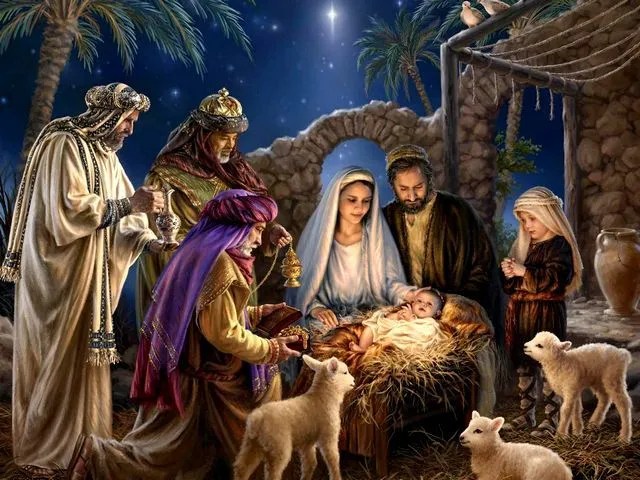
Monday, 2 February 2015 : Feast of the Presentation of the Lord, World Day for Consecrated Life (Gospel Reading)

Liturgical Colour : White

Luke 2 : 22-40

When the day came for the purification according to the Law of Moses, they brought the Baby up to Jerusalem, to present Him to the Lord, as it is written in the Law of the Lord : ‘Every firstborn male shall be consecrated to God.’ And they offered a sacrifice, as ordered in the Law of the Lord : a pair of turtledoves or two young pigeons.

There lived in Jerusalem at this time a very upright and devout man named Simeon; the Holy Spirit was in him. He looked forward to the time when the Lord would comfort Israel, and he had been assured, by the Holy Spirit, that he would not die before seeing the Messiah of the Lord.

So he was led into the Temple by the Holy Spirit at the time the parents brought the Child Jesus, to do for Him according to the custom of the Law. Simeon took the Child in his arms, and blessed God, saying, “Now, o Lord, You can dismiss Your servant in peace, for You have fulfilled Your word and my eyes have seen Your salvation, which You display for all the people to see. Here is the Light You will reveal to the nations, and the glory of Your people Israel.”

His father and mother wondered at what was said about the Child. Simeon blessed them, and said to Mary, His mother, “Know this : your Son is a sign, a sign established for the falling and rising of many in Israel, a sign of contradiction; and a sword will pierce your own soul, so that, out of many hearts, thoughts may be revealed.”

There was also a prophetess named Anna, daughter of Phanuel, of the tribe of Asher. After leaving her father’s home, she had been seven years with her husband, and since then she had been continually about the Temple, serving God as a widow night and day in fasting and prayer. She was now eighty-four. Coming up at that time, she gave praise to God, and spoke of the Child to all who looked forward to the deliverance of Jerusalem.

When the parents had fulfilled all that was required by the Law of the Lord, they returned to their town, Nazareth in Galilee. There the Child grew in stature and strength, and was filled with wisdom : the grace of God was upon Him.

Alternative reading (shorter version)

Luke 2 : 22-32

When the day came for the purification according to the Law of Moses, they brought the Baby up to Jerusalem, to present Him to the Lord, as it is written in the Law of the Lord : ‘Every firstborn male shall be consecrated to God.’ And they offered a sacrifice, as ordered in the Law of the Lord : a pair of turtledoves or two young pigeons.

There lived in Jerusalem at this time a very upright and devout man named Simeon; the Holy Spirit was in him. He looked forward to the time when the Lord would comfort Israel, and he had been assured, by the Holy Spirit, that he would not die before seeing the Messiah of the Lord.

So he was led into the Temple by the Holy Spirit at the time the parents brought the Child Jesus, to do for Him according to the custom of the Law. Simeon took the Child in his arms, and blessed God, saying, “Now, o Lord, You can dismiss Your servant in peace, for You have fulfilled Your word and my eyes have seen Your salvation, which You display for all the people to see. Here is the Light You will reveal to the nations, and the glory of Your people Israel.”

Monday, 2 February 2015 : Feast of the Presentation of the Lord, World Day for Consecrated Life (First Reading)

Liturgical Colour : White

Malachi 3 : 1-4

Now I am sending My messenger ahead of Me to clear the way; then suddenly the Lord for whom you long will enter the sanctuary. The Envoy of the covenant which you so greatly desire already comes, says YHVH of hosts.

Who can bear the day of His coming and remain standing when He appears? For He will be like fire in the foundry and like the lye used for bleaching. He will be as a refiner or a fuller. He will purify the sons of Levi and refine them like gold and silver. So YHVH will have priests who will present the offering as it should be.

Then YHVH will accept with pleasure the offering of Judah and Jerusalem, as in former days.

Sunday, 1 February 2015 : Fourth Sunday of Ordinary Time, Septuagesima Sunday (Homily and Scripture Reflections)

Liturgical Colour : Green or Violet (Septuagesima Sunday – Usus Antiquior)

Dear brothers and sisters in Christ, today we celebrate the Septuagesima Sunday, which literally means ‘seventy’. This is to remind us that as this is the ninth Sunday before Easter, we are about seventy days away from the great feast and celebration of our Lord’s Passion, death and ultimately, the most important of all, the Resurrection through which He made whole all mankind and bring hope into the world engulfed in the darkness.

As is appropriate, the Gospel today from the Gospel of St. Mark spoke about time and works that men take up, to fulfill the Lord’s call for all of us. The parable of the vineyard workers and the owner is speaking about how we mankind, the people of God are called by the Lord to be His servants and to do the good works which He had initiated in this world.

The Gospel from the readings for the Fourth Sunday of Ordinary Time spoke of how Jesus our Lord exercised His power and authority to cast out demons and heal all those afflicted by the physical and spiritual sickness and diseases. And that is just how our Lord does His work to liberate us all from the clutches of Satan, and ti show the way for us all to seek the Lord our God.

And in the first reading of the Ordinary Time readings, from the Book of Deuteronomy, the Lord had promised His people that He would send them a Prophet, that is the One who would bear His will and His words of truth to the people. Jesus is that Prophet, who taught the people and His own disciples through stories and parables which bore the truth of God inside them. He is the Word of God made flesh.

In the parable told by Jesus in the Gospel for Septuagesima Sunday, the vineyard owner is truly the Lord our God, who is the Lord of all. The vineyard itself is the world that is saved, that is the Church of God, and the workers are all of us, the race of men. God seeks out all of us at different times, and He sought us in the darkened world outside the Church, that is everything else beyond the vineyard. Like the owner who went out to seek more workers for his field at various hours, the Lord too seeks us at all the time, desiring to find us and bring us to salvation.

There are therefore three main things I want and I hope all of us will take away from the readings of today, that we may reflect on them and understand the necessity for us to know what the Lord wants from us. First, it is that we should not wait until it is too late and then only then we desire to seek the Lord. The Lord always wants to seek us, but if we ourselves refuse to listen to His call, then we will be forever damned in the darkness.

And we do not know when death will come for us. All of us will die one day, at the time and place that only the Lord our God knows. There are many who continue to ignore the Lord’s heedings for us, and they wait, thinking that there is still time for them. But death may claim them on the next day, and even on the next minute or second! And when that happens, no matter how we beg or how we plead with the Lord, He will refuse us for we have ourselves refused the generous and repeated offer of mercy which He had given us.

And then secondly, the Lord invites us to enter His Church, to be saved with all those who have been saved earlier. The Church of God is represented in the Gospel with the vineyard and all the workers inside it. All those whom the Lord calls and accepted His call and worked in His Church are saved. Thus, we ought to rejoice indeed, for we have received baptism that initiated us to be the members of the Church, the children of God and thus the partakers of God’s saving works and grace.

And last of all, as we see, that all the workers received equal pay of one denarius or silver coin, regardless of how long they have worked in the vineyard. Thus, the same applies to all of us the children of God. Regardless of what we have in this life, our possessions, our abilities and talents, our works and contributions, as long as we are all faithful to God and keep His commandments, we are all equal before the Lord.

This does not mean literally that everyone should be equal. As we can see, that different workers work at different hours and for different lengths of time. This means that each of us in the Church of God have distinct roles, each according to his or her own abilities. We should not be jealous that others had done less, or be proud that we have attained salvation earlier because He called us earlier than others.

This means that we should not be proud of our justification and look down on others who have yet to be saved. After all, as long as we receive His salvation and agree to become part of His Church, we shall receive the same reward, represented by the equal pay of one denarius for each worker, that is our salvation and eternal life, to live together in perfect bliss and happiness without end, with the Lord our God.

Therefore, brothers and sisters in Christ, let us all realise that we all have much to do in order to bring others into the salvation in God. We should help one another, and as part of the Church, to be examples and role models for all those who have yet to find their way to the Lord, so that they too may be saved. And we have to realise as well, that the vineyard of the Lord, that is His Church, still require many people to help as the servants of the works of God.

May all of us be awakened to follow the Lord and to righteously walk in His way. Let us all seek the Lord and harken to His call. Do not wait until it is too late for us, but let us stir ourselves from our slumber and walk from now on, only in the path of the Lord. God bless us all. Amen.