Monday, 31 July 2017 : 17th Week of Ordinary Time, Memorial of St. Ignatius of Loyola, Priest (Homily and Scripture Reflections)

Liturgical Colour : White

Dear brothers and sisters in Christ, today we heard the story of how the Israelites rebelled against God in the first reading from the Book of Exodus, telling us about that time when the people of Israel chose to build for themselves a pagan idol, a golden calf to be worshipped as god instead of the One and only True God Who had brought them out from the land of Egypt.

They have rebelled against God and forgotten the love and mercy which He had shown them, when He brought them out of the land of their slavery. They suffered grievously in Egypt under the tyranny of the Pharaoh and the Egyptians, and God remembered them and the promise which He had made with Abraham and their forefathers. God sent ten great plagues upon Egypt which forced the Pharaoh to let the Israelites go free, and when he reneged on that and sent his chariots after the Israelites, God destroyed the entire armies of the Egyptians in the Red Sea.

But despite the wonders that He had shown them, and despite the guidance and help which He had given them throughout their journey, the Israelites still chose to commit sin by raising up for themselves a pagan idol, a god that they established to be their god and saviour, as the one who brought them out of Egypt, just because Moses went up the Mount Sinai for forty days and forty nights to receive God's laws and commandments.

They thought that God had abandoned them, and therefore, they quickly lost faith in Him and turned to alternative sources of comfort and hope, that is in the pagan worship of the false gods and idols, one that they must have been exposed to during their time in Egypt. A golden calf is one among the many deities worshipped and held sacred by the Egyptians, and thus Israel sinned against God.

We may be wondering why did the Israelites do such a thing, that is to rebel against God and to disobey His commandments. But the answer to this is really the fact that the Israelites did not allow the Word of God and His truth to develop inside of them. They witnessed all the miraculous deeds of God and listened to His words and covenant, as delivered unto them through Moses, but they did not allow them to grow in them. Their faith was a superficial faith.

In the Gospel today, Jesus spoke to His disciples about the two parables related to each other, one in which Jesus spoke about the kingdom of heaven being likened to a mustard seed, which is a very small and insignificant seed, compared to other fruits which have much larger seeds. However, from that very small seed, when placed in a fertile soil and provided with the optimum condition for germination and growth, the mustard seed will grow into a large mustard plant, far larger than what we would normally expect for seed of such a small size.

Then, Jesus continued with the story of another parable, of when yeast is added into three measures of flour shaped into a dough, the yeast will cause the whole dough to rise from a flat and small piece of dough into a large, expansive and soft piece of bread. Yeasts are very small and microscopic in size, and yet under the right conditions, the yeast can cause marvellous works to happen, including the fermentation of grapes into wine, and as mentioned, the formation of the leavened bread.

Therefore, after hearing and discussing all of these, what then, is the message which all of us should take note from today's Scripture readings? There are two key messages which we should take heed of, first of all, it is that we must provide a good condition and environment in our lives, in order for our faith to grow and develop within us. As we see from the parables of Jesus, using the examples of mustard seed and yeasts, mustard seed cannot grow and germinate without sufficient water in the soil, oxygen and suitable temperature, and yeast similarly cannot carry out its function unless oxygen is present.

Similarly therefore, our faith cannot grow without us providing a good condition and environment in which that faith we have can flourish. Otherwise, our faith will continue to remain dormant and will be useless to us. Thus, we have to provide a conducive environment, through love and dedication of ourselves to our fellow men, and through our commitment to God. And it is important for us to develop ourselves spiritually, by having an active prayer life, in which we constantly pray from our hearts, seeking to communicate with God.

And then, the second message is that, it does not matter how small we think our faith may be, even when compared to others who are seemingly more faithful and more pious than us, just like the small mustard seed, as long as it is given the right condition for optimum growth, eventually the seed will blossom and become fruitful. Thus, we ourselves do not need to worry or be concerned that we have little faith, for in whatever little faith we may have, as long as we are genuine in that faith, we will find our way forward.

We should thus begin from ourselves and from those who we are interacting with, from our families and friends. We should live our faith actively and sincerely through our daily actions, by loving our brethren, and showing mercy to those who have hurt us. We should increase our charity and generosity to those who are in need, and be ready to provide ourselves out of love for them.

Perhaps, we all should be inspired by the example of St. Ignatius of Loyola, the founder of the Society of Jesus, or also known as the Jesuit order. The Jesuits are now the largest religious order in the Church, with enormous contributions in the field of evangelisation and charity works in the Church. But their origins traced to the humble beginnings under St. Ignatius of Loyola and his companions.

St. Ignatius of Loyola was born a nobleman into an influential family in what is now Spain, destined to lead a life of privilege, wealth and fame, and he was thus brought up in that manner, seeking for worldly glory and fame, as he became a knight involved in conflicts and wars raging at that time. However, as he lay wounded in one occasion after a great battle, it came to him that whatever glory and fame he sought in the world, whatever valour and honour he sought through battle were meaningless and empty.

Thus St. Ignatius of Loyola chose to leave everything behind and devote himself to the works of the Church. He gathered fellow minded men who desired to spearhead the efforts of the Church in evangelisation and charity. As it happened, it turned out that the religious order that St. Ignatius of Loyola founded went on to become a very important player in the Church's effort of Counter-Reformation in resisting and fighting back the tide of heresy of Protestantism throughout Christendom, as well as in the evangelising works of St. Francis Xavier, another Jesuit and companion of St. Ignatius of Loyola.

The examples shown by St. Ignatius of Loyola show us that even though we may think that our faith is small, weak or insignificant, but if we have the desire to grow in our faith, and take the concrete steps necessary, we will be able to cultivate the faith we have in us, and we can have truly great and far-ranging effect, as shown in how St. Ignatius of Loyola, once a young nobleman with worldly ambitions and lacking in faith, after he had devoted himself to God's cause, he began the good works which impacts are still felt even to this very day.

Brothers and sisters in Christ, therefore, let us all ask St. Ignatius of Loyola to intercede for us, that God may move our hearts which are filled with doubts and indecision, so that we may be more courageous and be more capable of taking concrete actions and steps to be ever more faithful and committed to our faith in God. May the Lord bless all of our good works, and may He give us the courage day after day to serve Him with all our might. Amen.

Monday, 31 July 2017 : 17th Week of Ordinary Time, Memorial of St. Ignatius of Loyola, Priest (Gospel Reading)

Liturgical Colour : White

Matthew 13 : 31-35

At that time, Jesus offered His disciples another parable : "The kingdom of heaven is like a mustard seed that a man took and sowed in his field. It is smaller than all other seeds, but once it is fully grown, it is bigger than any garden plant; like a tree, the birds come and rest in its branches."

He told them another parable, "The kingdom of heaven is like the yeast than a woman took, and hid in three measures of flour, until the whole mass of dough began to rise." Jesus taught all these things to the crowds by means of parables; He did not say anything to them without using a parable. This fulfilled whag was spoken by the Prophet : 'I will speak in parables. I will proclaim things kept secret since the beginning of the world.'

Monday, 31 July 2017 : 17th Week of Ordinary Time, Memorial of St. Ignatius of Loyola, Priest (Psalm)

Liturgical Colour : White

Psalm 105 : 19-20, 21-22, 23

They made a calf at Horeb and worshipped the molten image. They exchanged the glory of God for the image of a bull that eats grass.

They forgot their Saviour God, Who had done great things in Egypt, wonderful works in the land of Ham, and awesome deeds by the Sea of Reeds.

So He spoke of destroying them, but Moses, His chosen one, stood in the breach before Him to shield them from destruction.

Monday, 31 July 2017 : 17th Week of Ordinary Time, Memorial of St. Ignatius of Loyola, Priest (First Reading)

Liturgical Colour : White

Exodus 32 : 15-24, 30-34

Moses then returned and came down from the mountain carrying in his hands the two tablets of the Testimony, tablets written on both sides, back and front. These tablets were the work of God and the writing graven on the tablets was the writing of God.

When Joshua heard the noise of the people who were shouting he said to Moses, "There is a sound of war in the camp." But Moses answered, "It is not a victory song, nor the cry of defeat that I hear, but the sound of singing."

When he drew near to the camp and saw the calf and the dancing, his anger burst forth and he threw down the tablets he was holding, shattering them at the foot of the mountain. Then he seized the calf they had made and burnt it in the fire, grinding it into a powder that he scattered over the surface of the water, and this he made the Israelites drink.

Moses said to Aaron, "What did these people do to you that you brought such a great sin on them?" And Aaron said, "Do not let your anger be roused. You know these people and how evil they are. They said to me : 'Make us gods to go before us; as for this Moses, the man who brought us out of Egypt, we do not know what has happened to him.' I then said to them that whoever had gold was to give it over to me. I threw it in the fire and out came this calf!"

The next day Moses said to the people, "You have committed a very grave sin, but now I am going up to YHVH; perhaps I will obtain pardon for your sin." So Moses went towards YHVH and said, "Ah! These people have committed a very great sin; they made a god out of gold. And now please forgive their sin… if not, blot me out of the book You have written."

YHVH said to Moses, "Whoever has sinned against Me, I will blot him out from My book. Go now! Lead the people where I told you. My Angel will walk before you and on the day of punishment I will punish them for their sin."

Saturday, 3 December 2016 : Feast of St. Francis Xavier, Priest and Patron of Missions (Homily and Scripture Reflections)

Liturgical Colour : White
Dear brothers and sisters in Christ, on this day we commemorate together the feast of St. Francis Xavier, a renowned Jesuit priest and missionary, whose hard work in evangelisation throughout especially South, Southeast and East Asia had led to the foundation of the roots of the Church in the many countries existing there today, where many millions upon millions of the faithful now live, a growing and thriving Church.

And for what he had done, he was named as the Patron of Missions, as the patron saints for all missionaries and their mission areas, for his pioneering work and dedication in establishing many of the buds of the faith in those far flung areas. And he did not have it easy, because such a task at that time was indeed very monumental and challenging to be done.

First of all, St. Francis Xavier lived during a time of great difficulties in the Church, a time of turmoil, both within and outside the Church, where conflicts and wars were rampant. At that time, from outside, the Turks who reigned in the Ottoman Empire were resurgent and powerful, seizing lands after lands from Christendom, putting many of the faithful under the rule of these pagans. As a result, great suffering occurred and also a great fear arose to threaten the Church, as then, there was a real threat that the Ottoman Turks would be able to overcome all of Christendom.

And at the same time, from within, there were divisions among the faithful, where false prophets and heretical teachings arose in the population, heresies such as Hussites and later on, during the time of St. Francis Xavier, the heresy known as the Protestant ‘reformation’, where many people rebelled against the authority of the Church and established splinter groups on their own, with their own teachings that are deviant and in contradiction with the teachings of Christ through His Church.

And within the Church itself, there was plenty of corruption and immorality, where many of the members of the clergy, even to the higher ranks were corrupt and wicked. They engaged in corrupt practices, demanding money and worldly goods for the absolution of sins, a practice known as indulgence, but which was twisted and corrupted by these irresponsible Church leaders and officials.

Amidst all of these challenges and difficulties facing the Church at that time, St. Francis lived through a time of great change and renewal within the Church, known as the Counter-Reformation, spearheaded by his contemporaries, and which he was also part of, through the Society of Jesus or the Jesuit religious order which was established by St. Ignatius of Loyola. Through their hard work, the Church began to purify itself from all its excesses and corrupt practices, and brought back many to the true faith.

It was told that at first, St. Francis Xavier was reluctant to join the effort, and he had aspirations of worldly glories and achievements. Initially St. Ignatius of Loyola and some other of these saints also had similar condition, where they sought for personal glory and achievement and ignored God’s calling at the beginning. But through persistence and constant guidance, who was said to quote to St. Francis Xavier at one time the saying of Jesus, “What would it benefit a man if he gains the whole world, but lose his own soul.” Eventually, he became convinced and decided to dedicate himself to the Lord.

Henceforth, St. Francis Xavier together with the saints of the Counter-Reformation, St. Ignatius of Loyola, St. Peter Canisius, St. Teresa of Avila, St. Philip Neri and many others, St. Francis Xavier helped to rejuvenate the faith in many people, and he led the efforts to spread the Good News of God to those areas of the world which have yet to hear it. For at that time was a time of great discovery, the Age of Exploration, where new lands were discovered, and the Christian nations have the opportunity to evangelise to the peoples who have for the past one and a half millennia no chance to listen to the teachings of the faith.

But at that time, travel was not as convenient and easy as it is now. If it is now possible to go from one end of the earth to the other end in a mere day or less, and with relative comfort and little risk, at that time, the only available method of travel was either by land or by sea. The sea route was the faster route, but it was rife with danger, as storms and strong gales could cause the ships to be broken up and sink, and at the fastest, the journey took many months to complete.

Amidst all of these challenges, St. Francis Xavier was one of the first pioneers of the works of evangelisation in that time, bringing the Good News of the Gospel to many countries along the route of his travel, from India to the Malayan Archipelago, to the region of China and the Philippines, and as far as Japan to the furthest part of East Asia.

St. Francis Xavier visited all of these places, sometimes by himself, and sometimes with his fellow brother priests and missionaries, planting the seeds of the faith among the indigenous population, sowing the seeds for the growth of the future Church that would be established in those areas. Some welcomed him openly and willingly, while some others viewed his teachings and the Christian faith with suspect, and still some others outrightly banned the faith and persecuted its followers.

But amidst all these difficult challenges, nevertheless St. Francis Xavier persevered on, visiting many places and countries on his way, preaching to the people wherever he landed on and stopped by on, guiding the priests and missionaries and helping to delegate these faithful servants of God in their mission to bring the salvation of God to these people.

It was told that one time, St. Francis Xavier travelled in a boat with some others, and a great storm occurred, with huge waves that threatened to sink the boat. All of the people in the boat feared for their lives, save for St. Francis Xavier who prayed to the Lord fervently asking for His help. He put a crucifix into the water and the waves and the wind calmed down. But the crucifix was lost as it slipped through his fingers.

When he landed in one of the islands of the Moluccas Islands, it was told that a crab appeared from the water, with a crucifix marked on its back, and holding onto the crucifix which St. Francis Xavier had used earlier on and lost. And St. Francis Xavier thanked God and blessed the crab. This crab does exist and is indeed prevalent in the Malayan Archipelago where St. Francis Xavier once did extensive works.

There are many other miraculous works attributed to St. Francis Xavier, and this is related to what we heard in the Gospel today, that the Lord Jesus said that all those who do His work and bring the Good News to others will perform wondrous works, not necessarily be miracles, but most importantly, as St. Francis Xavier had proved and done, many millions upon millions up to this day have been saved from hell, and many among them were saints and martyrs themselves.

Today, as we all commemorate the feast of this holy and courageous, hardworking and diligent Patron saints of all missionaries and the Mission itself, let us all look again at all the examples which St. Francis Xavier had done, some of which we have discussed earlier on, and then let us ask ourselves, are we able to do what he has done, and contribute to the good works of the Church in preaching the faith to many others?

We may be thinking that in this world today, where all the peoples are easily connected to each other and where travel is so commonplace and easy that everyone would have heard of the Good News, but the reality is that, there are still many people outside the bounds of the Church, either because they rejected the Good News, or were ignorant of the Good News, or received the wrong messages because of false prophets and messengers in our midst.

And within the Church itself, there are many who have slipped away from their faith, because they were lukewarm and also for some, lazy, as they did not live out their faith with zeal, but instead, were what we often call as nominal Christians, those who call themselves as Christians, and they are indeed Christians, but in their actions in life, they do otherwise.

If we look at it, the situation today is pretty much just as how it was five and six centuries ago, at the time of St. Francis Xavier and his fellow saintly contemporaries and martyrs, all the holy missionaries who went through a great deal of suffering and persecution, difficulties and inconveniences to bring the Good News and the truth of God to many people. But because of their dedication, many were saved.

Shall we not then do the same, brethren? Shall we not follow in the footsteps of the Apostles and these saints? Jesus our Lord has given all of His disciples and followers that final command before He left them to ascend into His heavenly glory, that all of us should go to the nations, and preach the Good News to all the peoples, that all may believe in God and give themselves to be baptised in the Lord’s Name. And it is also important that we have people who have that quality in their faith.

Brothers and sisters in Christ, what shall we do then? How do we do what the Lord had asked us? We do not have to start from very big things. We can and indeed should begin from ourselves. Live our lives faithfully with real care and mercy for our brethren, showing concern for our neighbours and those who are suffering. Let us all through our actions show one another and all the people of God, that the Lord Jesus calls all to repentance and to turn our hearts towards Him, that in the end, all may be saved through Him.

May God bless us and help us in all of our endeavours. May He strengthen our faith and show our commitment to Him, that like St. Francis Xavier and all the good workers of the faith, missionaries of the Good News, we may continue the works that they have started, and by our works, we may awaken the faith in many people who are in need of God’s salvation. May the Lord be with us all. Amen.

Saturday, 3 December 2016 : Feast of St. Francis Xavier, Priest and Patron of Missions (Gospel Reading)

Liturgical Colour : White
Mark 16 : 15-20

At that time, Jesus told His disciples, “Go out to the whole world and proclaim the Good News to all creation. The one who believes and is baptised will be saved; the one who refuses to believe will be condemned.”

“Signs like these will accompany those who have believed : in My Name they will cast out demons and speak new languages; they will pick up snakes, and if they drink anything poisonous, they will be unharmed; they will lay their hands on the sick, and they will be healed.”

So then, after speaking to them, the Lord Jesus was taken up into heaven and took His place at the right hand of God. The Eleven went forth and preached everywhere, while the Lord worked with them and confirmed the message by the signs that accompanied it.

Saturday, 3 December 2016 : Feast of St. Francis Xavier, Priest and Patron of Missions (Psalm)

Liturgical Colour : White
Psalm 116 : 1, 2

Alleluia! Praise the Lord, all you nations; all you peoples, praise Him.

How great is His love for us! His faithfulness lasts forever.

Saturday, 3 December 2016 : Feast of St. Francis Xavier, Priest and Patron of Missions (First Reading)

Liturgical Colour : White
1 Corinthians 9 : 16-19, 22-23

Because I cannot boast of announcing the Gospel : I am bound to do it. Woe to me if I do not preach the Gospel! If I preached voluntarily, I could expect my reward, but I have been trusted this office against my will. How can I, then, deserve a reward? In announcing the Gospel, I will do it freely without making use of the rights given to me by the Gospel.

So, feeling free with everybody, I have become everybody’s slave in order to gain a greater number. To the weak I made myself weak, to win the weak. So I made myself all things to all people in order to save, by all possible means, some of them. This I do for the Gospel, so that I too have a share of it.

Cardinals Update : Cardinal Julius Riyadi Darmaatmadja, Metropolitan Archbishop Emeritus of Jakarta (Indonesia), turned 80, ceases to be a Cardinal-elector

71b352a8ce

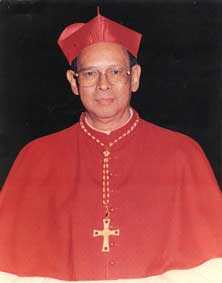
On Saturday, 20 December 2014, Cardinal Julius Riyadi Darmaatmadja, S.J., Cardinal-Priest of S. Cuore di Maria, Cardinal Metropolitan Archbishop Emeritus of Jakarta (Indonesia), turned 80, and therefore, according to the rules written in the Apostolic Constitution Universi Dominici Gregis, he lost his right to vote in any future conclave. Cardinal Darmaatmadja was born at Muntilan in the Central Java Province of Indonesia, then was the Dutch colony of the Dutch East Indies on 20 December 1934.

Cardinal Darmaatmadja was made Cardinal-Priest of S. Cuore di Maria by Pope St. John Paul II in the 1994 Consistory of Cardinals on 26 November 1994, the sixth Consistory of his pontificate. Cardinal Darmaatmadja was made a Cardinal in honour of his position as the Metropolitan Archbishop of Semarang, a position which he held from 1983 to 1996, and being one of the heart of Christianity in Indonesia at the island of Java. After that Cardinal Darmaatmadja became the Metropolitan Archbishop of Jakarta from 1996 to his retirement in 2010.

url

http://www.gcatholic.org/hierarchy/data/cardJP2-6.htm#41

Cardinal Darmaatmadja did not attend the 2013 Papal Conclave which elected Pope Francis due to his ill health and deteriorating eyesight, even though he was still a Cardinal-elector then.

May God bless His Eminence Cardinal Darmaatmadja with a blessed old age and health. May he remain strong in the faith and hopefully can perhaps still continue to work great graces and good works of love and peace just as he had once done in his long service to the Church, particularly his contributions as the shepherd of the many faithful in Indonesia, in the two Archdioceses of Semarang and Jakarta.

Kardinal-Julius-Darmaatmadj

(Above is Cardinal Julius Riyadi Darmaatmadja just after the 1994 Consistory)

The College of Cardinals now stands at 208 members in total, with 111 Cardinal-electors and 97 Cardinal non-electors. There are now a vacancy of 9 Cardinal-electors as compared to the maximum number of electors allowed in the Conclave of 120.

Next Cardinal-elector to age out (80) will be Cardinal Giovanni Lajolo (Italy), the President Emeritus of the Governorate of the Vatican City State on 3 January 2015.

Sunday, 21 December 2014 : Fourth Sunday of Advent, Memorial of St. Peter Canisius, Priest and Doctor of the Church (Homily and Scripture Reflections)

Liturgical Colour : Purple or Violet

Dear brothers and sisters in Christ, today we celebrate the fourth and therefore the last Sunday of Advent in our liturgical year. Christmas is coming soon and this week is the time traditionally prescribed by the Church as the time for the final preparation for Christmas. This Sunday we continue to observe and reflect on the major aspects of Christmas, that is Love. We have previously reflected on Hope, on Peace, and finally on Joy at the Gaudete Sunday last week.

Love is the central nature of Christmas and all that we celebrate. Indeed, love is the centre of everything, of why we still live and breathe comfortably now in this world. God loves us all, for we were created special, with the very image of our God imprinted on us, and we have been given the greatest gift of all. And what is this gift? It is the Gift of all gifts, surpassing all other gifts, that is Christ our Lord Himself, the Gift of God to all mankind.

As we have often talked about and discussed throughout this Advent season, this season is a time for ardent prayer and genuine preparation, a time for us to prepare for the ‘Adventus’ or the coming of the Lord. And after going through four Sundays in which we discern the true meaning of Christmas, we should all be ready and prepared to celebrate this Christmas meaningfully.

Otherwise, if we fail to understand the true meaning of Christmas, then we will not benefit from the richness of God’s grace which He had given to us, which will benefit us most if we can appreciate what Christmas truly is. Christmas is not just about the glorious and bountiful food, not just about the festivities and the parties, and not just about the decorations and shopping that we often do to prepare for Christmas.

Christmas is truly about love, the love of God for mankind. Surely we know that the Gospel has clearly spoken about God who loves us all so much, that He gave us His only Son, so that all those who believe in Him, the Son, will not perish but gain eternal life (John 3:16). This is the essence of Christmas, the coming of the Son into the world, so that a new Hope arises for the nations and for all the peoples.

So the aspect of love that we reflect on this Sunday, reflects this Love that God had shown us, the true meaning of Christmas that I have often emphasized. Without the love of God, there can be no Christmas, and there can be no hope for us. There can no true peace in us, if we do not embrace the peace brought to us by God’s Love in Christ. There can also be no joy in us that lasts, if we do not share in the joy of God’s Love.

What is love, brothers and sisters in Christ? Is love shown by expensive gifts or romantic activities, and all the things taught and shown to us by the world? Is it like what are being advertised to us in many things, about love? No, it is not that kind of love, for that kind of love is often selfish, love that is bound to possessions and material goods, love that is conditional and once spent, then no love is left. Sadly, this is also the reason why there are so much sorrow in the world, of broken families, of abuses in the family, of infighting and jealousy, and many others.

Love, and indeed real love, is not about all these, but is the kind of love which Love Himself, Christ, had shown us. For God is Love, and He had shown us what love really is. His love is true love, genuine and pure, unconditional and gentle. His love does not have any prerequisite, nor does He demand us to give Him something for the love He had shown us. Indeed, He loved us even when we are still sinners, and even laid down His life for us.

St. Paul mentioned in his letter to the Romans, that someone may want to give their life for the just and righteous ones, but very unlikely to do so, for those who are wicked and evil. But Jesus suffered for us, bearing all of our sins, and died for us, laying down His life, even when we are still sinners and wicked (Romans 5:8). And as Jesus had said that the greatest kind of love is for someone to lay down his life for a friend (John 15:13), then we can see indeed how much greater the love God had for us when He chose to lay down His life for us, sinners and evildoers.

God does detest our sins greatly. Sin has no place in His presence, as sin is a taint and corruption, and for He who is perfectly good and pure, sin is completely disgusting. And yet, His love is even greater than His hatred for our sins. He loves us so much that He was willing to endure all those sufferings in order to rescue us from our predicament of sin.

This is the kind of love we should really have with us, and the love we should cherish. For it is through the love of God that we can enjoy a new hope, true peace and real joy which the world and others cannot provide. His love for us is unconditional, and by His coming into the world, that we celebrate in Christmas, He offered Himself, His love and mercy for all of us, so that we may be saved.

But at the same time, we have to be vigilant and be careful, for this world certainly has done much to prevent the love of God from reaching us, as Satan is the Lord of this world, and he has all in his possessions and within his means to tempt us and lead us away from the salvation and love which God freely offers us all. And today, we celebrate the feast of a great and faithful servant of God, who is a devout and courageous defender of the Faith in God.

St. Peter Canisius was a Dutch Jesuit, who lived during the time of the Protestant ‘reformation’, when many of the faithful and the members of the Church were misguided and misled by those who have been corrupted by the lies and the confusion of the evil one. They left the Church and the teachings of our Lord Jesus Christ as faithfully kept by the Church and chose to follow their own human desires, greed, selfishness, and other evils in them.

St. Peter Canisius joined the Society of Jesus, also known as the Jesuit order, which is the spearhead of the Church’s effort at Counter-Reformation, which main goal is to counter the heresy of Protestantism and bring as many souls as possible back to salvation that exists only in the Church of God. He led the effort of Counter-Reformation in what is now Germany, where the effects of the Protestant heresy is at its worst. He preached the true faith, and it was told that his preaching was so effective that hundreds and more returned to the true Faith.

He preached and taught in many places, and he persuaded many to return to the Faith not by coercion or force, but by clear reason and clear understanding of the Faith, and through that clarity in the teaching of the Faith, his words of truth, the truth of God rang deep into the depths of the hearts of many, who were convinced to abandon their heresy and return to the Holy Mother Church.

St. Peter Canisius was very particular in the matter of the education of the Faith to the people, and his most well-known legacy is the three books of Catechism he had written, which are the clear source of the teachings of the Faith, used in many generations and saved countless souls from sins and heresies. That is why his name today is also identical with Catholic education and several Jesuit education institutes adopted his name after he was made saint of the Holy Church.

He was also credited for his great devotion to Mary, and he taught that the best way to the Lord is through His mother Mary, and he was the one who added the response in the Ave Maria or Hail Mary prayer, “Holy Mary Mother of God, pray for us sinners.” This clearly showed the importance of Mary in the lives of the faithful, for through her intercessions and prayers for us, God our Lord His Son, is most likely to hear our pleas and petitions, and mercy shall be shown us.

Why did St. Peter Canisius do all of these, brothers and sisters in Christ? Why did he go forth and preach to the heretics and those who have been lost to the darkness of the world? That is because of none other than God’s love for us, and His desire that we be found and be gathered again, that we will be lost sheep no more but belonging once more to the one flock of Christ, that is the Church.

The love of God is such, that He, although despising our sins and repelled by our wickedness, endure all of them, and even endure all forms of humiliation and rejection, none less by His own people, the ones whom He was sent to save! And yet, He persevered, out of that eternal and infinite love which He has in Him, for He is Love, and just as He wanted to share that love with us when He created us, thus, He wanted us to be loved by Him even when we have fallen into sin.

Therefore, brothers and sisters in Christ, even as we prepare for the Christmas celebrations which will be here in less than a week’s time, and even as we prepare to rejoice together with the whole world and the whole Universal Church at the celebration of the Birth of our Lord Jesus, let us never forget that this event is there in the first place, because of God and His Love for us, that is made real and concrete through His Son Jesus, who performed the act of ultimate love for us, to die for us for our sins on the cross at Calvary.

This Christmas, shall we then ponder at the love God has for us, that He was willing to enter into our world, and indeed into our lives and dwell within us? Let us never forget that Christ is at the heart of Christmas, and at the very heart of that celebration and joy is the Love of God, the eternal and undying love Christ had shown us through the cross, the very purpose of His coming into this world, and thus to liberate us from the chains of sin.

Sin no more, repent, change our ways and be wholeheartedly devoted to God from now on, that this Christmas and the next ones will be decidedly different from the past ones, that this time, we truly understand and fully embrace the love of Christ, the true meaning of Christmas. God bless us all and may St. Peter Canisius intercede for us always with the Blessed Mother of our Lord, Mary our mother. Amen.


First Reading :

https://petercanisiusmichaeldavidkang.com/2014/12/19/sunday-21-december-2014-fourth-sunday-of-advent-memorial-of-st-peter-canisius-priest-and-doctor-of-the-church-first-reading/


Psalm :

https://petercanisiusmichaeldavidkang.com/2014/12/19/sunday-21-december-2014-fourth-sunday-of-advent-memorial-of-st-peter-canisius-priest-and-doctor-of-the-church-psalm/


Second Reading :

https://petercanisiusmichaeldavidkang.com/2014/12/19/sunday-21-december-2014-fourth-sunday-of-advent-memorial-of-st-peter-canisius-priest-and-doctor-of-the-church-second-reading/


Gospel Reading :

https://petercanisiusmichaeldavidkang.com/2014/12/19/sunday-21-december-2014-fourth-sunday-of-advent-memorial-of-st-peter-canisius-priest-and-doctor-of-the-church-gospel-reading/


Epistle (Usus Antiquior) :

https://petercanisiusmichaeldavidkang.com/2014/12/19/usus-antiquior-fourth-sunday-of-advent-i-classis-sunday-21-december-2014-epistle/


Gospel (Usus Antiquior) :

https://petercanisiusmichaeldavidkang.com/2014/12/19/usus-antiquior-fourth-sunday-of-advent-i-classis-sunday-21-december-2014-holy-gospel/