(Usus Antiquior) Commemoration of All the Faithful Departed, All Souls’ Day (Feria II Classis) – Monday, 3 November 2014 : Epistle

Epistle for the First Mass

Lectio Epistolae Beati Pauli Apostoli ad Corinthios – Lesson from the Epistle of Blessed Paul the Apostle to the Corinthians

1 Corinthians 15 : 51-57

Fratres : Ecce, mysterium vobis dico : Omnes quidem resurgemus, sed non omnes immutabimur. In momento, in ictu oculi, in novissima tuba : canet enim tuba, et mortui resurgent incorrupti : et nos immutabimur.

Oportet enim corruptibile hoc induere incorruptionem : et mortale hoc induere immortalitatem. Cum autem mortale hoc induerit immortalitatem, tunc fiet sermo, qui scriptus est : Absorpta est mors in victoria. Ubi est, mors, victoria tua? Ubi est, mors, stimulus tuus?

Stimulus autem mortis peccatum est : virtus vero peccati lex. Deo autem gratias, qui dedit nobis victoriam per Dominum nostrum Jesum Christum.

English translation

Brethren, behold, I tell you a mystery : we shall all indeed rise again, but we shall not all be changed. In a moment, in the twinkling of an eye, at the last trumpet; for the trumpet shall sound, and the dead shall rise again incorruptible, and we shall be changed.

For this corruptible must put on incorruption, and this mortal must put on immortality. And when this mortal had put on immortality, then what is written shall come to pass. Death is swallowed up in victory. O death, where is your victory? O death, where is your sting?

Now the sting of death is sin, and the strength of sin is the Law. But thanks be to God, who had given us the victory through our Lord Jesus Christ.

Epistle for the Second Mass

Lectio libri Machabaeorum – Lesson from the Book of Maccabees

2 Maccabees 12 : 43-46

In diebus illis : Vir fortissimus Judas, facta collatione, duodecim milia drachmas argenti misit Jerosolymam, offerri pro peccatis mortuorum sacrificium, bene et religiose de resurrectione cogitans (nisi enim eos, qui ceciderant, resurrecturos speraret, superfluum videretur et vanum orare pro mortuis) : et quia considerabat, quod hi, qui cum pietate dormitionem acceperant, optimam haberent repositam gratiam.

Sancta ergo et salubris est cogitatio pro defunctis exorare, ut a peccatis solvantur.

English translation

In those days, the most valiant man Judas, making a gathering, sent twelve thousand drachmas of silver to Jerusalem for sacrifice to be offered for the sins of the dead, thinking well and religiously concerning the resurrection (for if he had not hoped that those who were slain should rise again, it would have seemed superfluous and vain to pray for the dead); and because he considered that those who had fallen asleep with godliness, had great grace laid up for them.

It is therefore a holy and wholesome thought to pray for the dead, that they may be loosened from sins.

Epistle for the Third Mass

Lectio libri Apocalypsis Beati Joannis Apostoli – Lesson from the Book of the Apocalypse of Blessed John the Apostle

Apocalypse 14 : 13

In diebus illis : Audivi vocem de caelo, dicentem mihi : Scribe : Beati mortui, qui in Domino moriuntur. Amodo jam dicit Spiritus, ut requiescant a laboribus suis : opera enim illorum sequuntur illos.

English translation

In those days I heard a voice from heaven, saying to me, “Write : blessed are the dead, who die in the Lord.” “From henceforth now,” said the Spirit, “that they may rest from their labours, for their works follow them.”

Sunday, 2 November 2014 : Feast of All Souls, 31st Sunday of Ordinary Time (Homily and Scripture Reflections)

Liturgical Colour : Purple/Violet or Black

Dear brothers and sisters in Christ, today we celebrate the Feast of All Souls, which means that we celebrate the memory of all those who have departed this life before us into the afterlife. The souls of the dead are separated from their bodies, and while their bodies sleep, their souls await the resurrection of the dead at the end of time, during the Last Judgment, when Jesus the King will come again and judge all the living and the dead, and this is part of our faith.

We believe that all the souls of the righteous will be judged by God to belong to Him, and as the Last Judgment shows, they will be counted among the saved ones, and be granted the eternal life and happiness which God had promised all of us. Meanwhile, the souls of the wicked and all those who had done evil in life, and never repented from those evils, will be cast into the eternal damnation and punishment in hell, with Satan and his angels.

Why do we then celebrate today, as the day of commemoration of all the souls who have departed this life? That is because, our Faith believes that, while the righteous ones and those who have done justly in life, will enter heaven directly, being found worthy of it, who are the saints, whose feast day we just celebrated yesterday, the solemnity and feast of All Saints. And those who are wicked and evil in life, they would be condemned to a state of eternal death and suffering, cast into hell and the lake of fire.

But how about those who were with sin, but yet also were righteous? Many of us are in this state, as we commit venial sins and sometimes even mortal sins, and yet in our lives we also commit things that are good and righteous in the sight of God? God is loving and merciful to us, brothers and sisters in Christ, and therefore, if we had been faithful and righteous in life, despite of our sins, we will not be cast into hell and suffer for eternity without hope.

That is because hell is reserved only for those who constantly refused to listen to the Lord and commit mortal sins, and other form of sins, one after another and failing to seek the Lord’s mercy. Hell is however, not exactly a place, but a state, in which we are separated from God and His love for eternity, without hope of redemption and salvation, as we ourselves have rejected the salvation in Jesus in the first place, through our actions.

The suffering is because of the unimaginable nature of losing God’s love and presence in our lives, which brought despair and sorrow so great that it is painful. This is certainly not the fate which God intended for all those who remain faithful to Him. But at the same time, for many of us, we are still not yet worthy of heaven, for the glory of heaven is reserved for those who are truly just alone, and sin has no place in the presence of God. Remember that God is just and His hatred against sin is as great as His mercy and love for us all.

Therefore, our Faith has the concept of what is called purgatory and limbo, in which the souls of the dead and all the souls of those who have not been baptised and yet are righteous among the nations, remain during their sojourn before they are worthy of heaven, suffering temporarily for the consequences of their sins. In the purgatory and limbo, the souls who are there are not without hope, unlike those who are in hell, but they also long for the happiness and joy of heaven which the saints enjoy, and that temporal separation from God, even though not permanent like those souls in hell, bring them great longing and great suffering.

Therefore, on this commemoration of the All Souls’ Day, we commemorate those souls of our brethren, who had departed before us, and we pray for them, asking also the intercession of the saints and imploring the Lord for His generous mercy, to be given to those souls who now suffer in purgatory, for the venial sins and other impurities which prevent them from truly being with God.

But at the same time, this occasion should also be a reminder for us who are still alive, that we should take heed of this fate of the souls suffering in purgatory, and even more so, that we take heed of what is going to happen to the wicked and those who embrace evil, who will be cast down into hell. We have to be vigilant in our own lives, and guard our actions, that evil will not have its way into us, and cause us to commit sin.

Brothers and sisters in Christ, our Church in fact consist not just all of us who believe in Christ in this world today, as this is just one component of the Church of God. We are the Church Militant, who are still living and walking on this world, fighting constantly and regularly in a spiritual battle against the forces of evil, and resisting all forms of sin, we ought to lead a righteous life, to guard against Satan and to be justified in our faith that we merit salvation.

But our Church also consists of the Church Triumphant, which consists of the holy saints, men and women who had been found worthy to merit the glory of heaven, and yet, as I have mentioned yesterday, and as we celebrated the feast of All Saints yesterday, they are still very much together with us, and they constantly pray for our sake, and being close to the throne of God, they are our intercessors, asking for God to show us His mercy and love.

And lastly, our Church also consists of the Church Suffering, namely the souls of the dead who are still in purgatory, suffering for their sins, on their path to heaven, and yet at the same time, they are again also very much still with us, as even death does not part them from us. They are all aware of their sins and how these sins had prevented them from directly enjoying the fullness of God’s promise and how they had suffered because of that.

Thus, they too are praying for our sake, imploring the Lord to send us reminders and strength, to overcome our evils and wickedness, while we still have time, and not to wait until it is too late for us. As at best, our sins will prevent us from being found worthy of heaven directly, and we will end up in purgatory just as they are now in purgatory, or even at worst, that we may end up falling into the endless pit of hell, without any way or hope of escaping it.

Therefore, on this day, we really should use the opportunity, to pray for our beloved ones, and also for every other souls who have departed this life, that the Lord will show mercy on them. We should ask the saints for their intercession, that they will also pray for the sake of the souls in purgatory, as well as pray for us too, so that all of us may be eventually found worthy by the Lord and escape suffering towards eternal life and salvation, together with them the saints, in the glory of heaven.

Let us commit all of us to prayer, that we pray for all the members of the Church, particularly all of us the Church Militant, fighting constantly against evil of this world, and those in purgatory, the Church Suffering. We should pray for one another and help one another to guard ourselves from wickedness, that God’s promised salvation will bear fruit in us, through our faith, our repentance and our devotion to Him.

Nevertheless, this day of All Souls remind us yet again, and the Scriptures also affirmed that we should have no reason to fear death, or fear the condemnation and suffering of hell at all. That is because, even though because of sin, our disobedience against God, we will die, but we will not die forever. Jesus our Lord Himself had made the ultimate proof, when He died on the cross for us, and then rose in glory and majesty, showing that He had conquered death.

Therefore, even as we remember the dead today, and even as we reflect on the nature and inevitability of death to all of us, we have to always remember and put our complete hope and trust in our Lord Jesus, our Risen Lord and Saviour. Through His death we have also died to our sins and to our past lives, and through His Resurrection we have been brought into a new life, a life that is justified by faith and by our love for God.

That is why the sacrament of Baptism is so important, just as the Scriptures mentioned, that through the waters of baptism, when we are immersed in it, we have been ‘drowned’ unto death, the death from our old lives, filled with sin, impurities and wickedness of our heart and soul, and we have been remade into a clean, pure slate, which the Lord transformed into a new life through His resurrection. We did not remain in death, but we rise with Him in glory, if we choose to follow Him faithfully and devotedly.

Death and sin has no say over us, brothers and sisters in Christ, if we remain faithful to the Lord, and if we put our trust solely in Him alone. The belief in the resurrection is central to our faith, and as long as we believe in this, we shall have the eternal assurance of life and salvation, which our loving God had made through Jesus His Son. The souls in purgatory and limbo also knows this, and they prayed ceaselessly for the end of their suffering, when their sins are made clean, and they once again reunite with their Lord. The Lord had indeed won the final victory over death.

Therefore, brothers and sisters in Christ, on this occasion today, let us first be reminded that the consequences of sin is death, and death is fatal for us, if we do not make the conscious effort to detach us from those sins, then we are in great danger of falling into eternal damnation. Let us not be deceived by our own glory and achievements, for remember that we are all mortals, and eventually whatever we have in this world, will mean nothing if we have not done them in the Name of God.

Let us instead, look upon the examples of the holy saints, who have put their trust in God, and walked in His path. They have abandoned their wicked past, and cast away their old lives of sin, and in return they received the glory of God, and the fullness of divine promise made through Jesus, our Lord. Following the examples of the saints is a foolproof and guaranteed path for us, that we may also become justified in our faith, and therefore be assured in our own salvation.

And lastly, let us never forget those who have gone before us, and those whom we have loved, who have predeceased us, and now who may be in purgatory, seeking to be united in complete fullness with God. We pray for them, and ask the saints for their intercession for the sake of these souls in purgatory and limbo as well, that they may be delivered from the suffering which they now endure for their sins.

May after their sufferings, their sins are cleansed and they may be brought into full and glorious unity with God, and may we one day also be with them, in the glory of heaven. Let us put our trust and faith ever in God, who is Lord of the living and the Judge of all, knowing that if we do so, death will not have its final say on us, and we will receive the fullness of our Lord’s promise of eternal life and happiness.

May all the souls of those departed in the Lord, receive the grace and love of God, rest in peace, the peace of Christ our Lord. And may we all who still walk in this world continue to walk faithfully in the way of our Lord, emulating the examples of the saints, that we all, together as one Church, Church Militant, Church Triumphant, and Church Suffering be one day be reunited fully in God’s glory when He comes again, and may we praise Him for eternity thereafter. Amen.


First Reading :
https://petercanisiusmichaeldavidkang.com/2014/10/31/sunday-2-november-2014-feast-of-all-souls-31st-sunday-of-ordinary-time-first-reading/

Psalm :
https://petercanisiusmichaeldavidkang.com/2014/10/31/sunday-2-november-2014-feast-of-all-souls-31st-sunday-of-ordinary-time-psalm/

Second Reading :
https://petercanisiusmichaeldavidkang.com/2014/10/31/sunday-2-november-2014-feast-of-all-souls-31st-sunday-of-ordinary-time-second-reading/

Gospel Reading :
https://petercanisiusmichaeldavidkang.com/2014/11/01/sunday-2-november-2014-feast-of-all-souls-31st-sunday-of-ordinary-time-gospel-reading/

(Usus Antiquior) Twenty-First Sunday after Pentecost (II Classis) – Sunday, 2 November 2014 : Homily and Scripture Reflections

Dear brothers and sisters in Christ, today we heard about how important it is for us to practice our faith with real commitment and zeal, and not just empty words and proclamations. And we cannot be hypocrites in our faith, like the example which our Lord Jesus gave us, in the wicked and unforgiving servant, who was forgiven in his own debts, but did not forgive the debts of others whose debts are even smaller then his own debt.

How is the parable of the wicked servant, as told by Jesus, relevant to us? It is indeed relevant, as the actions of the wicked servant and the other servants, are all in fact representative of our own actions, and our own dispositions in life. The wicked servant was in fact representative of the Pharisees and the chief priests, whom the Lord rebuked for their actions in life. But this could also easily mean the same for us, as it is easy for us to follow in their footsteps too.

How is this so? That is because we have to first realise the fact that we are all sinners, and sin is like a debt, a debt which we owe the Lord. Not that the Lord owns sins and neither it is that the Lord is the One who gave us sin. No, it is not. Sin is the disobedience of mankind against the will of God, and therefore, it directly and indirectly refers to the lack of love and honour which we should have given and presented to God.

Thus, when we sin before the Lord, we owe the Lord the love and honour, which we should have given to Him, which we instead gave to Satan, the father of sin and lies. And the more we sin, thus the greater is our debt of love towards God, and the more we have to pay back, just as the wicked servant owed the master a lot of money, to the point that he was unable to pay it back.

And this is why our Lord Jesus came in, for He is the Word incarnate into flesh, the Son of God who had been sent into the world by the Father, so that by what He had done, via His ultimate sacrifice of love on the cross, He offered Himself as a worthy Lamb of God, the ultimate price to be paid for our sins, the whole mountains of our sinfulness, indeed! For the sum of all of our sins are indeed so great, that it may seem to us at first that they are insurmountable.

But what is impossible for men, is indeed possible for God. Nothing is impossible, and just as the master forgave all the debts of the wicked servant, the Lord Jesus also absolved the sins of mankind when He sacrificed Himself on the cross, and gave justification and salvation to all mankind. But then, it cannot stop here, just as the parable has a continuation.

The wicked servant also had his fellow servants who owed him money, far smaller in amount than what the wicked servant had once owed his master. Yet, he did not emulate the example of his master, and persecuted his fellow servant just for the sake of that small debt, which he refused to forgive. This is a reality of our faith, and one which may easily occur to us as well.

The Pharisees and the teachers of the Law, no matter how much and how often they have hated Jesus and tried to undermine His works, were also forgiven their sins by Jesus, who even forgave them again on the cross, when He asked the Father not to take into account their actions filled with sin. And yet, despite this, they persecuted their fellow men, for their little sins, which according to them, taints a person and makes him or her unworthy of salvation. They were unbending in their rules and persecuted and ostracised the people for even the smallest matters of the Law.

And how about us, brothers and sisters in Christ? It is the same. We have also been forgiven our sins, but we do not follow the example of Christ in many if not most situations. How often can we remember that we do not forgive or take great offence at one another, even our own close family members, even for the smallest of matter? How often is it that we refused to forgive our brethren just because he or she had wronged us, and we remained in our anger and vengeance?

Therefore, brothers and sisters in Christ, the readings today from the Scripture made it very clear to us, how we have to take heed of the Lord Jesus’ actions and teachings, that is to wear all the aspects of our faith upon us, to guard over the possible temptations and advances of the devil. The breastplate of faith is the core of our faith in God, in the One who had forgiven us our debts, and give us a new chance in life, which however will not be complete, if it is not accompanied by action filled with justice, love and truth.

This means that our actions must emulate the actions of Christ, and we have to forgive one another the mistakes which we have committed to each other. We have to show justice in our actions to our fellow men, and if the Lord had forgiven us from such a great debt and sin, who are we not to follow His examples, and instead be like the wicked servant who persecuted his fellow servant for so small a debt?

Let us take heed of this, lest we suffer the same fate as the wicked servant, who was thrown into jail, into the darkness, having to pay every cent of his debt. And as mentioned, the great extent of our sins is immeasurable and insurmountable, by us. And therefore, the result of disobeying the Lord and following the path of the wicked servant is eternal suffering, or hell.

We certainly do not want this, and thus, let us change our ways, and become better children and servant of our God, that we may be worthy of life together with Him, in full bliss and happiness, forever. Amen.

Thursday, 23 October 2014 : 29th Week of Ordinary Time, Memorial of St. John of Capestrano, Priest (Homily and Scripture Reflections)

Liturgical Colour : Green or White (Priests)

Brothers and sisters in Christ, today we have to come to realise of the nature of God and His coming into the world, when He came to save us through Jesus Christ. As Jesus Himself had said, that His coming into the world would not cause peace but divisions and conflicts, and in those, many would suffer because of the division and the oppositions.

However, in order to truly understand what Jesus had meant in His words we heard today in the Gospel, we have to understand the nature of this world and how things work here. Remember that this world has been tainted by darkness and evil ever since sin entered into the world through men. Men who have been tainted by sin also followed the ways of evil and sin, tainting their hearts and the world with their unworthiness.

And in the process, they closed themselves and their hearts to the Lord. In short, the ways of this world is diametrically opposite to that of the way of the Lord. Ever since the beginning of time, when men disobeyed the will of God and followed their own desire and Satan’s words, the actions of men had come in direct conflict and opposition to the acts and the will of God.

God did not come into the world to bring violence and destruction upon it, and neither did He want to condemn the world and bring ruin to it by causing intentional conflict and infighting among men. Instead, we have to realise that it is our own disobedience and unwillingness to obey to the will of God which brought us into direct conflict with the Lord Jesus and all that He had taught the world through His disciples.

Thus, those who follow the words and teachings of Christ, by accepting baptism and becoming one with the Body of the Church of God will inevitably come into direct conflict and opposition against those who hold fast to the ways of the world, or those who listened to Satan and his lies instead of the truth in God. As Christ Himself repeatedly said to His disciples and the people, that those who followed Him and walked in His ways would suffer rejection and persecution just as Jesus Himself had been persecuted.

The concrete proof of this saying by Jesus came not sooner than after Jesus Himself had been betrayed, brought to the courts of Pilate and condemned to death, and after His death and resurrection. As the Church grew and spread due to the works of the Holy Apostles and the disciples of Christ, so does the unity of the family of the people of God, the Jews was torn apart. And it was St. Paul himself, once known as Saul, who showed the reality of what Jesus had told His disciples.

Many of the righteous and the faithful were hunted down and persecuted by Saul and his allies in the Pharisees and the Sadducees, who were firmly opposed to Jesus and His ways, just in the same way that Satan and the world came in direct opposition to the ways of the Lord. Eventually Saul himself repented from his sins and followed the Lord, being shorn off from his former allies and benefactors the Pharisees, and as St. Paul, he was often hunted, condemned and persecuted by the same people who had considered him friend and ally.

During the time of the Roman Empire itself, when the persecutions of the faithful were common, many families were torn apart when one or more members of their families chose to abandon the old and sinful ways of the Roman polytheistic paganism, and decided to follow the way of the Lord. Many martyrs and saints were made in this way, when the faithful ones refused to recant their faith in God and were martyred in many painful and even gruesome ways, in the defense of their faith.

Brothers and sisters in Christ, at the end of the day, we have to realise that conflict and difficulties are inevitable if we choose to follow the way of the Lord and remain faithful to it. We cannot become disciples and followers of Christ if we do not want to suffer rejection and persecution which may come our way at any time. What is important however, is whether we are capable of overcoming our own hatred, desire for violence and revenge, just as what the world had shown to us.

Many of the martyrs had led such an exemplary and wondrous life, and they acted with such love and offered forgiveness to their persecutors, that many of those who had persecuted them, including even some members of their own families, in turn became believers and repented from their sins. This is exactly what we should also do, brothers and sisters in Christ, not to oppose the persecution and violence with our own hatred and violence, but instead with love.

That done, we may play our part in bringing more and more souls to salvation in God, and through Him we may be justified for our hard works. And today, we also celebrate the feast of a saint, whose life may become even further inspiration for us, that is of St. John of Capistrano or Capestrano, an Italian priest who lived during the time of the early Renaissance, known for his zealous and fiery preaching and by the title of the ‘Soldier Priest’ due to his role in fighting the infidel Ottoman Turks in a crusade.

St. John of Capistrano was a friar who went about many parts of Europe, the northern portions in particular, to spread the faith and the orthodox faith among the people of God. His sermons frequently drew thousands and tens of thousands of people. He was known for his hard ways of opposing the Jewish people, who in their influential positions continued to deny the Lord and refused to believe in the truth of Christ.

He also stood up against the threat of the Ottoman Turks when they rose in power and might, conquering many Christian nations and brought many of the faithful under slavery and forced them to recant their faith and reject Christ under the threat of death. He fought faithfully in the holy crusade and he died of a plague after the conclusion of the successful fight for the defense of the faith.

Brothers and sisters in Christ, the example of St. John of Capistrano and the many other martyrs and saints of our faith showed how we have to understand what is required from us in our faith. Sometimes, in order to be faithful to God, we have to forgo our relationship and connections with others, as we have to choose, between God and our relationship with men. We have to realise that at times, we are required to choose and stand up for our faith, and we cannot sit on the fence.

May Almighty God therefore awaken in us the desire to bring others to Him, that while we suffer rejection and persecution from others for our faith in Him, our actions and deeds founded firmly on the tenets of faith may be source of inspiration on countless others and also those who persecuted us, that they too may see the light of Christ as we did, and thus hopefully open themselves to the Lord and give themselves for true conversion to the faith. God bless us all. Amen.

Thursday, 23 October 2014 : 29th Week of Ordinary Time, Memorial of St. John of Capestrano, Priest (Gospel Reading)

Liturgical Colour : Green or White (Priests)

Luke 12 : 49-53

At that time, Jesus said, “I have come to bring fire upon the earth, and how I wish it were already kindled! But I have a baptism to undergo, and what anguish I feel until it is over!”

“Do you think that I have come to bring peace on earth? No, I tell you, but rather division. From now on, in one house five will be divided : three against two, and two against three. They will be divided, father against son and son against father; mother against daughter and daughter against mother; mother-in-law against her daughter-in-law, and daughter-in-law against her mother-in-law.”

Wednesday, 22 October 2014 : 29th Week of Ordinary Time, Memorial of Pope St. John Paul II, Pope (Homily and Scripture Reflections)

Liturgical Colour : Green or White (Popes)

Dear brothers and sisters in Christ, today we celebrate together for the very first time, the feast of a great saint, and one whose memory is certainly still very clear in the minds of most of us, except for the very youngest ones among us. If we are at an age of adulthood or above, that is eighteen or beyond, we would have remembered how we once know of Pope John Paul II as our Pope, and thus as the Vicar of Christ and the Successor of St. Peter the Apostle.

And just earlier this year in April, that together with another great Pope of the last century, Pope John XXIII, the Pope who initiated the Second Vatican Council that they were together raised to the glory of the Altar of God as the holy saints of the Church, worthy of heaven, of praise and also worthy of being asked for intercessions from, to pray for us sinners still in this world.

To many of us, Pope St. John Paul II was our Pope, the Pope who had filled so much of our faith life. His very long reign, the second longest among the verified reigns of Popes, third if St. Peter himself is included, the reign of twenty-seven years certainly is of a very significant to the whole Universal Church. Many of us did not even know any other Pope than this saint, until he passed away just less than a decade ago.

However, even though many of us knew him, and even though many of us think that he was a great man and a great Pope, how many of us actually knew who he was and what he had done for the Church and for the faithful people of God? It is likely that many of us do not have the full image and idea of who he really was and what he has done. And many of us might have wrong impressions about him through misinformations and miscommunications of the world and the media.

That is why, let me share a bit first on who Pope St. John Paul II was. He was a Pole, the first ever Pope to originate from Poland, an Eastern European country, which at that time had the unfortunate fate of being overrun by the two great powers that were its neighbours. Pope St. John Paul II was born Karol Jozef Wojtyla in Krakow, Poland, just two years after Poland regained its independence from the Russian Empire after a period of more than a century.

But as the life of Pope St. John Paul II would testify, Poland was to be subjected to a series of unfortunate and very grim events, subjugation first by the forces of the NAZI Germany and then later under the dominance and hegemony of the Communist Soviet Union. Nevertheless, the one fact most if not all of us knew well was that the central role which Pope St. John Paul II would play in bringing down the dreaded Communism, not just in Poland, but also in almost the whole world.

Pope St. John Paul II himself did not have an easy life, as his mother died young when the then Karol Wojtyla was still very young, and he quickly lost his siblings to various reasons, including his elder brother whom he respected a lot, to a disease. His father passed away just at the start of the great miseries to befell Poland, and Pope St. John Paul II, Karol Wojtyla was left all alone in the world, without a family, but yet with God and His Blessed Mother at his side.

If we are wondering why Pope St. John Paul II chose the motto which would be famously accredited and associated to him, then we do not need to look further from the fact how he had persevered through many sufferings and difficulties, left all alone in the world, but he made it through the help and the intercession of the Blessed Virgin Mary, Mother of God.

His motto was Totus Tuus, the abbreviation of the full motto of Totus Tuus suum Maria, or ‘Blessed Virgin Mary, I am all yours’. This motto showed the great devotion which Karol Wojtyla, later Pope St. John Paul II had for Mary, and he was indeed known as one of the great Marian Popes who highly promoted the veneration and devotions to the Blessed Virgin.

This is the same kind of attitude which we should also have in our faith life and in our lives in general. We have to devote ourselves to the Lord and also to His Blessed Mother Mary, fully and completely if we are to allow God to come and work His wonders in us, and through us He can indeed do many things for the benefit of the world and for His people, as He had shown through how He worked through the person of Pope St. John Paul II, who should indeed be the role model for all of us in living our faith.

He endured difficulties after difficulties, persecutions after persecutions, and he frequently brushed closely with death. Yet, God had indeed had a plan for him, and every time, the Lord and His Blessed Mother guided him and delivered him from harm’s path. He suffered indeed, but he knew that he suffered for the sake of the Lord, who would indeed be bound to listen to the pleas of His people and take action.

He stood up for the faithful, when he, as the Metropolitan Archbishop of Krakow, one of the most influential and outspoken Archbishops and prelates in Poland and in Communist-dominated Eastern Europe, defended the right of his sheep, the flock of God for a place to worship God, a church to be built in the vicinity of the city of Krakow, at a locale known as Nowa Huta, the new city, supposedly the hallmark in the Communist government’s project to establish a utopian Communist city without a church building.

The then Archbishop Karol Wojtyla led the faithful people of Nowa Huta in a defiant rally and celebration of the Holy Mass, commemorating the establishment of a church building in that city championed by the Communists as the model of a utopian society without the faith. He gave the people the foundation stone of the church building, originating from the catacombs of St. Peter the Apostle, the rock upon whom the Lord had established His Church, and blessed by Pope Paul VI, now known as Blessed Pope Paul VI, beatified just last Sunday by our current Pope, Pope Francis.

Even after he was elected to the Papacy, to succeed as the Vicar of Christ and the Successor of St. Peter the Apostle, Karol Wojtyla, then on known as Pope John Paul II, continued his works for the good of the Church as he had always done, defending the orthodox and true teachings of the faith, and also to help the people of God suffering persecution in the Communist regimes of Eastern Europe.

We knew how Pope St. John Paul II had survived an assassination attempt, although he was grievously injured by it, on the day of our Lady of Fatima’s apparition in 1981. He attributed his survival to the ever caring and loving Mother of God, to whom he had devoted himself fully to, and to His Son, that he was again brought from the brink of death to continue to serve the people of God. We also knew how he forgave the one who tried to assassinate him.

And even to the end of his life, suffering from Parkinson’s disease which increasingly debilitated him and made it very difficult for him to continue to work as the leader of the Universal Church, he persevered on, and in his suffering, through which he share the suffering of Christ, he became a source of priceless inspiration for countless numbers of the faithful.

Brothers and sisters in Christ, after that summary of the life and the actions and contributions of Pope St. John Paul II, how are they relevant to the readings we had heard today, and how ultimately does do they relate to our own lives? It is in fact quite obvious that while every one, every single children of God will encounter different things on their respective journeys to God, but the actions of Pope St. John Paul II, Karol Wojtyla can indeed be a model and inspiration for all of us.

In the First Reading, St. Paul in his letter to the Church and the faithful in Ephesus revealed what had been entrusted to him in the graces and wisdom of God, that he might enlighten and show that wisdom to the people of God, so that all those who heard his words may be moved within their hearts and souls, and decide to seek the Lord their God with all of their hearts’ devotion.

In the same way therefore, Pope St. John Paul II, his predecessors and successors, the bishops and priests who had given themselves completely to the service of God, also received the same graces and wisdom to teach the Lord’s words and laws to His people, so that through them, many would be saved. But this does not mean that they alone are the ones who can do this.

Yes, brothers and sisters in Christ, each one of us at our own baptism, when we were welcomed into the Church of God, and now as a member of that one and only Church, we all have our own parts to play in the salvation of souls and in the good works of evangelisation done by the Church. We have been given the same graces, wisdom and blessing, and indeed it is part of our responsibility to bring the people of God, especially those who still live in darkness, into the light of Christ.

This is also what Christ had done, by bringing together the separated people of God, and grant them His peace. Ever since mankind had disobeyed God and followed their own desires, they had walked their own paths and in contrary to each other, each following their own hearts’ desires and inevitably leading to conflicts, violence and many other evils. Ever since the day of the Tower of Babel, mankind had been divided against one another and peace as well as harmony were lost.

It was therefore the peace of Christ, which He made by His works and His sacrifice on the cross, which offered mankind a new hope, that they may abandon their old lives of sin and darkness, of disobedience and injustice, of hatred, fear and violence, so that they may receive the love and peace of the Lord, by following Jesus and walking in the path He had prepared for them.

And in the Gospel, this responsibility which we have as members of the Church is reiterated yet once again by the parable of Jesus our Lord, on the master and the steward. This parable tells us clearly that we are indeed stewards appointed by God, and with a certain purpose, that is to love one another, and to spread the Good News which had been given to us by God, to those who still have yet to hear it.

That is what the faithful servants will do, unlike the unfaithful servants, which examples are the Pharisees and the teachers of the Law, when they failed not only to lead the people in faith by example, but they have cast obstacles in the path of the people of God, and in their selfishness, they abused their power and authority, like the unfaithful and bad servants. And when the Master comes back, that is the Lord, He will rebuke them without mercy and cast them out of His presence, precisely what He did with those Pharisees and hypocrites.

Therefore, this is a stern and clear reminder for us to avoid following the path of those Pharisees and avoid succumbing to our human desires, greed, pride, arrogance, hatred, lack of love, unfaithfulness, sloth and many others. Instead, we should open wide the doors of our heart to Christ our Lord, inspired by the words of Pope St. John Paul II, ‘Aprite le porte a Christo!’ which means, ‘Open wide the doors to Christ!’.

When we open wide the doors of our hearts to Christ, in essence we allow Him to enter into our hearts and transform us from within, allowing His love to fill us up, and therefore, it will affect our actions and deeds, which will then be based no longer on our own selfish desires, but instead upon the love of God. We must not be afraid to seek the Lord for help, and indeed we should entrust everything we have to God and to His Blessed Mother Mary just as Pope St. John Paul II had done.

Do not tarry and do not delay, for as much as God is merciful and loving, and as much as He desires to embrace us with His love and forgive us our sins, nothing good will come until we take the initiative and embrace His mercy first. Therefore, it is imperative that we realise that God hates sin and all wickedness, and if we delay and wait, and wait and wait, eventually time will catch up to us, and at the time that we do not know, the Lord will decide that our time is up, then no amount of regret or even repentance will help.

Therefore, brothers and sisters in Christ, let us help one another, working with one another to take care of ourselves, that we do not open ourselves to sin and evil, and so that we may allow the Lord to come into us, and to transform us with His love and grace. May Almighty God bless us, empower us and strengthen us, and through the intercession of Pope St. John Paul II, may all souls come eventually to salvation in God, with the help of His Blessed Mother Mary, the Mediatrix of all graces. Amen.

Tuesday, 21 October 2014 : 29th Week of Ordinary Time (First Reading)

Liturgical Colour : Green

Ephesians 2 : 12-22

At that time you were without Christ, you did not belong to the community of Israel; the covenants of God and His promises were not for you; you had no hope and wer without God in this world. But now, in Christ Jesus and by His Blood, you who were once far off have come near.

For Christ is our peace, He who has made the two peoples one, destroying in His own flesh the wall – the hatred – which separated us. He abolished the Law with its commands and precepts. He made peace in uniting the two peoples in Him, creating out of the two one New Man. He destroyed hatred and reconciled us both to God through the cross, making the two one body.

He came to proclaim peace; peace to you who were far off, peace to the Jews who were near. Through Him we – the two peoples – approach the Father in one Spirit. Now you are no longer strangers or guests, but fellow citizens of the holy people : you are of the household of God. You are the house whose foundations are the Apostles and prophets, and whose cornerstone is Christ Jesus.

In Him the whole structure is joined together and rises to be a holy temple in the Lord. In Him you too are being built to become the spiritual sanctuary of God.

Monday, 20 October 2014 : 29th Week of Ordinary Time (First Reading)

Liturgical Colour : Green

Ephesians 2 : 1-10

You were dead through the faults and sins. Once you lived through them according to this world and followed the Sovereign Ruler who reigns between heaven and earth and who goes on working in those who resist the faith.

All of us belonged to them at one time and we followed human greed; we obeyed the urges of our human nature and consented to its desires. By ourselves, we went straight to the judgment like the rest of humankind.

But God, who is rich in mercy, revealed His immense love. As we were dead through our sins, He gave us life with Christ. By grace you have been saved! And He raised us to life with Christ, giving us a place with Him in heaven.

In showing us such kindness in Christ Jesus, God willed to reveal and unfold in the coming ages the extraordinary riches of His grace. By the grace of God you have been saved through faith. This has not come from you : it is God’s gift. This was not the result of your works, so you are not to feel proud.

What we are is God’s work. He has created us in Christ Jesus for the good works He has prepared that we should devote ourselves to them.

Sunday, 19 October 2014 : 29th Sunday of Ordinary Time, Mission Sunday and Memorial of St. John de Brebeuf and St. Isaac Jogues, Priests and Martyrs; and St. Paul of the Cross, Priest (Homily and Scripture Reflections)

Liturgical Colour : Green

Brothers and sisters in Christ, today we celebrate together the love of God for us in the Eucharist through which He gave us all His own Body and Blood, so that we who share in them, we may receive salvation in our God, and be freed from the bondage of sin and death. And we are reminded of this fact in the readings from the Holy Scriptures which we read today.

In the first reading, taken from the Book of the prophet Isaiah, the Lord revealed to Isaiah His servant, of the coming of salvation for the people of Israel, in the person of Cyrus, the King and Emperor of the Persian Empire, who would deliver the people of God the salvation which they would come to await for. For a background understanding, I will share with you the significance of this passage from the Book of Isaiah by telling you the historical background behind it.

At the time the revelation was made to the prophet Isaiah, it was at the time just as the northern kingdom of Israel fell to the conquering power of the Assyrian Empire. The people of the northern kingdom was unfaithful and were engrossed in wickedness and in the worship of the pagan gods. As such, they were handed over to the hands of their enemies and brought away as slaves and exiles from the lands promised and given to their ancestors.

Meanwhile, in the kingdom of Judah, the southern kingdom, the people of God there were also not always faithful. They also from time to time rebelled against the will of God, preferring to follow their own ways and disobeyed the Lord’s instructions. At the time of the prophet Isaiah, during the reign of King Hezekiah of Judea, the consequences for these were not so apparent yet, but then soon they too would suffer the same fate as their northern brethren, the kingdom of Israel.

They too would be defeated, conquered and exiled, as well as into slavery by the rising power of the Neo-Babylonian Empire, under the famous king Nebuchadnezzar, who brought siege to Jerusalem, the Holy City of God, and brought it to ruin. The Temple of Solomon was destroyed and the Ark of the Covenant was lost in the chaos. This represented the end of the southern kingdom of Judah and the rule of the kings as a whole, and also marked the beginning of what would be called the Babylonian exile.

During this period of exile, the people of Judah were also uprooted and cast away from the land promised and given to their ancestors, and brought in chains to the foreign lands. There they suffered indignation and much humiliation, and they were made to work hard and experienced the bitter pills of difficulties of the world for a period of time, when, according to the word of God through the prophets, that they were humbled among the nations.

Yet, God did not leave them alone with that fate for long. He promised them deliverance, precisely through the prophet Isaiah, that the King of Persia, Cyrus the Great, who conquered many kingdoms in the known world at that time, would conquer Babylon and then liberated all the people of God from their bondage and slavery, allowing them to return home to their ancestral lands of Israel, freed at last from their bonds and exile.

God called Cyrus from among the nations, and gave him His blessings and grace, even though he did not know Him. Such was the Lord’s will and plan, and how He put all of His desires and will into effect. He never retracted His promises, nor is He ever being unfaithful. He fulfilled His promises through Cyrus, who just like Moses, brought the people of God out of suffering, bondage and slavery into freedom and God’s renewed promise and covenant.

But at the time of Jesus, the nation of the Jews have endured many cycles of persecutions, oppressions and enslavement by other, more powerful nations, and the latest to be added to the list at the time was the Roman Empire, which ruled over most of the known world, and was known for the first regular and organised ruling imperium in the world, with a meticulous system of taxation, both to maintain control and to obtain revenue for the Roman state.

However, the imposition of taxes also represented the symbol of Roman dominance and mastery over the world, and over the peoples of the Mediterranean at the time, including the Jews, who lived in the Roman province of Judea, which constituted roughly the old Promised Land which they had been given, together with the provinces of Galilee and Decapolis.

The imposition of the taxes were hated and disliked by the people, who viewed them as first the symbol of their submission to the Romans and their Emperor, the Caesar in Rome, as well as the symbol of their renewed enslavement and the end of their freedom which they had often fought hard for and gained for. It also burdened them economically, and thus they were resented by the people as a whole. This was also why the tax collectors were so hated by the people, and they were considered outcasts and traitors, as they were seen as serving the hated Romans in imposing their hated taxes.

The Roman taxes were paid with the Roman currency, that is the Roman coins, most commonly the silver variant, the denarius. On the denarius, just as all the other Roman coins, the face portrait of the Emperor were printed, such that to the extent of the Romans and the peoples of the Empire recognised their Emperor by the coins they released.

This represented a problem, and a rather serious one, in the view of the Jews, as the Roman Emperors at the time, beginning with the Emperor Augustus, and even his pre-Imperial predecessor, Julius Caesar, were deified and worshipped in the Empire as gods or descendants of the gods. Thus, for the Jews, particularly to the Pharisees, the act of paying the taxes with the Roman coins represent a potentially dangerous and serious sin.

Yes, that is the offering to the idols, as equated by the ‘offering’ of the Roman coins with the Emperor’s portrait to the Empire, and thus to the Emperor himself, the deified entity, the pagan god patron of the Empire. Thus, the Pharisees and the elders of Israel wanted to trap Jesus with the question, and had He answered that they should pay the taxes, then they could whip up the masses’ opinion against Jesus and accuse Him of collaboration with the Romans, essentially a traitor to the nation.

On the other hand, if He had answered that they should not pay the taxes, then the Pharisees and the elders, with their links to the Roman establishment could claim that Jesus wanted to lead the people in rebellion against the Roman rule, by refusing to pay the taxes due for them. But Jesus knew all that they had plotted against Him with, and He gave them the answer which none of them had predicted.

Give to God what belongs to God, and give to the Caesar, the Emperor of Rome, what belongs to him, namely the coins and the wealth of the world. Jesus wanted to remind us, just as He wanted to rebuke His opponents, that the wealth and the materials of this world belong to the world and ought to be returned back to them. Thus, money and possessions that we have and gained in this life, is no more than the means for us to live a good and sufficient life, enough for us to sustain ourselves, but they should not be the focus of our life.

Yes, for God is the Creator of all of us, the most beloved ones of all His creations. We were made by God with love, given life by His Spirit and intended for greatness and goodness, and despite our waywardness and disobedience, in the end, we still belong to God, and nothing and noone can deny this very fact. Hence, whatever we are and whoever we are, we ought to give it to the Lord, as we truly belong to God and not to this world.

And hence, we should avoid all the evils of this world and keep ourselves pure, and the Lord had already warned against these sinful ways, namely the sins of the Pharisees, who preached what they believed in, but they did not practice what they had preached. That is why they were called hypocrites, and rightly so, for their faith in the Lord was superficial, and all that they cared about was their own vanity and pride.

Brothers and sisters in Christ, what God wants from us is our love, that is what we ought to give to Him, after He Himself had loved us all first. We should also keep ourselves away from the vices and evils of the Pharisees. Think not about bringing harm and plotting against others, but think rather of love, and how we can better love one another, as well as forgiving those who had sinned against us, as Jesus Himself had taught us.

And today in our world, as it had been in the past, there are still many people who live in the darkness of the world, following the ways of the Pharisees and have yet to see the love of the Lord and have yet to understand His ways. And thus, today, in which we also celebrate the occasion of the Mission Sunday, we have to remind ourselves of the responsibilities and the obligations which we have been given by the Lord when we became the member of His Church.

God desires not the destruction of mankind, just as He did not desire the condemnation of His people, Israel. This was why He sent them deliverers, beginning from Moses and then Cyrus, and finally Jesus Himself, His own Son, the One who would deliver not just the Jews but all mankind from the greatest of their bondage and slavery.

Yes, all of us who have sinned and under the whim of sin are enslaved and bonded to sin. And the chains of sin that bind us will eventually and inevitably lead to death, the punishment and ultimate consequence for sin. And not just any death, but eternal death, which will separate us from the love of God, the suffering of hell for eternity, where we are completely and entirely devoid of that love which God lavishes on us.

We can just begin to imagine the kind of suffering when we lack and are denied the wonderful love which God has for us. The pain and suffering far dwarfs the kind of physical and mental suffering which the people in exile and slavery had suffered. And this is exactly what God does not want to happen to us, and thus He also sent His people more deliverers, and who are they? They are none other than each one of us, who have been received into His Church, and have been endowed with the faith.

Let me share with you the inspiring lives of the saints who we also commemorate today, that is St. Jacques Chastan and St. Isaac Jogues, as well as St. Paul of the Cross. For the case of St. Jacques Chastan and St. Isaac Jogues, they were French martyrs, who were part of the French missionaries, the Mission Estrangeres de Paris, the M.E.P. priests who were specialised in the missions to the far ends of the world, spreading the word of God to those who have yet to hear the Good News of the Lord.

St. Jacques Chastan was sent to the missions in Asia, to Thailand, then called Siam, and to Macao, and finally to Korea, where he met his death with faith, in a holy martyrdom. Through his works there and with the collaboration of many other missionaries, many souls were called to the Lord, and heeding the call of conversion, they gave themselves to be baptised and to be part of the Church of God.

The Korean authorities were strongly opposed to the efforts of the missionaries, and they did everything they could to prevent the spread of the faith. Many people, including St. Jacques Chastan were martyred in the defense of their true faith, refusing to renounce the faith and salvation which they had received. After all, when one had been liberated and delivered from slavery, who would want to be enslaved again? To do so would condemn oneself to an eternity of suffering.

Meanwhile, St. Isaac Jogues was a French missionary who was sent to the wild and undiscovered regions of North America, then known as the New World. He worked for the Lord among the many tribes of the North American indigenous populations. Life was indeed difficult for him, and the wars and conflicts between the tribes made it even more difficult. Nevertheless, St. Isaac Jogues persevered and continued to minister to them, spreading the Good News and converting many of them, urging them to abandon their old ways and learn the ways of the Lord.

St. Isaac Jogues was also martyred for his faith, while he was on his mission. He never gave up until the end, and as a result, together with him, many people who were enslaved by sin and darkness, were made free and gain salvation together in God. Such was the role model which actions we can and that we indeed should follow in life.

Lastly, St. Paul of the Cross, the Italian priest of the early modern era who was particularly devoted to the memory of the Holy Passion of our Lord Jesus Christ, in the remembrance of that singular act of ultimate love of God, through which mankind were delivered from the chains and the tyranny of sin into true freedom. Through his works and devotion to the Holy Passion of our Lord, St. Paul of the Cross bring many of the faithful into greater and deeper understanding of their faith, and how all of us too have our own roles to play in helping one another to reach out to God’s salvation.

Therefore, brothers and sisters in Christ, heeding the call of the Lord which He had made through the Scriptures and the Gospels which we had heard today, let us all be renewed in our faith and zeal for the Lord. Let us all realise the great love which God has for all of us, that He does not want to see us remain chained to sin and darkness, and for that He had sent us Jesus, to be the One true Saviour of all, in the mould of Moses and Cyrus, but He did even greater things than these two had done.

Why so, brethren? That is because sin is a greater slavery than anything else that may affect our body. Sin enslaves both our body and soul, our heart and mind, and all that comprise us. And thus, through Christ, by believing in Him and in His love, and in His death on the cross, through which He showed us the act of ultimate love, offering Himself in exchange for us as a ransom for death, the consequence of our sins, we have been made free.

Hence, on this occasion of Mission Sunday, inspired by the examples of the saints whom we remember today, let us all also imitate the love which Christ had shown us, and let us imitate this love and show the same love in our own actions and deeds in life, that we may come to realise the great potential within us, and also in the many others who still live in darkness and sin.

May Almighty God bless us and our efforts, the missionary works which we ought to take on, in order to spread the Word of God and the Good News of the Gospels to all the nations, especially those still under the thrall of sin, so that we may truly be what Jesus had asked of us, to give to the Lord what belongs to Him, that is all of us, our hearts and our minds, our entire being. May God bring more and more souls to Him and rescue them, and free them from the shackles of sin and into the everlasting life in true joy which He had promised us all. God be with us, forever and ever. Amen.

Gospel : https://petercanisiusmichaeldavidkang.com/2014/10/17/sunday-19-october-2014-29th-sunday-of-ordinary-time-mission-sunday-and-memorial-of-st-john-de-brebeuf-and-st-isaac-jogues-priests-and-martyrs-and-st-paul-of-the-cross-priest-gospel-reading/

Second Reading : https://petercanisiusmichaeldavidkang.com/2014/10/17/sunday-19-october-2014-29th-sunday-of-ordinary-time-mission-sunday-and-memorial-of-st-john-de-brebeuf-and-st-isaac-jogues-priests-and-martyrs-and-st-paul-of-the-cross-priest-second-reading/

First Reading : https://petercanisiusmichaeldavidkang.com/2014/10/17/sunday-19-october-2014-29th-sunday-of-ordinary-time-mission-sunday-and-memorial-of-st-john-de-brebeuf-and-st-isaac-jogues-priests-and-martyrs-and-st-paul-of-the-cross-priest-first-reading/

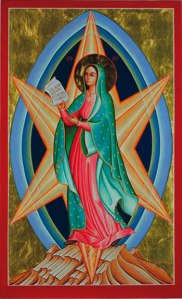
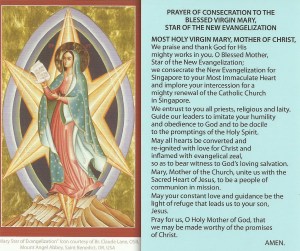
Prayer of Consecration to the Blessed Virgin Mary, Star of the New Evangelisation

marystarofevanglisationicon

On 7 October 2014, on the Feast of our Lady of the Rosary, His Excellency Archbishop William Goh Seng Chye, the Archbishop of Singapore dedicated and consecrated the Archdiocese of Singapore and all the efforts of the New Evangelisation in Singapore to the Blessed Virgin Mary, Star of the New Evangelisation.

Although this refers to the Archdiocese of Singapore, I believe that everyone else in the world, within the Church of God may also pray the same prayer for the sake of evangelisation of the Good News everywhere in this world.


Here is the text of the prayer, to be prayed daily from 7 October 2014 to 7 October 2015, the Feast of our Lady of the Rosary.


10669256_842249659148292_6829732685043142899_o

Most Holy Virgin Mary, Mother of Christ.

We praise and thank God for His mighty works in you. O Blessed Mother, Star of the New Evangelisation; we consecrate the New Evangelisation for Singapore to your Most Immaculate Heart and implore your intercession for a mighty renewal of the Catholic Church in Singapore. We entrust to you all priests, Religious and laity. Guide our leaders to imitate your humility and obedience to God and to be docile to the promptings of the Holy Spirit.

May all hearts be converted and re-ignited with love for Christ and inflamed with evangelical zeal, so as to bear witness to God’s loving salvation. Mary, Mother of the Church, unite us with the Sacred Heart of Jesus, to be a people of communion in mission.

May your constant love and guidance be the light of refuge that leads us to your son, Jesus. Pray for us, O Holy Mother of God, that we may be made worthy of the promises of Christ. Amen.