Monday, 1 May 2017 : 3rd Week of Easter, Memorial of St. Joseph the Worker (Homily and Scripture Reflections)

Liturgical Colour : White
Dear brothers and sisters in Christ, on this day we celebrate together the Feast of St. Joseph the Worker, remembering the foster-father of our Lord, St. Joseph who was a carpenter of the village of Nazareth. He was just a mere carpenter, a profession which was not highly respected at that time, considered a menial labour and job for the poor people, and yet, he was an upright and just man, who obeyed God in all of His commandments.

He worked hard to meet the daily needs for himself, and later on, also for his family, the Holy Family of Jesus, Mary and Joseph. As the breadwinner and head of the family, he must have laboured hard to sustain and provide for the whole family. The job as a carpenter was surely not an easy one, as carpenters even today can attest to. The job was tough and consumed many hours, and yet the pay was minimal.

Yet, St. Joseph remained true to his work and to his calling, which he had been called to, to be the foster-father of the Lord and the protector of the entire Holy Family. He remained true to the mission he had been entrusted with, and he was ever faithful, protecting Mary as she was heavily pregnant, while they were going down from Nazareth to Bethlehem for the census. He guided her through from inn to inn, and dwelling to dwelling, even though all of them rejected them because they were all already full.

And when king Herod wanted to kill the newborn Baby Jesus, the Angel of God instructed St. Joseph to bring both Him and Mary to the land of Egypt, so that He might be hidden away from those who would want to cause Him harm, like Herod and the other enemies of the Lord. What does that mean, brothers and sisters in Christ? It means that livelihood must have been hard for St. Joseph and for his family, as that meant, St. Joseph would have to live in exile in Egypt for the time when Jesus was there, and not being able to return to Nazareth meant that he must have laboured hard in the foreign land trying to make ends meet for his family.

But St. Joseph never complained, and he remained true to his calling. He accompanied the Holy Family and led it through times of joy and through times of difficulty. He was there for the young Jesus as He was growing up in body and stature. It was likely that he taught Jesus the skills required to survive in life, and likely taught him carpentry skills. St. Joseph worked hard throughout his life, and he is an inspiration to all of us who also work, and who also worry about our daily living, on how we are to make ends meet for ourselves and for our families.

Brothers and sisters in Christ, as we reflect on the life and the works of St. Joseph, let us all spend some time to ask ourselves this question. What is work and our career for us? What is the significance of what we are doing in our daily work, in our workplace, in all the busy things and schedules we filled our lives with? Is there meaning to all the things that we are doing in life?

Many of us instinctively will say that we are working in order to gain more money and wealth, to make sure that we are able to sustain our lives, providing for our daily needs. However, do we all realise that we can be easily distracted from what we ought to do in life, and we end up having the wrong focus in our work and in our daily efforts? It is because of our greed and desire, which caused us to lose focus on what working in life truly means.

Let us reflect, brothers and sisters, on all the time when we have become too busy in our lives, too busy trying to aim for promotion in our career, looking for more opportunities to gain renown, fame, recognition and praise from others around us, and in the process, we end up neglecting our families, our relatives and those whom we love, just because we have been too busy with our work, but with the wrong focus.

And we know how some people, if not many of them, in their pursuit for money, for power, for influence and other things, sought illegal and unjust means in order to attain and obtain whatever it is that they desired. This resulted in the corruption of the hearts and minds, as we fall into sin because of our unbridled and uncontrolled desire. This is what we all must avoid doing, brothers and sisters in Christ.

Let us all model ourselves after the good worker and the faithful servant of God, St. Joseph, the carpenter, the just and upright man, a hardworking person, and the foster-father of our Lord Jesus Christ, who was exemplary in his life and actions, in how he committed himself to his work, and in how he has obeyed the Lord in all of his life’s deeds. In the same manner therefore, we too should do the same in our own respective lives.

Let us all inspire one another, and help one another in reaching out to God and to His salvation. May the Lord help us all in all of our endeavours, and may He bless all of our works, so that not only that we will do our work from now on, keeping in mind that it is God for whom ultimately we labour for in this world, and not for ourselves. Let us all pray that we shall be given the strength to persevere through all sorts of challenges in life. Amen.
Monday, 1 May 2017 : 3rd Week of Easter, Memorial of St. Joseph the Worker (Gospel Reading)

Liturgical Colour : White
John 6 : 22-29

At that time, the next day after Jesus fed the five thousand men, the people, who had stayed on the other side, realised that only one boat had been there, and that Jesus had not entered it with His disciples; but rather, the disciples had gone away alone.

Bigger boats from Tiberias came near the place where all these people had eaten the bread. When they saw that neither Jesus nor His disciples were there, they got into the boats and went to Capernaum looking for Jesus. When they found Him on the other side of the lake, they asked Him, “Master, when did You come here?”

Jesus answered, “Truly, I say to you, you look for Me, not because of the signs which you have seen, but because you ate bread and were satisfied. Work then, not for perishable food, but for the lasting food which gives eternal life. The Son of Man will give it to you, for He is the One on Whom the Father has put His mark.”

Then the Jews asked Him, “What shall we do? What are the works that God wants us to do?” And Jesus answered them, “The work God wants is this : that you believe in the One Whom God has sent.”

Alternative reading (Mass of St. Joseph)
Matthew 13 : 54-58

At that time, Jesus went to His hometown and taught the people in their synagogue. They were amazed and said, “Where did He get this wisdom and these special powers? Is He not the carpenter’s Son? Is Mary not His mother and are James, Joseph, Simon and Judas not His brothers? Are not all His sisters living here? How did He get all this?” And so they took offence at Him.

Jesus said to them, “The only place where prophets are not welcome is their hometown and in their own family.” And He did not perform many miracles there because of their lack of faith.

Monday, 1 May 2017 : 3rd Week of Easter, Memorial of St. Joseph the Worker (Psalm)

Liturgical Colour : White
Psalm 118 : 23-24, 26-27, 29-30

Although princes conspire against me, Your servant will observe Your decrees. Your laws are my delight, my counsellors who uphold me.

When I explained my ways, You responded; instruct me then in Your precepts. Explain to me all Your ordinances, and I will meditate on Your wondrous deeds.

Keep me away from deceitful paths; be gracious and teach me Your law. I have chosen the way of truth; I have set my heart upon Your laws.

Alternative reading (Mass of St. Joseph)
Psalm 89 : 2, 3-4, 12-13, 14 and 16

Before the mountains were formed, before You made the earth and the world, from eternity to eternity – You are God.

You turn humans back to dust, saying, “Return, o mortals!” A thousand years in Your sight are like a day that has passed, or like a watch in the night.

So make us know the shortness of our life, that we may gain wisdom of heart. How long will You be angry, o Lord? Have mercy on Your servant.

Fill us at daybreak with Your goodness, that we may be glad all our days. Let Your work be seen by Your servants and Your glorious power by their children.

Monday, 1 May 2017 : 3rd Week of Easter, Memorial of St. Joseph the Worker (First Reading)

Liturgical Colour : White
Acts 6 : 8-15

Stephen, full of grace and power, did great wonders and miraculous signs among the people. Some persons then came forward, who belonged to the so-called Synagogue of Freedmen from Cyrene, Alexandria, Cilicia and Asia. They argued with Stephen but they could not match the wisdom and the spirit with which he spoke.

As they were unable to face the truth, they bribed some men to say, ‘We heard him speak against Moses and against God.’ So they stirred up the people, the elders and the teachers of the Law; they took him by surprise, seized him and brought him before the Council.

Then they produced false witnesses who said, “This man never stops speaking against our Holy Place and the Law. We even heard him say that Jesus the Nazarean will destroy our Holy Place and change the customs which Moses handed down to us.” And all who sat in the Council fixed their eyes on him, and his face appeared to them like the face of an Angel.

Alternative reading (Mass of St. Joseph)
Genesis 1 : 26 – Genesis 2 : 3

God said, “Let Us make man in Our image, to Our likeness. Let them rule over the fish of the sea, over the birds of the air, over the cattle, over the wild animals, and over all creeping things that crawl along the ground.” So God created man in His image; in the image of God He created him; male and female He created them.

God blessed them and said to them, “Be fruitful and increase in number, fill the earth and subdue it, rule over the fish of the sea and the birds of the sky, over every living creature that moves on the ground.” God said, “I have given you every seed bearing plants which is on the face of all the earth, and every tree that bears fruit with seed. It will be for your food. To every wild animal, to every bird of the sky, to everything that creeps along the ground, to everything that has the breath of life, I give every green plant for food.” So it was.

God saw all that He had made, and it was very good. There was evening and there was morning : the sixth day. That was the way the sky and earth were created and all their vast array. By the seventh day the work God had done was completed, and He rested on the seventh day from all the work He had done. And God blessed the seventh day and made it holy, because on that day He rested from all the work He had done in His creation.

The True Beauty of the Liturgy of the Mass

Image

tridentine_mass_elevation_2

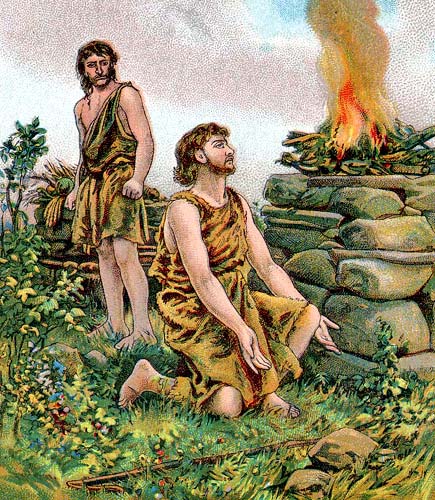
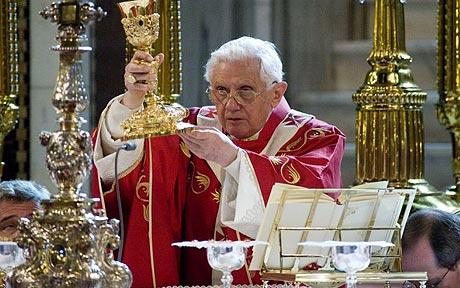
Would you rather give a half-hearted offering like that of Cain, offering what the Lord had not desired, or would you rather give it all to God like Abel, who offered the best to the Lord?

Image

Image

Would you rather be like Judas Iscariot, who scolded Mary for wasting money on perfume used to anoint the feet of Christ before His death? especially that was out of false concern of the poor given that he desired the money for himself? or would you be rather be Mary indeed, who anointed the feet of Christ for His burial, even with the expensive nard-flower perfume and therefore like Abel, gave her best offering to the Lord?

Image

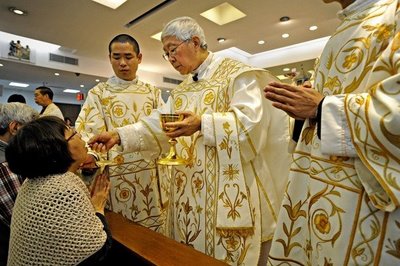
Such is therefore, what we should think of, when we think about the Mass and the liturgy that surrounds it. Many would be in danger of misunderstanding the entire purpose of having such liturgies and rites of worship, and dismissing them as backward, elitist, showy, and wasteful in nature – No, indeed, in fact, all these are for the glory of God alone, and we wouldn’t give half-hearted gifts and attempts to our Lord. Our worship in the Mass is to the Lord alone, and the glory that is in the Mass, is for the glory of God.

Image

Image

Image

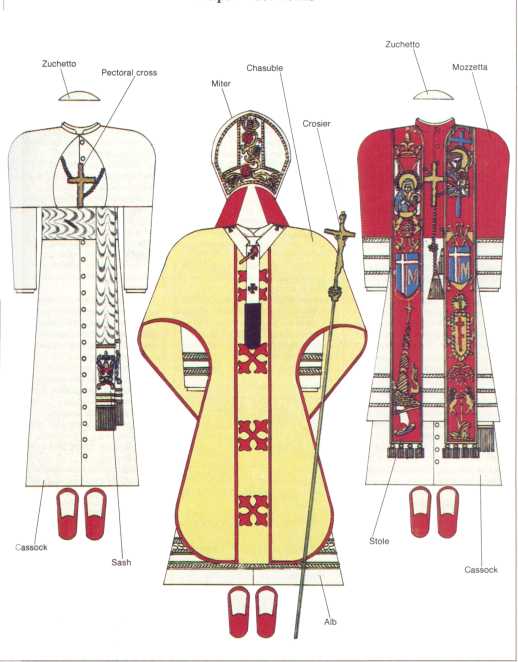
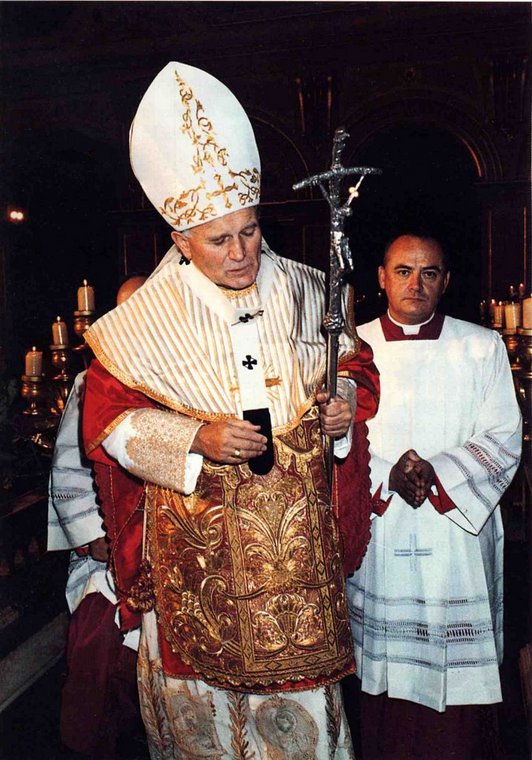
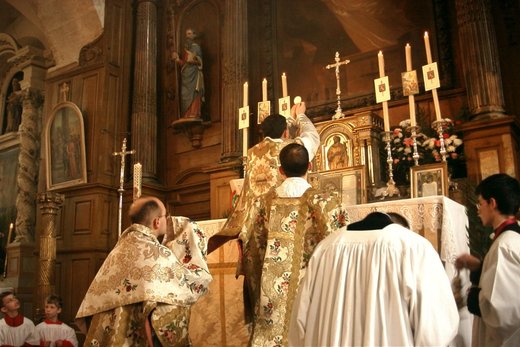
So why elaborate vestments, with colourful and vivid images, even with golden thread or velvet? Why elaborate and jewelled mitres? Why elaborate church buildings, the Altar decoration and everything else? That is because all these are for the glory of God, and for God alone, and not for the glory of men. And in this too, as I had often mentioned, many would be able to learn more about the faith, and at the same time, bring worship closer to what it should be, that is, to be a heaven on earth, especially with the angels and the saints, we worship God together.

1451110-High_Altar_Antwerp

Image

Men are visual creatures, and we base ourselves and our perceptions closely with our visions and what we see in our surroundings. One very strong argument why so many people had left the faith and became lost in the past decades was because the disappearance of beauty in our worship, not the beauty of excessive displays of course, but the true beauty of worship in that every part of the Mass and its liturgy has its own particular importance and meaning, even all the gestures made in the Mass.

MainAltar01

Being visual creatures, men no longer see God as the divine He is, because especially like Science, which place accountability, reproducibility, etc. at the most important, especially visual proofs, men no longer see God because our worship had become so diluted, so abused by decades of excessive trials and innovations which ended up diluting this image of ‘heaven on earth’ in the Mass. The Mass becomes less a desire for all to come to other than just a ‘chore’ for many to come, and Sunday obligation becomes what it is, an obligation, rather than true desire to come and worship the Lord.

jesus_holding_earth_world

Therefore, it is important that in the coming future, our Church, while projecting itself ever more, as it had always done, in helping the needy and the unloved around the world, expanding its charitable acts which is already the world’s largest by significant margins, ever more, but most importantly also, at the same time, strengthening the anchor of faith, through the energetic and constant explanation of the faith and the Sacred Tradition, particularly on the Mass and its liturgy, especially to the youths and the newly baptised, that they will truly grasp what being a Catholic is about.

That being a Catholic entail not just being good person, helpful person, and caring person, but also someone who truly knows entirely what they are doing at Mass, at their worship of the Lord every Sunday, and who truly come for the Mass because they desire to seek the Lord, and understanding the beauty of the liturgy of the Mass, they become ever closer to God, and through this, be ever more blessed and loving, that they can bring forth this love in their service of others. Ora et Labora, a balance indeed required between prayer and worship, and the service facet of our faith.

throne5

In this manner, we must always remember this verse, which is also a very nice Psalm passage I had discovered, that in all things, we glorify God alone, particularly in the Mass, through all its beauty :

Non nobis, Domine, sed Nomini tuo da gloriam!
Not to us, o Lord, but to Your Name we give glory!

+Peter Canisius Michael David C. Kang
Ut Omnes Unum Sint, ad Maiorem Dei Gloriam
21 April 2013, Good Shepherd Sunday

Thursday, 4 April 2013 : Thursday of the Easter Octave (Scripture Reflection)

The Risen Christ is truly risen, our Messiah, and our Lord. He is not dead anymore, because God had given to Him a glorious life, to conquer death, that in Him, if we believe in Him, we would also find the same life, that is life eternal in God, and with God. He is truly risen, and truly has been raised from the dead, in body and in the spirit, that He is truly, bodily, our Risen Lord. That is why He said to His disciples when He first appeared to them. Why are you afraid? Why fear? It is I, Christ, and I am truly risen! My body is real, and I am not a spirit of the dead, unlike your ancestors!

Yes, while all mankind died in death that is our punishment for our rebellion against God, that from dust we had come, and into dust we would return, Christ was not worthy of death, because He is perfect and spotless, as He is without sin, and yet He suffered sin and death for our sake, and was unjustly punished and condemned for our faults. All these so that it would not be us who would have to bear the burden of our rebellion and that of our forefathers, but through Christ we would gain eternal life, that is our reward, if we would repent, believe in Christ, and put our hope in Him.

Through Christ lay forgiveness for our faults and our rebellion against our loving God, and through Him lay the only path to life, for is He not the way, the truth and the life? Yes, only if we put our complete trust in Christ, and put in Him all our beings and our dedication, that we can be brought from eternal death and separation from God, back into God’s favour. He offered all these freely as He hung from that cross on Calvary. His Blood He offered freely for all of us, as the blood of the new Covenant that would seal all who believe in Him and save them all.

Yet, many of us remain blind to Christ’s mercy and kindness, and blind from His redemptive works. The same happened to the two disciples on the way to Emmaus, and to all the disciples gathered in fear of the authorities, because all of them had lost their hope and pivot on Christ. Their faith and heart had wavered, and they had let the evil one to sow seeds of fear and uncertainties and let them grow within their hearts, that they were frozen with lack of faith when Christ appeared to them. Yes, to all of us it may seem that if Christ is to appear before us, given if we have no knowledge of Christ’s resurrection, which had been prophesied by the prophets, we may also not believe in Him.

But the disciples had listened directly from Christ Himself, that He was to suffer, and to die, and then to rise again from the dead in glory on the third day, which He had mentioned frequently to the disciples, especially as He approached the time of His Passion. It is the inflexibility and the hardness of their hearts that prevented them from truly understanding what Christ had said to them, and that also made them, and so many other people of Israel at the time, especially the Pharisees and the chief priests, that Christ is truly the Messiah, the suffering Messiah, through whom the world’s salvation was to come.

Yet Christ did not give up on them, and He opened their minds and hearts to His truth, just as He revealed Himself to the two disciples on the way to Emmaus. Therefore brothers and sisters in Christ, will we then also welcome Christ into our hearts? That He will then come in and open the doors of our hearts and our minds, and also remove the veil of fear and doubt from our eyes, that we will see Him? in the great glory of His resurrection? Keep our prayer life strong, that we will always have the Lord within our hearts.

Remember, that our works and actions will not reflect God’s work if we do not keep a strong faith in Him, which can only be built up and maintained through prayerful life. Pray at all times, that God will always be with us, and strengthen us, and speak to us, to lead us into the path that God had desired for us, for the good of all of us. Let our faith in God shines within us, and with this great faith and strength, may all of us be courageous and strong, to carry out God’s mission to spread His words and love to all mankind, through service and love.

May God bless all of us, and may we make best use of this most holy season of Easter, to renew our commitment to our Lord and to our fellow mankind, to love ever more, and to be ever more faithful. Amen.

Faith, prayer, and service (Fides, Ora, et Labora)

Image

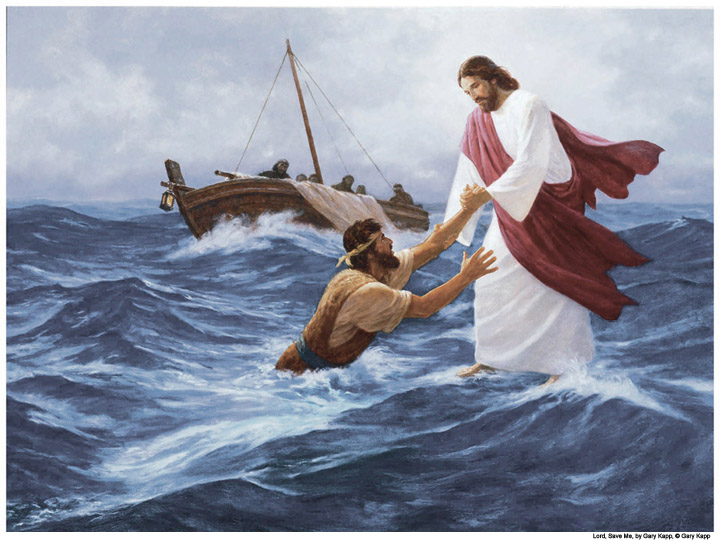
You man of little faith, why are you afraid? (Add : ‘That’s why you’re sinking!’), as Jesus said to Peter when He appeared to the disciples in the storm, as the disciples feared they would sink, and Peter sank while he attempted to reach to the Lord on the water.

That’s why, keep your faith strong! Prayers, service, and love for God and our fellow men, but most importantly, before we go out and serve others, make sure that our prayer life is good and strong. There is no Ora et Labora without the Ora, and without the Ora ‘prayer’, our service is meaningless, since we then tend to associate our actions with ourselves, becoming object of self glorification rather than give glory to God, even if we are doing good things to others.

Appreciate the beauty of prayer and worship, and seek out to learn more about our worship, our Mass, from your priests, or any qualified liturgists around, who can help all of us understand about how beauty of the liturgy of the Mass can bring heaven closer to earth, and bring God’s divine glory closer to us, unworthy men.

In our worship we bring glory to God, and we profess the glory of the Risen Lord, victorious and triumphant, and in service, we bring glory to God, the humble and suffering Lord, who through His death on the cross, brought the ultimate service and love to all.

Non nobis, Domine, sed Nomini tuo da gloriam – Not to us, o Lord, but to You, we give glory.

Yours in Christ,

Ut Omnes Unum Sint, ad Maiorem Dei Gloriam
(That they all may be One, for the greater glory of God)
+Peter Canisius Michael David C. Kang
Servus Servorum Dei

Tuesday, 22 January 2013 : 2nd Week of Ordinary Time, Memorial of St. Vincent, Deacon and Martyr (Scripture Reflection)

In today’s readings, God shows that He is faithful, and that He will reward all those who believe in Him. We can rest assured that God will protect us, as long as we too remain faithful in Him, and remain in His favour. After all, the Lord has proven His faith to us and His love by sending us His only Son, Jesus Christ, to be our Saviour, by being the High Priest of all mankind, giving up Himself as a worthy sacrifice in place of our innumerable sins. Such indeed, is the extent of God’s love and reliability, as He is reliable as He is loving, the only one we can truly trust, since He stopped at nothing but gave Himself entirely for our sake. Thus, brothers and sisters in Christ, let us anchor ourselves in Christ, and let God be the firm foundation of our faith, and our life. So that, even when troubles come, and even when uncertainties and temptations come, we can be assured that as long as we keep our anchor in Christ, we are in God’s good hands.

God did create rules and set of laws in the past to the Israelites, which He announced to Moses on Mount Horeb, the Holy mountain of God, and the purpose of these rules is none other than to serve as the same anchor to keep all the Israelites anchored in God and His teachings, and not to be led astray by the temptations of the other gods followed by tribes that the Israelites met on their way to the Promised Land, and in the Promised Land itself, to always remain faithful in God. Nevertheless, as was evident in the many parts of the Old Testament, the people of Israel disobeyed the Lord many times and did things in opposition to His commandments and His rules, which include the rule of the Sabbath.

However, the coming of Christ has brought an entire new dimension to the interpretation of these laws and their relations to God’s people, as Christ, being God Himself, has walked amongst His people, and He, the Son of Man, is the Master of the Sabbath, and thus, consequently also the new ‘Anchor’ of the people’s faith, replacing all the old laws and commandments with His new commandment of love, for the Son of God did not come to destroy but to perfect the old commandments and serve as the fulfillment of all the promises and prophecies made by the prophets.

Laws, customs, and regulations should not be seen as so binding and authoritative to the point of enslaving those whom these regulations are supposed to protect into their slaves instead. This is what Jesus meant when He said that the Sabbath was made for man, not man for the Sabbath. These rules, laws, and customs are there, because they are there to guide us to the correct path and prevent us from going astray, but not to limit us unnecessarily, especially when nothing that we do are wrong in the eyes of God. We have even seen that in the Book of the Maccabees, the Israelites under the leadership of the Maccabees allowed themselves to fight to defend themselves on the Sabbath against the pagan Greeks, rather than leaving themselves to be killed without defense. And so was David and his followers when they were truly hungry, for food is a basic and essential commodity to humans like us, and also to all creations. God certainly do not wish to deny us this essential commodity and leaving us to die of hunger just by inflexibly obeying the law of the Sabbath.

This is also why, we as Catholics, do not follow the Jewish Laws anymore, including the laws regarding food prohibitions, as what matters to Jesus Christ, the new ‘anchor’ of our faith, which renews the Law into its perfect form, is the purity and sincerity of our hearts and our souls, and not matters that concern our physique, such as food and rituals. Indeed, the Lord Himself said that (Matthew 15 : 11) “What enters into the mouth does not make a person unclean. What defiles a person is what comes out of his mouth.”

Therefore, what matters is the laws that regulate our spirituality, which will ensure our internal spirituality and soul remain pure and unblemished to the Lord, which can be achieved through prayers, and doing good work for the sake of God, and for the sake of all around us. “Ora et Labora” indeed, to pray and to do good works, so that our hearts will be pure and be worthy of God.

We do have rules and regulations in our Church, just as the Jews did, and we too have to obey these rules, as these rules, although are human in nature, can help us greatly in ensuring that all of us can have the optimum condition necessary to sustain our spiritual wellbeing and purity, despite all the temptations and the challenges presented by the world around us.

Therefore, let us all pray that Jesus, as the anchor of our faith and our life, will strengthen us, and will support us in our daily lives and daily encounters with temptations and challenges of the world, that we will be able, with the help of the rules and laws of the Church, maintain our spiritual health and maintain our purity in the eyes of God, focusing on the internal rather than the external dimension of our being.

http://en.wikipedia.org/wiki/Vincent_of_Saragossa

Today we also celebrate the Feast of St. Vincent, who was a Deacon and Martyr in the early Church. Also known as St. Vincent of Saragossa, St. Vincent was imprisoned for his faith in late Roman Empire under Emperor Diocletian, and met his martyrdom at the Emperor’s orders. St. Vincent is another shining example of loyalty to the faith in God, just as shown by St. Agnes, whose feast we celebrated just the day before. These martyrs show us that God rewards those who believed in Him and remain faithful in Him, as stated in the first reading today. As long as we keep our anchor in Christ, and remain strong in our faith in Him, even with all the challenges and persecutions laid by the world against us, like these saints and martyrs, we will eventually prevail and be rewarded with nothing less than life eternal with Christ, forever and ever. Amen.

St. Vincent of Saragossa, Deacon and Martyr, pray for us.