Friday, 2 August 2013 : 17th Week of Ordinary Time, Memorial of St. Eusebius of Vercelli, Bishop; and St. Peter Julian Eymard, Priest (First Reading)

Leviticus 23 : 1, 4-11, 15-16, 27, 34b-37

YHVH spoke to Moses, “Then there are the appointed feasts of YHVH at the times fixed for them, when you are to proclaim holy assemblies. At twilight on the fourteenth day of the first month is YHVH’s Passover. And on the fifteenth day of this month it is YHVH’s feast of Unleavened Bread. For seven days you shall eat bread without leaven.

On the first day there will be a sacred assembly and no work of a worker shall be done. For seven days you shall present an offering by fire to YHVH and on the seventh day you shall hold a sacred assembly and do no work of a worker.”

YHVH spoke to Moses and said, “Speak to the Israelites and say to them : When you enter the land that I will give you and you reap its harvest, you will bring to the priest a sheaf, the firstfruits of your harvest and he shall wave the sheaf before YHVH for you to be accepted; on the day after the sabbath the priest shall wave it.”

“From the day after the sabbath, on which you bring the sheaf of offering, you are to count seven full weeks. The day after the seventh sabbath will be the fiftieth day and then you are to offer YHVH a new offering.”

“The tenth day of this seventh month shall be the Day of Atonement. You are to hold a sacred assembly. You must fast, and you must offer a burnt offering to YHVH.”

“The fifteenth day of this seventh month shall be the feast of Tents for YHVH, lasting seven days. The first day you shall hold an assembly; you must do no work of a worker. For seven days you must offer a burnt offering to YHVH. On the eighth day you are to hold a sacred assembly and you must offer a burnt offering to YHVH. It is a day of solemn assembly in which you shall do no work of a worker.”

“These are the appointed feasts of YHVH in which you are to proclaim holy assemblies for the purpose of offering offerings by fire, burnt offerings, grain offerings and drink offerings to YHVH, according to the ritual of each day.”

Website for World Youth Day 2016 Krakow has been launched

http://www.krakow2016.com/en/

The site above is the website for World Youth Day 2016, which has been launched today.

It may still be three years away, but let us prepare from now on, all the preparations to ensure that the World Youth Day at Krakow, the beloved city of Blessed Pope John Paul II will be as successful as the one held in Madrid (2011) and Rio de Janeiro (2013) and all the previous World Youth Day celebrations.

Friday, 24 May 2013 : 7th Week of Ordinary Time, World Day of Prayer for the Church in China (Scripture Reflection)

Brothers, and sisters in Christ! Today, I announce to you a great news of great joy, especially for the Church in Singapore. For as of 18 May 2013, the Coadjutor Archbishop of Singapore had succeeded as the new Archbishop of Singapore, Archbishop William Goh Seng Chye. He was installed today at the cathedra of the Cathedral of the Good Shepherd, the mother church of Singapore, and today also marked his inauguration as the ordinary of the Archdiocese, beginning the full extent of his ministry as bishop to the flock entrusted to him by the Lord in Singapore.

How is this then relevant to what we heard in the readings today, brothers and sisters in Christ? In fact, today’s readings are perfect for the occasion, because, today’s reading, in the Gospel in particular, deal with the intimacy of relationships between peoples. In the first reading, we heard about friendship and the type of friends we have and we can encounter in our daily lives.

In the Gospel then, we heard about another type of relationship, one that is even closer than friendship, that is marriage, which is a union between two persons, male and female, as ordained by God, that men should leave their parents and join with women, that they become one body, and from this union, spring forth new life, through procreation and birth of new children.

But there is yet still another, even more noble kind of relationship, one that is not explicitly mentioned in the Gospel today, but in fact has very large degree of similarity to it. That is the relationship that those in the Holy Orders with both God and with the Church which they serve, and which they lead. Those in the Holy Orders include all those who had been ordained by the authority passed down through the Apostles from Christ Himself, from our pope, to our bishops, and to our priests and deacons.

All are relationships that are sanctified by God, particularly in the case of marriage and the Holy Orders, in which we should always remember the words of Christ that, whatever God has made into one, no man and no angel should separate. No one may undo the union that God has sanctified and sealed, in the holy sacrament of matrimony and priesthood.

First then, let us begin with friendship. We may not have a sacrament of friendship, unlike marriage and priesthood, but true friendship itself is also holy, because true friendship must be based on love and purity of hearts and intention between the friends. Today’s first reading explained to us the different kinds of friends, because friends may indeed look superficially from outside like a good friend to us, but in fact, this ‘friend’ of ours is only using us up, either because we have material wealth or something that keeps this friend to remain at our side.

As long as we have this something, money, possession, or some other thing, this ‘friend’ will remain, but once we run out of this something, they will leave us, and sometimes do not be surprised that the ‘friend’ may even become an enemy. This is one of the thing warned by the first reading we heard today. We have to also take note of the parable of the prodigal son, where when the son has all the properties that he inherited from his father, he made many friends in the foreign land, and lived a happy but wasteful life. But those friends are not his true friends, because once his money dries up, they leave him and do not lift even their fingers to help him, until he has to work as a pig handler and even be tempted to eat the pig’s food due to his hunger. He has no friend!

What is true friendship then? True friends are friends who stand by us in times of joy, but even more importantly, they also stand by our side at our times of greatest sorrow. Not many people indeed will become our true friends, but once we have true friends in our life, true friendship, as long as we have love in ourselves, will last forever. Because true friendship is based not on material goods and possessions, or even human greed, but it is based on love, care, and compassion.

Thus, value the friendships we have and look beyond the veil of possessions and greed, in order to find out who are our true friends in life. True friends are not always those who join us in fun and happy things, in parties and celebrations, but are those who also care for us and protect us in our time of troubles and whenever we are downtrodden. All being said, we ourselves then too should strive to become true friends to those around us, particularly to those whom we love, and of course to our God.

Yes, Christ, our Lord and Saviour is also our friend, and He is friend to all mankind, to all the children of God, for remember that He Himself had said to His disciples that there is no greater love than that of a friend who gives up his life for the sake of his friend. And Jesus, our Saviour did just exactly that, because He died for all of us, giving up His life, and even though He was blameless and pure, He accepted damnation to death that through His death, we may gain a new life in Him, through His glorious resurrection.

Maintain this friendship and relationship that we have with Christ, with God, dear brothers and sisters in Christ. And how do we do that? Exactly by ensuring that we remained in God’s love and that ourselves and our hearts are always filled with God’s love, and in our actions, we always reflect Christ, our Lord, and become witnesses to His death and resurrection. And we also can help those among us who are least, weakest, ostracised, and abandoned, and in doing so, we are the friends of Jesus, and He is dear to us, just as we are dear to Him.

Then, after we have talked about friendship, let us continue on with a greater degree of relationship, that is marriage, which must be sealed in the sanctity of the sacrament of marriage. Marriage is only once in life and is eternal, between a man and a woman, as God ordained since the beginning of time, when He created Adam and Eve, the progenitor of all mankind.

Marriage is not merely physical relationship between two persons, that is filled with lust and desire. This kind of union is not marriage, but merely the fulfillment of human desires that may be corrupted by the evil one for his own purposes, and result in what we have seen in our world today, in the form of deviant form of ‘marriages’ that so many people champion, without realising that marriage is not something they should trifle with.

This is because marriage is ultimately about love, and again the love that I refer to over here, does not mean physical lust and sexual relationship between two persons, as these may form some part of marriage, but without true love, instead of a holy union of marriage, what we have is a perversion and sin before the eyes of God, essentially fornication and defilement of our own bodies, the Temple of the Holy Spirit.

Marriage is about love, that is the spiritual relationship, both between the two persons, male and female, united in love, caring for one another, committed in times of joy and sorrow, united in body and spirit, sealed by God Himself. And marriage is also about the spiritual relationship between the couple with God, because with God as their anchor, love will always remain within the sacred marriage union of the married couple.

Marriage itself must also breath out love, and produce love. Because the fruit of marriage is in fact children, and children are the fruits of love between the man and woman united by God in the sacred and inviolable union. Children receive love from both of their respective parents, which then ultimately have its source in God. That is the key to having a functioning and loving family, that this love that is within the couple is shared and poured to others, particularly in the child, whom the couple have responsibility for, and as the fruit of their marriage.

Therefore, marriage must never be manipulated and falsified by modern innovations and inventions, which bar the ultimate purpose of marriage, that is to produce the fruits of love, that is the children, just as the Lord commands mankind, to be fruitful and multiply, and to be Lord over all the earth. Men and women He created them for this purpose, that they multiply and prosper, sharing love with one another.

Sadly, too many modern innovations, especially through scientific discoveries, had made marriage no longer life-producing, and instead, even cause death in certain cases. The use of contraceptives and birth-control mechanisms had transformed marriage such that marriage is no longer solely based on love, and on producing the fruits of love, but has moved it such that mankind now focus on the more immediate and worldly aspect of marriage, submitting themselves to their desire and lust, and seeking pleasure instead of love in marriage.

Abortion and other life-destroying actions, continue to destroy both the sanctity of marriage, and the sanctity of life, for in abortion, we destroy the very life and fruit of love which is the fruit of marriage. Many abortions also resulted from extramarital affairs and relations, which signify the importance of marriage as the necessary step in the union between man and woman, for anything that is conceived outside of marriage, is not sealed by God, and therefore, becoming much more prone to human weakness and evil, which leads to irresponsible acts such as abortion.

Divorce is yet another great evil, that destroys both marriage, and the family which are split and destroyed by this other, irresponsible act. Marriage should be based on love, and the children, the fruits of marriage and love, must get love from their parents. Divorce, which destroys this union between the husband and the wife, ruins not just the two persons involved, but also the children, who suffer even more from the separation between their parents. This is also in direct violation against what God has revealed through Christ, His Son, that whatever God had joined into one, through the sacred sacrament of matrimony, should never be divided by men.

Therefore, brothers and sisters in Christ, those among us who are couples in holy marriage, strive to empower your married life, that the Lord remains in it, and love remains the heart of your marriage, that the marriage will not become empty, and end in painful and sinful divorce, or extramarital affairs. Rather, as a family, all of you must be functional and do your part as members of the family, to love one another and love the Lord your God, that He will give you guidance through your married life.

Pray together often, and have your meals together often too. Bring your children together with you, and raise him or her together, as husband and wife, sharing with them the love that is between both of you, the love that originates from God Himself, that they too will have love within themselves. Prayer especially is important, because prayer will strengthen your faith, and it can strengthen the anchor of love you have in God, and in one another.

Time maybe scarce, brothers and sisters, in our busy modern world, with all its noises, and with all the careers and works we have taken upon ourselves. But, brethren, try your best to spend your time together as a family, especially with the children, so that your marriage will remain loving and happy, and will last for eternity.

Then, finally, let us go into the most special relationship that those in the Holy Orders have, particularly the bishop, and today, especially as those in Singapore commemorate the inauguration of the ministry of the new Archbishop, Archbishop William Goh, it is most appropriate to look into the intimate nature of the relationship that the bishop has, both with God, and with the Church.

Those in the Holy Orders, and those committing themselves to pious, religious life, do not marry, not because they disobey the Lord, but because they commit themselves to God and His people so much that, they are in fact married to God and His Church. They had become the bride of the Church upon their entry into the Holy Orders.

Does this relationship then bring about love and life? just as marriage does? Yes! definitely! For a priest, a bishop, and any ordained ministers, and those who commit themselves to God, share fully in the love of God, and through their ministry, they share this love with all the faithful in the Church, to whom they made themselves as conduits of God’s love, and also of God’s life.

They bring life through their ministry, through their words and actions, because they bring healing to those who are sick, maybe not physically, but most importantly spiritually. Many of us have become dead spiritually, because our hearts are empty. The priests recharge our dead spiritual selves and allow us to be alive again, through the life that God has granted us. Through evangelisation too, priests bring life, to those who listen to the Word of God and believe, that they receive new life through the waters of baptism.

For them, the Lord and the Church are their sole care, the people of God. They choose not for themselves any particular partner, so that they can make themselves available, to share the love of God, to all mankind, rather than to be limited in the family. But this does not mean that the family cannot share its love with others, only that those in the family will certainly need to put the priority of love, first and foremost, to the fruits of their marriage, that is their children, and the love they have for one another as husband and wife.

A bishop is even more intimately in a loving relationship with God and with His Church, because a bishop is like a chief shepherd, who loves all the sheep entrusted to him by the Chief of all shepherd, that is God. He must love the priests that have been placed under his care, just as he needs to love the people, the laity that had been entrusted to him. They are married to him, just as he too is married to the Lord, to be his most humble and dedicated servant, in the evangelisation of the Good News to all.

Therefore, brothers and sisters in Christ, let us inspire one another, and build good relationships among ourselves. Forgo our hatred and fear, and allow love and joy of companionship build up in all our hearts. Build healthy and strong relationships, be it friendship, or higher degree ones such as marriage or Holy Orders for those who chose either, and anchor them in love, and our faith in God. God will then surely bless all of us, with everlasting love and abundant blessings.

Finally, today, we also mark the World Day of Prayer for the Church in China, which falls annually on 24 May. We show our care for the oppressed and persecuted faithful in China, by building concrete bridges of love, to reach out to them, and care for them, and pray for them especially, that they may be strong, to resist the temptations of the world, and that those who suffer will receive their due reward for their unfailing faith.

We are one Church, one Body in Christ, my brothers and sisters in Christ, from all over the world we had come, and into one we have become, that is one in the Church of God, the Universal Church He established on Peter, His apostle. No human power, no government, no form of oppression or persecution, will be able to separate what God has made into one, not even in the case of China. Therefore, pray hard, brothers and sisters in Christ, that liberation will soon come, not only for those oppressed in China for their faith, but also in North Korea, and other places, where injustice, and prejudices against the faith in God is still rampant, even till today.

Our Lady of Sheshan, protector of the faithful ones in China, pray for them, and pray for all of us. God be with us all, through joy and sorrow, and through this darkened world, and may He bring us into the light of salvation. Amen.

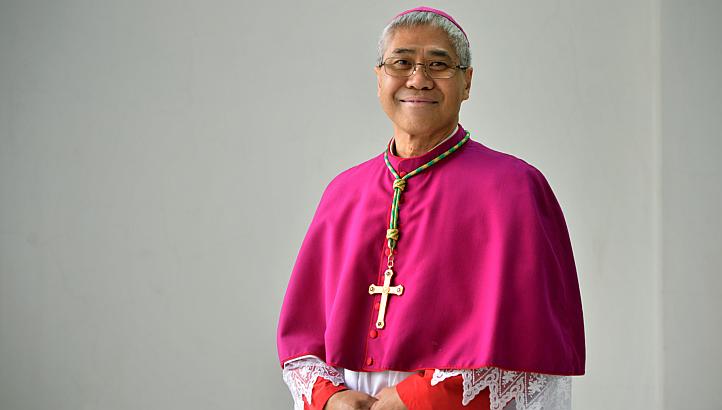
Installation, Inauguration, and Thanksgiving Mass for Archbishop William Goh Seng Chye, the new Archbishop of Singapore

Image

The new Archbishop of Singapore, Archbishop William Goh Seng Chye, having taken over officially on Saturday, 18 May 2013 after the Holy See accepted the resignation of the now Archbishop Emeritus Nicholas Chia Yeck Joo, will be installed at the cathedra of the Cathedral of the Good Shepherd, the mother church of the Church in Singapore.

Image

Archbishop William Goh was the Coadjutor Archbishop of Singapore and being a coadjutor, in conjunction with the Code of the Canon Law, has the right to immediately succeed the Archbishop upon his resignation being accepted by the Holy See.

This Installation Mass will also be an Inauguration Mass for the ministry of the new Archbishop and also a thanksgiving for both the new Archbishop and for the service of the now Archbishop Emeritus Nicholas Chia.


Details on the Mass :

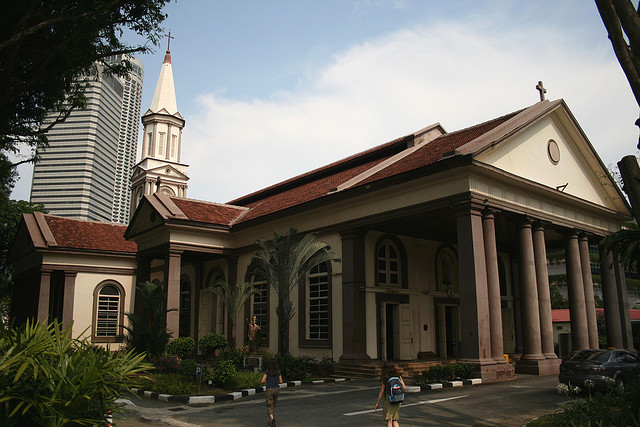
Location : Cathedral of the Good Shepherd, ‘A’ Queen Street, Singapore

Time : Friday, 24 May 2013 at 10.30 am (on Vesak Day – Public Holiday)


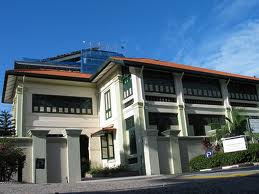
As Archbishop William Goh has officially taken over the duty as the Ordinary of the Archdiocese, he immediately resides in the official residence of the Archbishop in the Archbishop’s House, located within the Cathedral grounds.

Image

Meanwhile, Archbishop Emeritus Nicholas Chia will transfer his residence to the Catholic Spirituality Centre in Hougang, Singapore, where Archbishop William Goh had resided during his term as the Coadjutor Archbishop.


God bless our new Archbishop and we also pray for our Archbishop Emeritus, that in his retirement he will continue to do great works for the sake of the Lord.

Ad multos annos, His Excellency Archbishop William Goh!

Tuesday, 19 March 2013 : 5th Week of Lent, Solemnity of St. Joseph, Spouse of Blessed Virgin Mary (Gospel Reading)

Today also marks the Papal Inauguration of the 266th and current Pope, Pope Francis

Matthew 1 : 16, 18-21, 24a

Jacob was the father of Joseph, the husband of Mary, and from her came Jesus who is called the Christ – the Messiah.

This is how Jesus Christ was born : Mary His mother had been given to Joseph in marriage, but before they lived together, she was found to be pregnant through the Holy Spirit. Then Joseph, her husband, made plans to divorce her in all secrecy. He was an upright man, and in no way did he want to discredit her.

While he was pondering over this, an angel of the Lord appeared to him in a dream and said, “Joseph, descendant of David, do not be afraid to take Mary as your wife. She has concieved by the Holy Spirit, and now she will bear a Son. You shall call Him ‘Jesus’ for He will save His people from their sins.”

When Joseph woke up, he did what the angel of the Lord had told him to do.


Alternative reading


Luke 2 : 41-51a

Every year the parents of Jesus went to Jerusalem for Feast of the Passover, as was customary. And when Jesus was twelve years old; He went up with them, according to the custom of this feast. After the festival was over, they returned but the boy Jesus remained in Jerusalem, and His parents did not know it.

They thought He was in the company, and after walking the whole day they looked for Him among their relatives and friends. As they did not find Him, they went back to Jerusalem searching for Him, and on the third day they found Him in the Temple, sitting among the teachers, listening to them and asking questions. And all the people were amazed at His understanding and His answers.

His parents were very surprised when they saw Him, and His mother said to Him, “Son, why have You done this to us? Your father and I were very worried while searching for You.” Then He said to them, “Why were you looking for Me? Did you not know that I must be in My Father’s house?” But they did not understand this answer.

Jesus went down with them, returning to Nazareth, and He continued to be subject to them.

Tuesday, 19 March 2013 : 5th Week of Lent, Solemnity of St. Joseph, Spouse of Blessed Virgin Mary (Second Reading)

Today also marks the Papal Inauguration of the 266th and current Pope, Pope Francis

Romans 4 : 13, 16-18, 22

If God promised Abraham, or rather his descendants, that the world would belong to him, this was not because of his obeying the Law, but because he was just and a friend of God through faith.

For that reason, faith is the way and all is given by grace; and the promises of Abraham are fulfilled for all his descendants, not only for his children according to the Law, but also for all the others who have believed.

Abraham is the father of all of us, as it is written : “I will make you father of many nations.” He is your father in the eyes of Him who gives life to the dead, and calls into existence what does not yet exist, for this is the God in whom he believed.

Abraham believed and hoped against all expectation, thus becoming father of many nations, as he had been told : “See how many will be your descendants.” This was taken into account for him to attain righteousness.

Tuesday, 19 March 2013 : 5th Week of Lent, Solemnity of St. Joseph, Spouse of Blessed Virgin Mary (Psalm)

Today also marks the Papal Inauguration of the 266th and current Pope, Pope Francis


Psalm 88 : 2-3, 4-5, 27 and 29

I will sing forever, o Lord, of Your love and proclaim Your faithfulness from age to age. I will declare how steadfast is Your love, how firm Your faithfulness.

You said, “I have made a covenant with David, My chosen one; I have made a pledge to My servant. I establish his descendants forever; I build his throne for all generations.

He will call on Me, ‘You are my Father, my God, my Rock, my Saviour.’ I will keep My covenant firm forever, and My love for him will endure.

Tuesday, 19 March 2013 : 5th Week of Lent, Solemnity of St. Joseph, Spouse of Blessed Virgin Mary (First Reading)

Today also marks the Papal Inauguration of the 266th and current Pope, Pope Francis


2 Samuel 7 : 4-5a, 12-14a, 16

That very night, YHVH’s word came to Nathan, “Go and tell my servant David, this is what YHVH says : Are you able to build a house for Me to live in? When the time comes for you to rest with your ancestors, I will raise up your son after you, the one born of you and I will make his reign secure.”

“He shall build up a house for My Name and I will firmly establish his kingship forever. I will be a Father to him and he shall be My son. Your house and your reign shall last forever before Me, and your throne shall be forever firm.”

Homily of Pope Francis at the Papal Inauguration Mass, Tuesday, 19 March 2013


Text  from Rome Reports :

http://www.romereports.com/palio/popes-homily-during-inauguration-mass-protect-one-another-english-9484.html#.UUg6O1cVZp4

Dear Brothers and Sisters,
 
“I thank the Lord that I can celebrate this Holy Mass for the inauguration of my Petrine ministry on the solemnity of Saint Joseph, the spouse of the Virgin Mary and the patron of the universal Church. It is a significant coincidence, and it is also the name-day of my venerable predecessor: we are close to him with our prayers, full of affection and gratitude.
I offer a warm greeting to my brother cardinals and bishops, the priests, deacons, men and women religious, and all the lay faithful. I thank the representatives of the other Churches and ecclesial Communities, as well as the representatives of the Jewish community and the other religious communities, for their presence. My cordial greetings go to the Heads of State and Government, the members of the official Delegations from many countries throughout the world, and the Diplomatic Corps.
In the Gospel we heard that “Joseph did as the angel of the Lord commanded him and took Mary as his wife” (Mt 1:24). These words already point to the mission which God entrusts to Joseph: he is to be the custos, the protector. The protector of whom? Of Mary and Jesus; but this protection is then extended to the Church, as Blessed John Paul II pointed out: “Just as Saint Joseph took loving care of Mary and gladly dedicated himself to Jesus Christ’s upbringing, he likewise watches over and protects Christ’s Mystical Body, the Church, of which the Virgin Mary is the exemplar and model” (Redemptoris Custos, 1).
How does Joseph exercise his role as protector? Discreetly, humbly and silently, but with an unfailing presence and utter fidelity, even when he finds it hard to understand. From the time of his betrothal to Mary until the finding of the twelve-year-old Jesus in the Temple of Jerusalem, he is there at every moment with loving care. As the spouse of Mary, he is at her side in good times and bad, on the journey to Bethlehem for the census and in the anxious and joyful hours when she gave birth; amid the drama of the flight into Egypt and during the frantic search for their child in the Temple; and later in the day-to-day life of the home of Nazareth, in the workshop where he taught his trade to Jesus.
How does Joseph respond to his calling to be the protector of Mary, Jesus and the Church? By being constantly attentive to God, open to the signs of God’s presence and receptive to God’s plans, and not simply to his own. This is what God asked of David, as we heard in the first reading. God does not want a house built by men, but faithfulness to his word, to his plan. It is God himself who builds the house, but from living stones sealed by his Spirit. Joseph is a “protector” because he is able to hear God’s voice and be guided by his will; and for this reason he is all the more sensitive to the persons entrusted to his safekeeping. He can look at things realistically, he is in touch with his surroundings, he can make truly wise decisions. In him, dear friends, we learn how to respond to God’s call, readily and willingly, but we also see the core of the Christian vocation, which is Christ! Let us protect Christ in our lives, so that we can protect others, so that we can protect creation!
The vocation of being a “protector”, however, is not just something involving us Christians alone; it also has a prior dimension which is simply human, involving everyone. It means protecting all creation, the beauty of the created world, as the Book of Genesis tells us and as Saint Francis of Assisi showed us. It means respecting each of God’s creatures and respecting the environment in which we live. It means protecting people, showing loving concern for each and every person, especially children, the elderly, those in need, who are often the last we think about. It means caring for one another in our families: husbands and wives first protect one another, and then, as parents, they care for their children, and children themselves, in time, protect their parents. It means building sincere friendships in which we protect one another in trust, respect, and goodness. In the end, everything has been entrusted to our protection, and all of us are responsible for it. Be protectors of God’s gifts!
Whenever human beings fail to live up to this responsibility, whenever we fail to care for creation and for our brothers and sisters, the way is opened to destruction and hearts are hardened. Tragically, in every period of history there are “Herods” who plot death, wreak havoc, and mar the countenance of men and women.
Please, I would like to ask all those who have positions of responsibility in economic, political and social life, and all men and women of goodwill: let us be “protectors” of creation, protectors of God’s plan inscribed in nature, protectors of one another and of the environment. Let us not allow omens of destruction and death to accompany the advance of this world! But to be “protectors”, we also have to keep watch over ourselves! Let us not forget that hatred, envy and pride defile our lives! Being protectors, then, also means keeping watch over our emotions, over our hearts, because they are the seat of good and evil intentions: intentions that build up and tear down! We must not be afraid of goodness or even tenderness!
Here I would add one more thing: caring, protecting, demands goodness, it calls for a certain tenderness. In the Gospels, Saint Joseph appears as a strong and courageous man, a working man, yet in his heart we see great tenderness, which is not the virtue of the weak but rather a sign of strength of spirit and a capacity for concern, for compassion, for genuine openness to others, for love. We must not be afraid of goodness, of tenderness!
Today, together with the feast of Saint Joseph, we are celebrating the beginning of the ministry of the new Bishop of Rome, the Successor of Peter, which also involves a certain power. Certainly, Jesus Christ conferred power upon Peter, but what sort of power was it? Jesus’ three questions to Peter about love are followed by three commands: feed my lambs, feed my sheep. Let us never forget that authentic power is service, and that the Pope too, when exercising power, must enter ever more fully into that service which has its radiant culmination on the Cross. He must be inspired by the lowly, concrete and faithful service which marked Saint Joseph and, like him, he must open his arms to protect all of God’s people and embrace with tender affection the whole of humanity, especially the poorest, the weakest, the least important, those whom Matthew lists in the final judgment on love: the hungry, the thirsty, the stranger, the naked, the sick and those in prison (cf. Mt 25:31-46). Only those who serve with love are able to protect!
In the second reading, Saint Paul speaks of Abraham, who, “hoping against hope, believed” (Rom 4:18). Hoping against hope! Today too, amid so much darkness, we need to see the light of hope and to be men and women who bring hope to others. To protect creation, to protect every man and every woman, to look upon them with tenderness and love, is to open up a horizon of hope; it is to let a shaft of light break through the heavy clouds; it is to bring the warmth of hope! For believers, for us Christians, like Abraham, like Saint Joseph, the hope that we bring is set against the horizon of God, which has opened up before us in Christ. It is a hope built on the rock which is God.
To protect Jesus with Mary, to protect the whole of creation, to protect each person, especially the poorest, to protect ourselves: this is a service that the Bishop of Rome is called to carry out, yet one to which all of us are called, so that the star of hope will shine brightly. Let us protect with love all that God has given us!
I implore the intercession of the Virgin Mary, Saint Joseph, Saints Peter and Paul, and Saint Francis, that the Holy Spirit may accompany my ministry, and I ask all of you to pray for me! Amen.”

Details on the Papal Inauguration Mass and ceremony of Pope Francis, 266th Pope and Bishop of Rome

Mass appeal: some details of tomorrow’s papal inauguration—UPDATED

Today, Tuesday, 19 March 2013, our new Pope will be solemnly inaugurated to begin his Pontificate. He is already our Pope, ever since he accepted the rightful election in the Conclave, but the Inauguration ceremony affirms and completes that process, with the imposition of the symbols of the authority of the Pope, as the leader of the entire Universal Church.

There will be some changes to the liturgy this year, as the imposition of the Pallium and the Ring of the Fisherman will take place just before the Mass starts, instead of being within the Mass itself, as the impositions are seen as more of an extra-liturgical event.

The Pope will pray with the leaders of the Eastern Catholic Churches, the Patriarchs and Major Archbishops at the Tomb of St. Peter underneath the main altar of St. Peter’s Basilica, where the pallium and the ring had been placed since the night before.

The Pope will then proceed with all the other concelebrating Cardinals and prelates outside to the Altar at St. Peter’s Square, which in the meanwhile the Laudes Regia hymn or ‘Laud to the King (Christ)’, that is a glorious rendition of the Litany of the Saints, with the new innovation of the inclusion of part asking the past Popes who had been canonised as saints for the new Pope, their successor, beginning from Pope St. Linus to Pope St. Pius X.

Following after this is the imposition of the papal pallium, which is different from the pallium worn by the Metropolitan Archbishops. Pope Francis’ pallium will be the same in appearance with that of Pope Benedict XVI’s pallium, with red crosses instead of black ones, representing the wounds of Christ, with three gold pins on three of the crosses, representing the nails that bound both hands and the legs of Christ onto the cross. The pallium symbolises the authority the Pope has over the entire Universal Church. The pallium will be imposed by the senior Cardinal of the order of Priest in the Cardinal-electorate, Cardinal Godfried Danneels.

The Ring of the Fisherman will be given after this, which signifies the bond between the Pope and God’s Church, and as the image on the ring depicts, that of St. Peter holding the keys on a boat, while fishing, as a fisher of man, it symbolises the Pope’s role as the successor of St. Peter the Apostle, and also as the current holders of the keys of the kingdom of Heaven, entrusted by Christ to Peter. The ring will be presented to the Pope by the senior Cardinal Deacon, Cardinal Jean-Louis Tauran.

Six Cardinals representing the rest of the Cardinals will pay homage to the Pope, and will give their obedience to him, following the imposition of the pallium and the Ring of the Fisherman.

The Mass follows as usual, and the readings will be done in different languages, English, Spanish, and most notably the Gospel in Greek, to highlight the universal nature of the Church, encasing both the Western and Eastern tradition of Christendom. The whole liturgy of the Mass itself will be conducted in solemn Latin and beautiful Gregorian chants.

The booklet for the Mass is available at the link below, in English, Italian, and Latin :

Click to access 20130319_inizio-ministero-petrino.pdf