(Usus Antiquior) Nineteenth Sunday after Pentecost (II Classis) – Sunday, 19 October 2014 : Homily and Scripture Reflections

Dear brothers and sisters, all the beloved ones in our Lord Jesus Christ, today we reflect together on the words of our Lord Jesus, when He told us the parable or the story about the banquet prepared by a king for his subjects, their rebelliousness and disobedience, as well as the welcoming of other guests deemed more worthy of the banquet of the king, and how a man without the proper wedding garment was cast out of the banquet into suffering and darkness.

St. Paul in his letter to the faithful and the Church in Ephesus, reminded them to keep strongly the faith in God, and how they should avoid all sorts of iniquities and evils, anger and wickedness, hatred and violence, and many other negativities often occurring in our own selves. Why is this so important? That is because what Jesus had told us in the parable of the banquet of the king refers to none other than our own lives and how we relate to the Lord our God, who is the King and Lord over all creations.

Brothers and sisters in Christ, the king in the parable refers to the Lord our God, who prepared a great banquet for all of His subjects, and if we follow the story, these subjects refer to none other than mankind, that is all of us. We are the subjects of the Lord, and all of us are freely invited to take part in the banquet that the Lord had prepared for us. Great joy and happiness indeed await us in that great celebration we ought to have together with God, our King.

But as we can see, from how the invited guests treated the invitation from the king, and also how they treated the servants of the king who went to invite them to the feast, torturing and persecuting them, that this truly represent the sad truth about us mankind, and how we often act in life, in response to the loving kindness of our God, who has loved us so much, and yet who was repaid with much indifference if not outright hostility from His beloved children.

Let us first look at what the invited guests did, when they heard about the king inviting them to the feast and banquet. What did they do? Some of them went on with their daily business and routine, tending their farms and merchant businesses. They disregarded the call of the king, and some even violently treated the servants of the king sent to call on them. What did the servants do, to merit such a treatment? Nothing! It was the guests’ own selfishness and self-preservation attitudes that keep them from doing what is right and rational.

If we do not look at this carefully, we may simply dismiss this parable as a mere story and an imagination, nice to hear and to be listened to, but nothing more than that. That is the real danger of our indifference to the status of our own life and actions. Why is this so? That is because the parable refer to our own attitude when we deal with our Lord and God, as I have mentioned.

Can we ask ourselves and look deep into ourselves at the same time, on how many times that we have been called by the Lord to do something that is good, according to His laws and desires, and yet we dragged our feet and refused to listen and obey? How many of us also complained either openly or deep within our hearts, on the obligations we ought to fulfill as the part of the Church of God? Certainly, if we look at all these, our behaviour often mirror that of the invited guests in the parable.

But as we see again in the readings, that God is patient and ever-loving, and He is also wholly committed to those whom He loves. That is why He continues to send helper after helper, and servants after servants, to help us to get back on track, despite of our sinfulness and disobedience against His will, because the desire of the Lord is to have us all back towards Himself and be purified from our iniquities.

Unfortunately, many of us continued in our disobedience and rebellion, making it difficult for even these servants of God, and throughout history, challenges and difficulties often faced these faithful servants who devoted themselves to serve God. They persevered nonetheless, and despite facing suffering or even death, they continued to do their part to bring as many souls as possible back towards the Lord.

It is a clear and stern reminder for us brethren, that all of us good or bad, be it rich or poor, or whether we have committed things good or evil in our lives, we are welcome to come to the feast and banquet of our King, but then if we are not capable of changing our ways in accordance to what the Lord desires from us, then we will likely end up like those rebellious guests, who received destruction and death as their just reward. Thus, the same fate awaits us, if we are not vigilant and be careful with our actions.

And indeed, if we come to the banquet of the Lord, we must be properly prepared and attired, as all the guests ought to wear a suitable attire to attend such a lavish and wonderful occasion of celebration. Obviously no one would wear a dirty and unclean clothes to such an occasion, nor would anyone even wear their ordinary daily wear or sleeping wear to such an event. A proper ‘attire’ therefore is required, or else, the fate that the man without the proper wedding garment, will be ours as well.

This attire refers not just to the attire and the clothes that we wear on our externals, our suits and garments. Indeed, we have to wear the proper garment as we come to the banquet of the Lord. What is this banquet of the Lord itself? It is the Holy Mass! For the Holy Mass is the celebration of the Holy Sacrifice of our Lord Jesus Christ on the cross, when He offered Himself in perfect obedience and humility, and love for us all, to be our redemption and salvation from our sins, the Lamb of God.

And remember when Jesus said that all those who eat the Bread of Life and drink from the Blood that brings salvation, they will no longer die but live eternally? That promise which Jesus had made was fulfilled in this holy sacrifice. That is because the Lord gave His own Body and Blood to all those who believe in Him, and we who have been baptised in His Name, share together the Precious Body and Blood of our Lord, in the banquet of the Lord, that is the Holy Mass.

And when we come to the celebration of the Holy Mass, as I have mentioned, of course our external appearance and preparation must be immaculate. But it cannot be just that we dress neatly and properly for the celebration of the Mass, as it is not just the garment of our body that we have to prepare, but also the garment of our heart and soul.

Therefore, let us look deep into ourselves, and how we usually act and do during the celebration of the Holy Mass, the banquet of our King. Are we really present in the celebration of the Holy Mass and are we in the church to focus ourselves to the love of God which He had shown by the shedding of His own Body and Blood? Should we not honour our Lord and King who had given so much for our sake?

Let us all remember these questions and facts, whenever we are tempted to do what is not right, and whenever we are tempted to talk among ourselves and among our friends, to use our phones and to play games instead of being really present in the Holy Mass. And let us also be reminded of this, whenever in our lives we are tempted to forsake our tenets of faith, and all of its principles for the sake of convenience and acceptance by the world.

Hence, brothers and sisters in Christ, let us ask our Almighty Father, to be with us at all times, empowering us with His love and presence, that we may be awakened even more strongly to His love and devotion, so that we may no longer follow the path of sin and debauchery, but in humility and true devotion, seek His mercy and loving embrace. Let us together worship our Lord and King, and partake together with full preparedness, of body and heart and soul, the banquet of our Lord! Amen.

Sunday, 19 October 2014 : 29th Sunday of Ordinary Time, Mission Sunday and Memorial of St. John de Brebeuf and St. Isaac Jogues, Priests and Martyrs; and St. Paul of the Cross, Priest (Homily and Scripture Reflections)

Liturgical Colour : Green

Brothers and sisters in Christ, today we celebrate together the love of God for us in the Eucharist through which He gave us all His own Body and Blood, so that we who share in them, we may receive salvation in our God, and be freed from the bondage of sin and death. And we are reminded of this fact in the readings from the Holy Scriptures which we read today.

In the first reading, taken from the Book of the prophet Isaiah, the Lord revealed to Isaiah His servant, of the coming of salvation for the people of Israel, in the person of Cyrus, the King and Emperor of the Persian Empire, who would deliver the people of God the salvation which they would come to await for. For a background understanding, I will share with you the significance of this passage from the Book of Isaiah by telling you the historical background behind it.

At the time the revelation was made to the prophet Isaiah, it was at the time just as the northern kingdom of Israel fell to the conquering power of the Assyrian Empire. The people of the northern kingdom was unfaithful and were engrossed in wickedness and in the worship of the pagan gods. As such, they were handed over to the hands of their enemies and brought away as slaves and exiles from the lands promised and given to their ancestors.

Meanwhile, in the kingdom of Judah, the southern kingdom, the people of God there were also not always faithful. They also from time to time rebelled against the will of God, preferring to follow their own ways and disobeyed the Lord’s instructions. At the time of the prophet Isaiah, during the reign of King Hezekiah of Judea, the consequences for these were not so apparent yet, but then soon they too would suffer the same fate as their northern brethren, the kingdom of Israel.

They too would be defeated, conquered and exiled, as well as into slavery by the rising power of the Neo-Babylonian Empire, under the famous king Nebuchadnezzar, who brought siege to Jerusalem, the Holy City of God, and brought it to ruin. The Temple of Solomon was destroyed and the Ark of the Covenant was lost in the chaos. This represented the end of the southern kingdom of Judah and the rule of the kings as a whole, and also marked the beginning of what would be called the Babylonian exile.

During this period of exile, the people of Judah were also uprooted and cast away from the land promised and given to their ancestors, and brought in chains to the foreign lands. There they suffered indignation and much humiliation, and they were made to work hard and experienced the bitter pills of difficulties of the world for a period of time, when, according to the word of God through the prophets, that they were humbled among the nations.

Yet, God did not leave them alone with that fate for long. He promised them deliverance, precisely through the prophet Isaiah, that the King of Persia, Cyrus the Great, who conquered many kingdoms in the known world at that time, would conquer Babylon and then liberated all the people of God from their bondage and slavery, allowing them to return home to their ancestral lands of Israel, freed at last from their bonds and exile.

God called Cyrus from among the nations, and gave him His blessings and grace, even though he did not know Him. Such was the Lord’s will and plan, and how He put all of His desires and will into effect. He never retracted His promises, nor is He ever being unfaithful. He fulfilled His promises through Cyrus, who just like Moses, brought the people of God out of suffering, bondage and slavery into freedom and God’s renewed promise and covenant.

But at the time of Jesus, the nation of the Jews have endured many cycles of persecutions, oppressions and enslavement by other, more powerful nations, and the latest to be added to the list at the time was the Roman Empire, which ruled over most of the known world, and was known for the first regular and organised ruling imperium in the world, with a meticulous system of taxation, both to maintain control and to obtain revenue for the Roman state.

However, the imposition of taxes also represented the symbol of Roman dominance and mastery over the world, and over the peoples of the Mediterranean at the time, including the Jews, who lived in the Roman province of Judea, which constituted roughly the old Promised Land which they had been given, together with the provinces of Galilee and Decapolis.

The imposition of the taxes were hated and disliked by the people, who viewed them as first the symbol of their submission to the Romans and their Emperor, the Caesar in Rome, as well as the symbol of their renewed enslavement and the end of their freedom which they had often fought hard for and gained for. It also burdened them economically, and thus they were resented by the people as a whole. This was also why the tax collectors were so hated by the people, and they were considered outcasts and traitors, as they were seen as serving the hated Romans in imposing their hated taxes.

The Roman taxes were paid with the Roman currency, that is the Roman coins, most commonly the silver variant, the denarius. On the denarius, just as all the other Roman coins, the face portrait of the Emperor were printed, such that to the extent of the Romans and the peoples of the Empire recognised their Emperor by the coins they released.

This represented a problem, and a rather serious one, in the view of the Jews, as the Roman Emperors at the time, beginning with the Emperor Augustus, and even his pre-Imperial predecessor, Julius Caesar, were deified and worshipped in the Empire as gods or descendants of the gods. Thus, for the Jews, particularly to the Pharisees, the act of paying the taxes with the Roman coins represent a potentially dangerous and serious sin.

Yes, that is the offering to the idols, as equated by the ‘offering’ of the Roman coins with the Emperor’s portrait to the Empire, and thus to the Emperor himself, the deified entity, the pagan god patron of the Empire. Thus, the Pharisees and the elders of Israel wanted to trap Jesus with the question, and had He answered that they should pay the taxes, then they could whip up the masses’ opinion against Jesus and accuse Him of collaboration with the Romans, essentially a traitor to the nation.

On the other hand, if He had answered that they should not pay the taxes, then the Pharisees and the elders, with their links to the Roman establishment could claim that Jesus wanted to lead the people in rebellion against the Roman rule, by refusing to pay the taxes due for them. But Jesus knew all that they had plotted against Him with, and He gave them the answer which none of them had predicted.

Give to God what belongs to God, and give to the Caesar, the Emperor of Rome, what belongs to him, namely the coins and the wealth of the world. Jesus wanted to remind us, just as He wanted to rebuke His opponents, that the wealth and the materials of this world belong to the world and ought to be returned back to them. Thus, money and possessions that we have and gained in this life, is no more than the means for us to live a good and sufficient life, enough for us to sustain ourselves, but they should not be the focus of our life.

Yes, for God is the Creator of all of us, the most beloved ones of all His creations. We were made by God with love, given life by His Spirit and intended for greatness and goodness, and despite our waywardness and disobedience, in the end, we still belong to God, and nothing and noone can deny this very fact. Hence, whatever we are and whoever we are, we ought to give it to the Lord, as we truly belong to God and not to this world.

And hence, we should avoid all the evils of this world and keep ourselves pure, and the Lord had already warned against these sinful ways, namely the sins of the Pharisees, who preached what they believed in, but they did not practice what they had preached. That is why they were called hypocrites, and rightly so, for their faith in the Lord was superficial, and all that they cared about was their own vanity and pride.

Brothers and sisters in Christ, what God wants from us is our love, that is what we ought to give to Him, after He Himself had loved us all first. We should also keep ourselves away from the vices and evils of the Pharisees. Think not about bringing harm and plotting against others, but think rather of love, and how we can better love one another, as well as forgiving those who had sinned against us, as Jesus Himself had taught us.

And today in our world, as it had been in the past, there are still many people who live in the darkness of the world, following the ways of the Pharisees and have yet to see the love of the Lord and have yet to understand His ways. And thus, today, in which we also celebrate the occasion of the Mission Sunday, we have to remind ourselves of the responsibilities and the obligations which we have been given by the Lord when we became the member of His Church.

God desires not the destruction of mankind, just as He did not desire the condemnation of His people, Israel. This was why He sent them deliverers, beginning from Moses and then Cyrus, and finally Jesus Himself, His own Son, the One who would deliver not just the Jews but all mankind from the greatest of their bondage and slavery.

Yes, all of us who have sinned and under the whim of sin are enslaved and bonded to sin. And the chains of sin that bind us will eventually and inevitably lead to death, the punishment and ultimate consequence for sin. And not just any death, but eternal death, which will separate us from the love of God, the suffering of hell for eternity, where we are completely and entirely devoid of that love which God lavishes on us.

We can just begin to imagine the kind of suffering when we lack and are denied the wonderful love which God has for us. The pain and suffering far dwarfs the kind of physical and mental suffering which the people in exile and slavery had suffered. And this is exactly what God does not want to happen to us, and thus He also sent His people more deliverers, and who are they? They are none other than each one of us, who have been received into His Church, and have been endowed with the faith.

Let me share with you the inspiring lives of the saints who we also commemorate today, that is St. Jacques Chastan and St. Isaac Jogues, as well as St. Paul of the Cross. For the case of St. Jacques Chastan and St. Isaac Jogues, they were French martyrs, who were part of the French missionaries, the Mission Estrangeres de Paris, the M.E.P. priests who were specialised in the missions to the far ends of the world, spreading the word of God to those who have yet to hear the Good News of the Lord.

St. Jacques Chastan was sent to the missions in Asia, to Thailand, then called Siam, and to Macao, and finally to Korea, where he met his death with faith, in a holy martyrdom. Through his works there and with the collaboration of many other missionaries, many souls were called to the Lord, and heeding the call of conversion, they gave themselves to be baptised and to be part of the Church of God.

The Korean authorities were strongly opposed to the efforts of the missionaries, and they did everything they could to prevent the spread of the faith. Many people, including St. Jacques Chastan were martyred in the defense of their true faith, refusing to renounce the faith and salvation which they had received. After all, when one had been liberated and delivered from slavery, who would want to be enslaved again? To do so would condemn oneself to an eternity of suffering.

Meanwhile, St. Isaac Jogues was a French missionary who was sent to the wild and undiscovered regions of North America, then known as the New World. He worked for the Lord among the many tribes of the North American indigenous populations. Life was indeed difficult for him, and the wars and conflicts between the tribes made it even more difficult. Nevertheless, St. Isaac Jogues persevered and continued to minister to them, spreading the Good News and converting many of them, urging them to abandon their old ways and learn the ways of the Lord.

St. Isaac Jogues was also martyred for his faith, while he was on his mission. He never gave up until the end, and as a result, together with him, many people who were enslaved by sin and darkness, were made free and gain salvation together in God. Such was the role model which actions we can and that we indeed should follow in life.

Lastly, St. Paul of the Cross, the Italian priest of the early modern era who was particularly devoted to the memory of the Holy Passion of our Lord Jesus Christ, in the remembrance of that singular act of ultimate love of God, through which mankind were delivered from the chains and the tyranny of sin into true freedom. Through his works and devotion to the Holy Passion of our Lord, St. Paul of the Cross bring many of the faithful into greater and deeper understanding of their faith, and how all of us too have our own roles to play in helping one another to reach out to God’s salvation.

Therefore, brothers and sisters in Christ, heeding the call of the Lord which He had made through the Scriptures and the Gospels which we had heard today, let us all be renewed in our faith and zeal for the Lord. Let us all realise the great love which God has for all of us, that He does not want to see us remain chained to sin and darkness, and for that He had sent us Jesus, to be the One true Saviour of all, in the mould of Moses and Cyrus, but He did even greater things than these two had done.

Why so, brethren? That is because sin is a greater slavery than anything else that may affect our body. Sin enslaves both our body and soul, our heart and mind, and all that comprise us. And thus, through Christ, by believing in Him and in His love, and in His death on the cross, through which He showed us the act of ultimate love, offering Himself in exchange for us as a ransom for death, the consequence of our sins, we have been made free.

Hence, on this occasion of Mission Sunday, inspired by the examples of the saints whom we remember today, let us all also imitate the love which Christ had shown us, and let us imitate this love and show the same love in our own actions and deeds in life, that we may come to realise the great potential within us, and also in the many others who still live in darkness and sin.

May Almighty God bless us and our efforts, the missionary works which we ought to take on, in order to spread the Word of God and the Good News of the Gospels to all the nations, especially those still under the thrall of sin, so that we may truly be what Jesus had asked of us, to give to the Lord what belongs to Him, that is all of us, our hearts and our minds, our entire being. May God bring more and more souls to Him and rescue them, and free them from the shackles of sin and into the everlasting life in true joy which He had promised us all. God be with us, forever and ever. Amen.

Gospel : https://petercanisiusmichaeldavidkang.com/2014/10/17/sunday-19-october-2014-29th-sunday-of-ordinary-time-mission-sunday-and-memorial-of-st-john-de-brebeuf-and-st-isaac-jogues-priests-and-martyrs-and-st-paul-of-the-cross-priest-gospel-reading/

Second Reading : https://petercanisiusmichaeldavidkang.com/2014/10/17/sunday-19-october-2014-29th-sunday-of-ordinary-time-mission-sunday-and-memorial-of-st-john-de-brebeuf-and-st-isaac-jogues-priests-and-martyrs-and-st-paul-of-the-cross-priest-second-reading/

First Reading : https://petercanisiusmichaeldavidkang.com/2014/10/17/sunday-19-october-2014-29th-sunday-of-ordinary-time-mission-sunday-and-memorial-of-st-john-de-brebeuf-and-st-isaac-jogues-priests-and-martyrs-and-st-paul-of-the-cross-priest-first-reading/

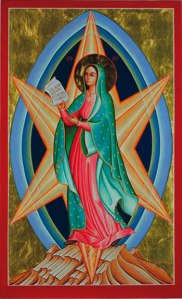
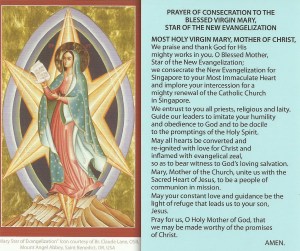
Prayer of Consecration to the Blessed Virgin Mary, Star of the New Evangelisation

marystarofevanglisationicon

On 7 October 2014, on the Feast of our Lady of the Rosary, His Excellency Archbishop William Goh Seng Chye, the Archbishop of Singapore dedicated and consecrated the Archdiocese of Singapore and all the efforts of the New Evangelisation in Singapore to the Blessed Virgin Mary, Star of the New Evangelisation.

Although this refers to the Archdiocese of Singapore, I believe that everyone else in the world, within the Church of God may also pray the same prayer for the sake of evangelisation of the Good News everywhere in this world.


Here is the text of the prayer, to be prayed daily from 7 October 2014 to 7 October 2015, the Feast of our Lady of the Rosary.


10669256_842249659148292_6829732685043142899_o

Most Holy Virgin Mary, Mother of Christ.

We praise and thank God for His mighty works in you. O Blessed Mother, Star of the New Evangelisation; we consecrate the New Evangelisation for Singapore to your Most Immaculate Heart and implore your intercession for a mighty renewal of the Catholic Church in Singapore. We entrust to you all priests, Religious and laity. Guide our leaders to imitate your humility and obedience to God and to be docile to the promptings of the Holy Spirit.

May all hearts be converted and re-ignited with love for Christ and inflamed with evangelical zeal, so as to bear witness to God’s loving salvation. Mary, Mother of the Church, unite us with the Sacred Heart of Jesus, to be a people of communion in mission.

May your constant love and guidance be the light of refuge that leads us to your son, Jesus. Pray for us, O Holy Mother of God, that we may be made worthy of the promises of Christ. Amen.

Thursday, 16 October 2014 : 28th Week of Ordinary Time, Memorial of St. Hedwig, Religious and St. Margaret Mary Alacoque, Virgin (Homily and Scripture Reflections)

Liturgical Colour : Green or White (Religious and Virgins)

Brothers and sisters in Christ, today heard about the salvation which God had brought upon mankind through the means of Christ our Lord, who is His own Son and also the Messiah, our Saviour. And how Jesus had secured this for all of us, through His obedient act on the cross, that is to suffer for our sins and so that we may be free from the consequences of our sins, that is death.

By the shedding and outpouring of His Blood, He who is the Lamb of God, completely perfect and unblemished, not just by appearance but also by the complete purity and perfection of His heart, without any traces of sin, obtained for us the grace of redemption from sins, which God had also granted to all those who offered sin and burnt offerings of animals, sheep, goats and doves.

However, the loving sacrifice of our Lord Jesus Christ was different, because through that singular act of ultimate love, and by the offering of the perfect sacrifice, the only One worthy of all of our sins at once, He obtained for us all, salvation for all those who believe in Him and those who indeed willingly take part in His salvation, namely those who with faith and love for Him, accept and receive His Body and Blood into themselves, which He freely shed and offered for our salvation.

And this was in essence what God had in mind for all of His beloved people, when He sent them His messengers, that is the prophets and servants during the time of the old covenant of God, and to the Apostles, who were also His messengers and bearers of the truth of God at the time of the new covenant of God. Through them God wanted to reveal to mankind the fullness of His mercy and love, which He conveyed through Jesus and His works in this world.

And yet, the hearts of mankind were too heavily saddled and corrupted with the burdens of sin. And this burden of sin prevented them from understanding and realising the love of God, which He had for them. Instead, they embraced those sins and succumbed to their own temptations, the temptations of their flesh, so that they turned a deaf ear to the words and callings of the prophets and the Apostles of God, and they became proud and haughty, torturing and persecuting those messengers of God’s Good News because they considered them a nuisance to their way of life.

Brothers and sisters in Christ, can we tell indeed how many times had the people of God disobeyed Him throughout time? In the Bible we witnessed yet again and again of this disobedience, beginning from the disobedience of our ancestors, who listened to Satan rather than to the words of the divine Wisdom of God, and then with the countless generations of mankind who continued to live in debauchery and sin, disregarding His laws and precepts.

And we knew of how the people of Israel did not have their full heart’s attention to the Lord. They complained against Moses and always made demands after demands to the Lord, even after He had done so much for them, so much that everyone who saw them would have proclaimed how fortunate and blessed they were, having been given the grace of God.

The disobedience of the people of God, who preferred to languish in sin and under the chains of slavery of the aforementioned sin, therefore became the greatest obstacle for mankind to reach out back to the Lord, their God and loving Father. But all this changed when the Lord exercised His might and power, and through a single stroke, changed everything through Christ, giving new hope to mankind and liberating them from the slavery of sin.

Thus, brothers and sisters in Christ, today we are reminded of the need for us all to constantly shun sin and impurities before the Lord, and we need to be always vigilant in all things, and be aware how the evil one may try to turn us away from the Lord. His attacks are always relentless and unforgiving, but we have no need to fear him, as long as we stay steadfastly faithful to His Son, our Lord and Saviour Jesus Christ.

Today we also celebrate the feast day of two great and faithful saints, whose life I am certain will be a great example to all of us, and what I am going to share with all of you about them will certainly benefit our faith, and our salvation in God. They are St. Hedwig of Silesia, the once Duchess of Poland turned into a holy religious devoted to God, and St. Margaret Mary Alacoque, a holy virgin devoted to God who began the popular devotion to the Sacred Heart of Jesus.

St. Hedwig of Silesia was married off to a Polish duke at a very young age, and in age of warfare at the time, time was chaotic and destructive. And she lost her husband after she had born him many children. After the death of her husband, she moved to a monastery established by her daughter, Gertrude, and she devoted her life to God fully from then on. St. Hedwig and her husband were both renowned for their very pious lifestyle and very great devotion to helping the poor.

They devoted themselves to give their love and service to the poor, and amidst difficulties, they never gave up but continued with their works with great passion. St. Hedwig donated all of her riches and fortune after her widowhood and as she enters the Church as a religious. She was renowned for her great piety and humility as well, often walking barefoot even in snow.

Meanwhile, St. Margaret Mary Alacoque was a young woman who devoted herself since early in her life to the Lord, to live a completely devoted life to the Lord. She lived frugally and with full faith in God. St. Margaret Mary Alacoque experienced many visions of the Lord and His mother Mary during her life, and in those visions, she experienced in particular the love emanating from the Most Sacred Heart of Jesus.

Thus from her began the promotion of the now popular devotion to the Sacred Heart of Jesus, which reminds us of the love of God which He showed us all through His Son, Jesus our Lord, whose loving sacrifice on the cross purchased for us the freedom from all of our sins and iniquities, and opened for us the path towards His love and His salvation, the offer of eternal life which He freely gives to all those who believe in Him.

Therefore, brothers and sisters in Christ, inspired by the examples of these two saints, let us all be on our way to seek the Lord and to be faithful to Him in all of our actions. Let us all shun all forms of sins and fornications, holding tightly and strongly to the centre tenets of our faith. May Almighty God grant us the gift of faith, empower us and help us on our way to reach Him. God bless us all. Amen.

Wednesday, 15 October 2014 : 28th Week of Ordinary Time, Memorial of St. Teresa of Jesus, Virgin and Doctor of the Church (Homily and Scripture Reflections)

Liturgical Colour : White

Brothers and sisters in Christ, today we heard about the distinction between the ones who lived in the flesh and in the Spirit, that is those who listen to the whim of their human weaknesses, namely pride, anger, jealousy, desire, arrogance, greed, ignorance, wrath, lust, dishonesty and many others, rather than to walk in the way which the Lord had designed for us.

The Lord had revealed His laws through Moses, with all the rules and regulations designed to help the people to control themselves and prevent themselves from succumbing to the desires and temptations of the flesh and the pleasures of the world, with which Satan constantly and daily assault us all mankind, in order to drag us into damnation together with him for eternity.

The Law of God, as exemplified by the Ten Commandments are a set of guides and rules to help the people of God as focus to lead them in life, just like a lighthouse with its light guides ships away from the shores and from dangerous and sharp rocks, so that they would not flounder and be wrecked on the reefs. Thus the purpose of the Law of God was not to punish, but instead to love the people of God, that is by showing how God loves them through such care that He gave them such guidance that they may not hurt themselves by doing something foolish in life.

Yet, many of the people refused to listen to and obey the laws, despite constant and repeated reminders by the Lord. They continued to persist in their rebelliousness, and they walked with pride, knowingly following the ways of Satan the deceiver, who lavished them with lies and temptations of the flesh. Like the tales of old, again using the example of the ships and the sailors who guide them through rough waters, Satan and his agents were like the legendary sirens who were told to be enchanters who lulled unaware sailors and ships with their songs, that they ended up wrecked on reefs and rocks and be lost.

The lull, the joy and the pleasures of Satan are dangerous, brothers and sisters in Christ, be it then, and be it now. He is always about and around us, looking for opportunities where we are at our most vulnerable. And if we are not careful, we may indeed be trapped by the devices of Satan and fall into damnation. Thus we have to be ever vigilant and be ready to guard ourselves against such vicious attacks.

And how do we best do this? This is by embracing the teachings of Christ and asking the Holy Spirit to be our guide, by entrusting ourselves fully to His love and shunning all things of the devil. That means we have to cast away all acts of fornication and corruption of our flesh, heart and soul, and begin to walk righteously in the sight of God. We have to practice our faith and commit fully to the truth and love of God, showing the faith we have in our words, actions and deeds.

And today, we celebrate the feast of a great woman and saint, whose life can be a model for us all, in living our faith. She is St. Teresa of Jesus, also known famously as St. Teresa of Avila, after the name of the city where she came from. St. Teresa of Jesus was recently made a Doctor of the Church, for her great and numerous works in faith, through which her writings and works became priceless inspiration source for many of the faithful.

St. Teresa of Jesus herself was born in Spain during the time of the early modern era Europe, at the time when the Church was about to be rocked greatly by the so-called Protestant ‘reformation’, where many of the faithful were led away by the lies and falsehoods of the agents of Satan, who infiltrated many hearts of the faithful and turned them against the efforts of the Lord through His Church.

Satan appealed to the people of God, to make themselves free from the Law of God through the Church, which had been seen by many as corrupted. Indeed, the Church leadership and hierarchy at the time had been seen as debauched and corrupt, much like the Pharisees and the teachers of the Law at the time of Jesus. They only fulfilled the Law on the superficial level, but in their hearts, they were corrupt and they served only their own desires.

But many people took matter to their own hands, and rather than listening to the words of the Holy Spirit, they followed the lies of Satan that caused even greater injury to the Church and to the faithful. They refused to help the Church and the faithful to get free from the entanglements of Satan, and instead they themselves became entangled even further.

This was where St. Teresa of Jesus entered the scene. Joining the Carmelites at a young age, St. Teresa of Jesus had always been noted for her great piety and devotion to the Lord, who made herself to belong completely to Christ our Lord. She wrote many books and writings which became model for many who came after her in the subsequent centuries, and she also received many visions about the Lord, and how we mankind ought to live our faith life. She eventually also became a leading figure of the Counter-Reformation efforts to return many souls to the Lord.

She suffered from many illnesses and diseases throughout her life as a religious sister, but she did not complain or become bitter because of that. Instead, she saw it as a suffering being suffered for the sake of the Lord. She also promoted the need for mankind to put themselves completely in trust to God, and to surrender themselves and subject themselves to the love of God.

This and many of her other teachings in her writings help mankind to find a clear path towards the Lord, avoiding all the efforts of the devil who constantly tried to turn mankind away from the path towards salvation and into damnation with him. Like the clear and bright light of the lighthouse, what St. Teresa of Jesus had written, had said and had done in her life, enduring suffering after suffering in joy with the Lord, and in her complete and undying trust in God, she showed us all, who still wander in the darkness of this world, how to reach our target and destination, that is the Lord our God.

Therefore, brothers and sisters in Christ, let us today ask for the intercession of St. Teresa of Jesus and of other holy saints of God, that they may help intercede for our sake, and pray for us before the Lord, that we may follow their leads and examples, to avoid falling into the traps and devices of Satan and that we may also reject firmly all forms of fornications of the flesh, and begin to live according to the Spirit. May Almighty God guide us on our way, and lead us to Himself, that we may find our way to resist Satan and remaining true to our faith in God. God bless us all. Amen.

Tuesday, 14 October 2014 : 28th Week of Ordinary Time, Memorial of Pope St. Callistus I, Pope and Martyr (Homily and Scripture Reflections)

Liturgical Colour : Green or Red (Martyrs)

Brothers and sisters in Christ, today we heard in the Holy Scriptures and the Gospel about the nature of the Law of God, and how we ought to keep it in faith, and how important it is to understand what the Law is all about, and how to best apply it in our lives. It also highlighted the hypocrisy of the Pharisees and the teachers of the Law, who kept a superficial vigil and observance over the Law, but not understanding the true intent and meaning of the Law.

As is with any forms of laws, the Law of God is often bound to be misinterpreted and misused, especially when its meaning and purpose are not fully understood by those who enforce these laws. It is imperative that the people of God understand what the Law is all about, that is about love, and not just any forms of love, but the love which comes from the source of all love itself, that is God.

The Law is meant as the symbol and representation of love of God for us mankind, by giving us this set of guidance and pointers to help us to orientate ourselves in this world filled with temptations, darkness, evils, and impurities. The ultimate aim of the Law is indeed ultimately to keep us in God’s grace, and to bring us back to His love all of us who have sinned and walked away from Him.

But when those who were tasked to safeguard and apply the Law erred in their judgments and refused to listen to what the Lord had to say about them, then the Law lost its purpose, and ended up becoming a chore and a tedious thing for the people of God to maintain and keep. As a result, that was why Jesus criticised the Pharisees and the teachers of the Law who were obsessed with the external applications of the Law rather than the holistic applications of the Law.

Being too engrossed in the external and superficial application of the Law is dangerous, as this ended up in the Pharisees and the teachers of the Law adopting an excessively strict and burdensome interpretation of the Law, which brought a great burden on the people of God, and sadly that this is done not in the spirit of true understanding of the purpose of the Law, ending in the observance of the Law just for the sake of observing it, which will bring no benefit but instead condemnation.

Brothers and sisters in Christ, therefore today we are all urged to turn deep into the Law of God, all the rules and observances which we have known in the Church, and begin to appreciate them in complete fullness and find the true meaning and purpose of the Law, that is the love of God for us, and His great desire to reunite us with Himself, so that we may be free from sin and unworthiness, and gain the eternal inheritance He had planned for us.

Today we celebrate together as the Church, the feast of Pope St. Callistus I, also known as Pope St. Callixtus I, the leader of the early Church and a martyr of the faith under the persecution of the Roman authorities at the time. Pope St. Callistus I was once a slave, who managed to escape his slavery and eventually became a servant of the Lord and His Church. He suffered many times for his Christian faith, and he was sent to many punishments by the authorities for that.

Nevertheless, eventually when Pope St. Callistus I was chosen as the Bishop of Rome and the successor of St. Peter the Apostle, and as the Vicar of Christ, he extended a new outreached hand towards those sinners and those who had erred in their path, committing adultery and fornication, allowing them to return to the Church to seek God’s mercy.

There were indeed serious oppositions to this policy, and some including the Saint Hippolytus were firmly opposed to the policies of Pope St. Callistus I who was seen as being too lenient against the sinners. St. Hippolytus was thus elected as a rival Bishop of Rome and Pope, in opposition to Pope St. Callistus I. But despite the differences and the rivalry between them, God continued to exercise His good intentions upon the world through them, as they continued to minister to the people of God in faith. Eventually both of them would also meet their end in martrydom, in the defense of their faith.

Brothers and sisters in Christ, the examples of the saints and the messages from the Holy Scriptures which we heard today, all call for us to reassess our own lives as well as our own actions and deeds. We have to remember that first, God is loving and merciful, and through the Law and rules which He had given us, He wants to bring us back to Him and be renewed in love, so that our sins may be cleansed, and we renewed and purified, may find justification and salvation in God.

However, at the same time, we cannot turn a blind eye on our sins and defects indeed. We cannot ignore them or to bypass them in our attempts to seek the Lord and find His mercy. For God hates and rejects sin and evil just as much as He loves and be merciful to all of us. Welcoming sinners is indeed important, and we should make it a priority to help sinners to come back to the Lord through Faith. However, this cannot be done at the expense of condoning sin or to reduce our contempt of sin.

Instead, brothers and sisters in Christ, from today onwards, if we have not done so before, let us all help one another so that we may remind ourselves of the sins we have committed, that we may repent from them and find our way to the Lord, seeking His mercy and forgiveness. Let us also from now on seek to understand the true meaning, purpose and intention of the Law of God, so that by obeying the Law in all its full meaning, we may gain the favour and the blessings of the Lord.

May Almighty God guide us always in life, and help us so that we may become ever better disciples and followers, rooted in love and abundant in charity and faith. God bless us all. Amen.

Tuesday, 14 October 2014 : 28th Week of Ordinary Time, Memorial of Pope St. Callistus I, Pope and Martyr (Gospel Reading)

Liturgical Colour : Green or Red (Martyrs)

Luke 11 : 37-41

At that time, as Jesus was speaking, a Pharisee asked Him to have a meal with him. So He went and sat at table. The Pharisee then wondered why Jesus did not first wash His hands before dinner.

But the Lord said to him, “So then, you Pharisees, you clean the outside of the cup and the dish, but inside yourselves you are full of greed and evil. Fools! He who made the outside, also made the inside. But according to you, by the mere giving of alms everything is made clean.”

Monday, 13 October 2014 : 28th Week of Ordinary Time (Homily and Scripture Reflections)

Liturgical Colour : Green

Brothers and sisters in Christ, today the Scriptures made a reference to the two sons of Abraham, who was each born of a different mother. Ishmael, the elder son, was born from the union between Abraham and her slave, Hagar, at the insistence of Sarah, his wife, who insisted to Abraham to bear a son with Hagar the slave, who will then legally be known as her own son.

It was common in the past, and even still until today, that a surrogate mother, usually a slave, to produce an heir to a wealthy and influential person, and whose heir will be adopted by the wife of the person, when the wife is unable to bear a child on her own. But in the case of Abraham, Sarah and Hagar the slave, Sarah was taking a shortcut to her problem of not being able to bear a child. God had promised Abraham that He would give him a son through Sarah, for it is nothing impossible for God, even for someone to bear a child at old age.

The younger son, Isaac, born from Abraham and Sarah was the child promised by God, and the blessings which God had given to Abraham in His covenant, was passed on to Isaac and his descendants. Meanwhile, Ishmael, while still blessed by Abraham, he had no part in his inheritance, and both him and his mother Hagar the slave was sent away by Abraham from his house.

The idea here is to separate two occasions in our own lives, the children of God, the children of our father in faith, that is Abraham, the faithful servant of God. The elder son, Ishmael, born of Hagar the slave represented our old lives, the lives of slavery, when we are enslaved by the power of sin and Satan’s works, that we are chained to this world and all of its darkness.

If we think that we are not chained or enslaved, then think about this, how our ancestors were cast out of Eden, the gardens of God filled with all wonderful things and perfections, because they disobeyed the Lord and preferred to follow Satan and their own desires than to listen to God, who had told them and taught them what they need to follow and obey, as well as what they need to avoid.

God did not create us to enslave us, or to make us like His slaves. Rather, we were created in love, for love and for our own good. God who is perfect and complete in everything truly had no need for anyone or anything to satisfy Him, and He did not need anything to be happy or to be joyful, as He is perfect and self-sufficient in everything, in love and joy.

Therefore, brothers and sisters in Christ, He created all things, and last and greatest of all, mankind, so that He may share that love He has with all of us. And we were created in perfection, meant to enjoy all the things God had created. He even entrusted all creations on earth to us, that we were meant to be the stewards of all creations, to live our lives in bliss, joy and perfect harmony with God.

But alas, we choose our lot with the evil one, who tempted us, and by accepting his temptations and lies, from our ancestors on, until the coming of the Saviour, all mankind had been enslaved, that is enslaved and chained by sin, the sins of our actions which corrupted us and brought us away from the promise of eternal life and happiness which God freely gave us and intended for us.

And that brought us under the slavery of our sins, that we are no longer free but bound under the consequences of sin, which ultimately is death. Death is the punishment and consequence of disobedience, and that is why mankind suffered from death, which was once without hope, and we feared death. But all was not lost, for God gave His help to us all, through Jesus Christ His Son, who is our Lord and Saviour.

That through Christ, we may be made anew, and transformed from the child of the first generation, represented by Ishmael, the son of the slave woman, to be like the other child, that is Isaac, the son promised by God to Abraham, the son of the free woman, and hence is free. This represents how we mankind had been made free, and through the suffering, death and resurrection of Christ, this was made true by God.

But this freedom is given only to those who want to believe in Christ, and not to those who continue to stubbornly refuse His offers of freedom. Yes, there are many indeed today who continues to refuse to follow the Lord and listen to Him, and they prefer to continue to live under the slavery of sin, and keep their chains of sin, which continue to chain them to death and destruction.

This was exactly the same kind of attitude which Jesus encountered as He taught the people, who were stubborn and persistent in their rebelliousness. They doubted Jesus, even after seeing what He had done, and asking for even more signs and miracles. They were not able to look beyond the veil of their doubt and unfaithfulness, and instead, they languished in sin, refusing to see the light until the day when the judgment comes upon them.

Therefore, brothers and sisters in Christ, as today we also celebrate the anniversary of the last of the apparitions of the Blessed Virgin Mary at Fatima, let us all look at the examples of the holy saints and martyrs, and chief of all, that of our Lady of Fatima, the Blessed Virgin Mary, the mother of our Lord and Saviour Jesus Christ. And let us look at the examples of Abraham our father in faith, and finally the examples and the actions of our Lord Jesus Himself.

All of them followed the Lord, obeyed the Lord and listened to His will, as contrasted to Adam and Eve, our ancestors, and the people whom Jesus confronted in the Gospel today. We have a choice, brothers and sisters in Christ. We can choose to follow the Lord and obey all of His commands and will, and walk righteously in His path, or to choose to instead listen to Satan and his lies, and obey our own whim and our own desires. It is up to us to make a difference in our own lives.

Thus, do we all want to choose life or death? Do we all want to be free from sin and its slavery, or do we want to remain bound to sin and be enslaved? Thus, let us all take conscious actions, to show that we want to be indeed free from all forms of the bondage of sin, and rebuke Satan who had enslaved us with them. Let us say courageously to him, that we do not want to have any more part in this slavery of our body and soul, but rather that we may be free in the Lord.

May Almighty God be with us, guide us and bring us into the freedom from our slavery, the slavery of our body and soul to sin, so that we may truly be righteous and just, and be found worthy of His grace and inheritance. God bless us all. Amen.

(Usus Antiquior) Eighteenth Sunday after Pentecost (II Classis) – Sunday, 12 October 2014 : Homily and Scripture Reflections

Dear brothers and sisters in Christ, today we come together to celebrate the love of God and to listen to His words as written and recorded in the Holy Scriptures. And St. Paul in his letter to the Church and the faithful in Corinth praised the people of God for their faith in God, and how the Lord Jesus affirmed the faith of all those who believed in Him, so that all of them will be justified at the end of time and not perish.

And in the Gospel, we heard about the healing of the paralytic man, that is a man who cannot move or walk due to the paralysis of the body, and Jesus healed him to show His power and authority over all things, all sins and diseases, both those of the body and those of the soul. Yes, that is why Jesus came into the world, to show the power of God by the healing of the sick, but more than just the body, as more important is the healing of the soul.

Jesus is the Lord, the God of all creations. One and only God, not created but existing and with the Father before all ages and before the beginning of the reckoning of time, and before creation. He was with the Father and the Holy Spirit, as a trinity of Godhead, Three separate and equal brings, but one in nature. This is our faith and this is what we believe in, in the Most Holy Trinity, Three Godhead but One in perfect unity of love, the One True God, whom the people of Israel also believed in.

And thus, He who is the Word of God, who created heaven and earth and all the creatures and creations in them, was willing to come down upon us, to be with us and to walk among us, taking in humility our humble human form, not that of a king but the lowly Son of a carpenter of Nazareth, that through Him, what God had planned for the salvation of mankind might proceed and be fulfilled completely.

Brothers and sisters in Christ, we know that men often fall sick, suffering from the disease of the body. We know now of many diseases, both those that are contagious and non-contagious. We know of the recent outbreak of Ebola virus in Africa, of which many thousands have died, and many thousands more suffered from the disease. And we know how many millions are affected by dengue fever, malaria, polio, smallpox and many other diseases, which many of these cause not just suffering and pain, but eventually even death.

And death comes especially when the disease is left untreated, either because the sufferers are unable to afford the fees needed to cure their respective illnesses, or that the disease itself has yet to be curable, namely no cure has yet to be found. Some disease like HIV, diabetes, cancer and others have not yet been curable, and hence what doctors can do, is mostly to reduce the suffering, or in the case of cancer, that is to excise and cut out the cancerous cells to remove them from the body, or to use chemicals to kill and destroy them.

But all these bodily diseases, illnesses and afflictions pale in comparison to the disease of our heart and soul, namely sin. Sin is indeed a disease, since it attacks us in the depth of our own beings, and not just our soul and heart can be affected, but even our body, for the body obeys the will of our heart and soul. And if sin corrupts our heart and soul, our body will likely also be corrupted by the same sin.

And sin is more dangerous and harmful than the effects of the bodily diseases that I mentioned earlier on. It does not mean that those bodily diseases are trivial, but considering their seriousness and the sufferings they can inflict on us, then we should be even more aware of the kind of harm which sin can cause to us. Remember that Jesus said, that we do not need to fear those that can bring about the destruction of the body, but we ought to worry indeed, those that can bring about the destruction of the soul.

One of the intentions of Jesus is indeed that, we should not fear the devil and his agents. We have seen how scary and destructive they may seem to look, but they have no power over us. They may strike at our body, but they cannot harm our soul. The One who can bring about the destruction of our soul is indeed God Himself, the Lord and Master of all, who has the authority over all things. We know of the Last Judgment, and how the righteous will be separated from the wicked, and while the righteous will enjoy the fruits of God’s promise and love, the wicked will suffer for eternity. What will they suffer for? For their sins indeed!

Yes, so we need to indeed be wary of sin, and how it can bring about our destruction, and how it can harm us both in this life, and the life that is to come. That is why our Lord Jesus is the One with the power and authority to forgive sins. He is the One with the power to heal us from all of our afflictions, body and soul. That is why He rebuked the Pharisees when they doubted His ability to forgive sins, and even accused Him of blasphemy.

Why so? This is because they failed to recognise Christ, when it was so clear that the prophets from all ages had spoken about the Messiah who was to come. And in Jesus all of their prophecies, and all the promises of God were fulfilled. He is the Lamb of God, who takes away the sins of the world, and all who believe in Him will gain life eternal, and total liberation from the sins that have chained us mankind to death.

That marked the difference between the paralytic man and the Pharisees. Both of them were afflicted, with sin and darkness in their hearts. But the paralytic man listened to the Lord and allowed Him to work His wonders in him, healing him from all of His afflictions. Thus, if we follow the Lord and remain completely faithful to Him, we will gain healing through Him and be made justified through our faith, and thus eligible of eternal life.

On the other hand, if we act like the Pharisees, thinking that we are perfectly alright and have no need for healing, then the pride, greed, arrogance and wickedness in our hearts, just as they were in the hearts of the Pharisees and the scribes will be our undoing. Is this what we want for ourselves? Certainly not. Therefore, it is imperative that we take heed of what our Lord Jesus had done and what He had taught and shown us through our Faith and through the Scriptures.

May Almighty God therefore guide us, heal us from our afflictions, empower us, and grant us strength, as well as humility, so that we may have the courage and will to ask Him humbly to heal us and to make us whole again, that we sinners, filled with the sins of our ancestors and the sins of our own daily lives, may be made pure like snow, white and pure as a diamond, and be cleansed from all the diseases of our body and soul. That in the end, after excising all that is evil from our beings, and after decisively rebuking Satan, we are precious and worthy, and are welcome into the eternal life God had prepared for us all. Amen.

Sunday, 12 October 2014 : 28th Sunday of Ordinary Time (Homily and Scripture Reflections)

Liturgical Colour : Green

Brothers and sisters in Christ, the readings of this Sunday refers very, very clearly to the loving nature of our Lord, God and Father, who created all of us at the beginning of time, to be the most beloved of all His creations. He is truly like a father to us all, giving us life and all that we need, and He paved the path for us in our lives, guiding us in all the things that we do, that even though we often do not realise what He had done, but He is indeed there, watching over us and leading us towards Himself.

God who loves us has prepared all goodness for us, and He has blessed us with great riches, all the inheritance which are promised to us. This is shown by Jesus, when He told the people and His disciples, of the parable of the king and the banquet, where He told them of a king who prepared a great feast and invited many people to come to His banquet.

The banquet represented the promise of good life and eternal joy with God, and just as the king intended to celebrate and be merry with all those who had been invited to the feast, God intended for all of us, His beloved creations, to enjoy the fullness of happiness with Him. That was exactly also what He intended for us at the beginning. But like the guests who refused to come and listen to the king, our ancestors beginning from Adam also refused to listen to God and His will.

The guests might have a variety of reasons for not coming to the banquet prepared for them, and we may not know them, since it was never mentioned by Jesus. But certainly, by observing our own human behaviours and reactions, surely we are able to easily predict them. The guests might have had other businesses and commitments to handle, but then we can ask, has the king not given them the notice for the banquet in advance? And what is so important that they should skip the banquet of the king for something else?

Thus the same often happens to us, as we live our lives in this world. How often is it that when God calls us and guides us to His ways, that we said no to them and quickly go about worrying about our own selves? How often is it that we prefer to follow our own hearts’ desires and wants, rather than to listen to God and follow His will for us? We often complained that God interferes in our lives on one hand, saying that we prefer to do things on our own, but on the other hand, when we are in trouble, we are also quick to blame God for not helping us when we are in need.

Brothers and sisters in Christ, men are not easy to satisfy, and our hearts continue to lead us to listen to our own desires and wants. It is within our human nature to succumb to the temptations of our flesh, and as a result, like the guests, we tend to regard our own concerns as priority, thinking about ourselves first and how to please ourselves first before that of others.

And the other possible ‘reason’ for their disobedience is indeed their laziness and sloth, preferring to remain idle in the comfort of their houses rather than to travel to the king’s palace to attend the banquet. And this we can indeed relate to ourselves, on how we tend to be slothful in this life, refusing the apparently more difficult path which the Lord offered us, and prefer the ‘easy’ and happy life which this world apparently gives.

Thus I would also like to share with you what St. Faustina Kowalska, the one who introduced the devotion to the Divine Mercy, had seen in one of her visions. She saw two paths and men who walked along these two paths. One path is a path that is filled with flowers and wonderful things, wide and pleasant to walk on, while the other path is a path filled with thorns, obstacles, and both narrow and difficult to walk on.

But then, she saw that the easy and pleasant path hide a terrible secret, that at the end, the many people who walked on that path, fell into an endless chasm that suddenly arose on the path of the road, and many were unaware of the chasm, and fell into the chasm as they walked. Meanwhile, on the narrow and difficult road, much fewer people travelled through it, but even as those who persevered on continued, when they reached the end, they found a very beautiful garden filled with goodness, where they lived on ever after.

Thus, the vision presented us yet again, that the Lord offers us goodness and the promise of eternal happiness in Him, and He will not renege on the promise which He had made and renewed over the many generations again and again. It is our choice whether we follow Him and trust in Him, or instead trust in Satan who ought not to be trusted. He leads us into damnation with him, but he is very clever indeed, and as we know in how he tried to tempt even Jesus, he offered all the goodness which he can offer us, be it food, power, wealth or glory, or other things that fulfill and satisfy our desires.

Thus we must be vigilant, and we cannot let go our our guard against the possible assaults by Satan, who awaits at every corner hoping to deceive us and lead us into harm. And that was why Jesus continued His story, by saying that after the king in his anger had destroyed all those who had disobeyed and spurned his invitation, he invited many others who were brought to his banquet instead of the first invited.

This is to highlight first the fate that all those who refused to listen to God, and prefer to follow their own paths and desires is death and destruction, just as those who walked the easy path fell into the chasm of infinite suffering in the vision of St. Faustina Kowalska. The path which the Lord offers may not seem easy, and indeed that obstacles will be plenty, but if we remain faithful to the end, we will be richly rewarded.

And then, when Jesus mentioned about the man who came to the banquet not wearing the proper banquet garment, He was in fact referring to how we lead our faith life. In being faithful to the Lord, we cannot be half-hearted, and in our effort to seek the Lord our God we cannot be divided between Him and something else. Thus, when we come to the banquet of the Lord, we too cannot be divided in our hearts, our minds and our souls.

What is this banquet of the Lord which God had prepared for all of us? That is none other than the celebration of the Holy Sacrifice of the Mass, where we celebrate in unity with the singular act of God’s greatest act of love for us all, that is His sacrifice, suffering and death on the cross, where He bared Himself to all those whom He loved, offering Himself as the perfect offering for the reparation and the redemption of all of us from our sins.

And just as the king prepared lavish food and drinks in the banquet, so thus the Lord also gave the best of all food and drink to all of us, who comes to His banquet, that is His own Precious Body and Precious Blood. Remember when Jesus said that those who eat of His Body and drink of His Blood will not die but live eternally with God? And that is the case indeed. If we are to come to attend the banquet, that is the Holy Mass, should we not then be properly ‘attired’?

This attire does not mean just that we should be properly attired with proper clothing and wear when we come for the Mass. Certainly we do not come to the banquet of the Lord wearing clothes as if we are about to go for a picnic or a leisure walk. Instead we should wear our very best and look our very best to honour the Lord our God. However, if this is as far as we go, then it is not enough.

How many of us attend the Holy Mass and yet our minds are not in the Mass at all? How many of us prefer to talk among ourselves and with our friends, and also to pay attention to our phones and other communication devices, contacting persons even outside the Holy Mass, and not to focus our heart, mind and soul to the Lord, who should be at the centre of the celebration? Ought the king not be given his proper place in his own banquet? And thus, should we not indeed give the Lord the proper adoration and respect He deserve in the Mass?

Think about these, brothers and sisters in Christ. There are two key messages which our Lord Jesus Christ and His revelations through the Scriptures want to tell us all today. First is that, we have a choice, either to follow the easier way out, that is to follow what we want and disregard the Lord, or to follow Him, and walk in His ways, even though that path might indeed be difficult and challenging. But the reward is clear, while the first path leads to destruction in the end, the path of the Lord never disappoints.

And then second, that if we choose to follow the Lord, He who loves us so much that He gave us everything, and held back not even His own Son, to bear our sins and die for our sake, that we may have life in Him, we cannot be half-hearted or be divided in our hearts, in our souls, and in our minds’ desires to follow Him. We cannot serve both God and our own heart’s desire, that is the temptations of the flesh.

And thus, as I have mentioned, we have to give it all, at the banquet of the Lord where He had given His own Body and Blood to us, in the celebration of the Holy Sacrifice of the Holy Mass, that we have to be fully prepared and properly attired in our body, in our mind, in our soul, and in our hearts. Our focus should be completely on the Lord. Look at Him who is in the Eucharist, and focus our entire being to Him! If we do so, then He, who is the King of all, will approve of us and our actions, and justify us in our faith.

Therefore, brothers and sisters in Christ, as we go on with our lives from today onwards, let us all dedicate ourselves anew and renew our commitment to the Lord. Let us from now on attend and fully participate in the Holy Sacrifice of the Mass, giving our Lord all of our love and devotion, just as He had loved us first to the fullness of His heart, that He even gave us His life.

May Almighty God be with us all, and may He guide us to Himself, that amidst all the difficulties and challenges which we may and will indeed encounter, we may remain faithful, and with our gaze fixed at Him, may we gain the promise of eternal life, which God gives freely to all who are true to Him in faith and love. Amen.